

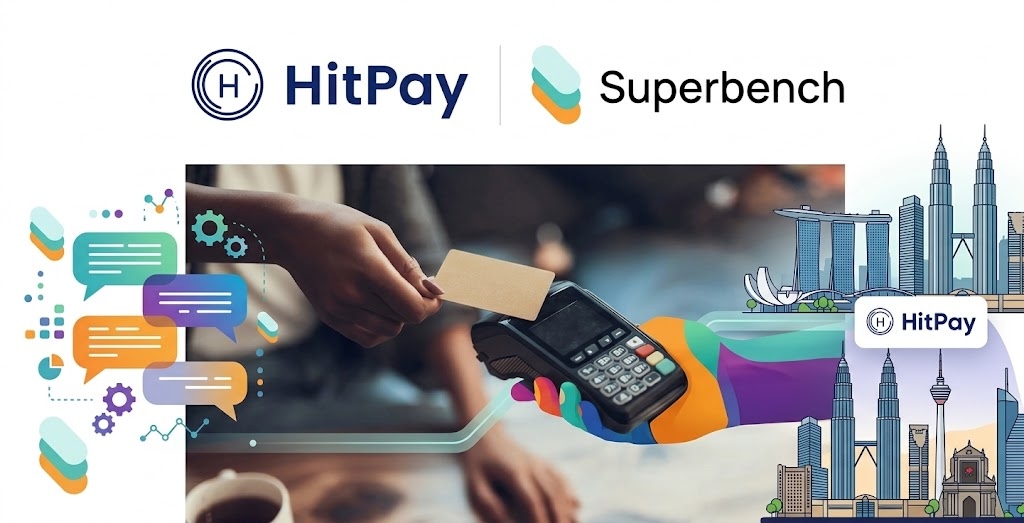
For many consumer-facing small businesses across Southeast Asia, managing the digital sales pipeline remains a headache: a prospective customer starts a conversation over AI, receives automated recommendations, and then gets bumped to a clunky, third-party checkout portal where drop-offs frequently happen.
Looking to eliminate that friction, AI customer engagement platform Superbench has integrated with payment infrastructure provider HitPay.
The partnership gives B2C small and medium enterprises (SMEs) across Singapore, Malaysia, and the Philippines a unified system that manages the entire customer journey—from initial inquiry to final payment processing.
Instead of requiring small businesses to manually upload pricing lists or continuously update FAQ documentation, Superbench automatically maintains and updates catalog information on the business’s behalf.
HitPay then powers the monetary layer, handling everything from online deposits to physical point-of-sale (POS) checkouts.
Instead of requiring small businesses to manually upload pricing lists or continuously update FAQ documentation, Superbench automatically maintains and updates catalog information on the business’s behalf.
Addressing the Philippine MSME digitalization divide

The collaboration directly targets a growing digital disparity in Southeast Asia, where small, consumer-facing businesses in retail, hospitality, and personal services form the backbone of the economy.
Southeast Asia’s e-commerce sector—the clearest indicator of how consumer activity is moving online—is projected to hit $185 billion in gross merchandise value this year, according to the e-Conomy SEA 2025 report by Google, Temasek, and Bain & Company.
While Filipino consumers are among the fastest in the region to interact with digital platforms and e-wallets, business adoption of advanced tools tells a different story:
- Lagging AI Adoption: According to studies cited by Bangko Sentral ng Pilipinas (BSP) and research from the Philippine Institute for Development Studies (PIDS), only 14.9% of Philippine businesses currently utilize AI tools. Adoption remains heavily concentrated among large, urban corporations rather than provincial or local service providers.
- The consumer vs. merchant payment gap: BSP data highlights that while nearly 75% of individual consumer transactions in the Philippines are initiated digitally, business payment processing digitalization continues to lag.
- Operational hurdles: For local MSMEs—ranging from beauty clinics and tuition centers to home services—building compliant, fraud-protected payment flows that support local favorites like GCash, Maya, and QR Ph alongside international cards often proves too complex or costly to build in-house.
However, AI adoption is moving unevenly across this merchant base:
- Singapore: AI adoption among SMEs tripled from 4.2% to 14.5% in 2024, according to the Infocomm Media Development Authority, though it still trails the 62.5% adoption rate among larger corporations.
- Malaysia: AI adoption reached 27% of businesses this year, up from 20%, according to Amazon Web Services research reported by Bernama.
- Philippines: Only 14.9% of firms currently utilize AI tools, according to a study by the Philippine Institute for Development Studies (PIDS), with adoption heavily concentrated among large, urban companies.
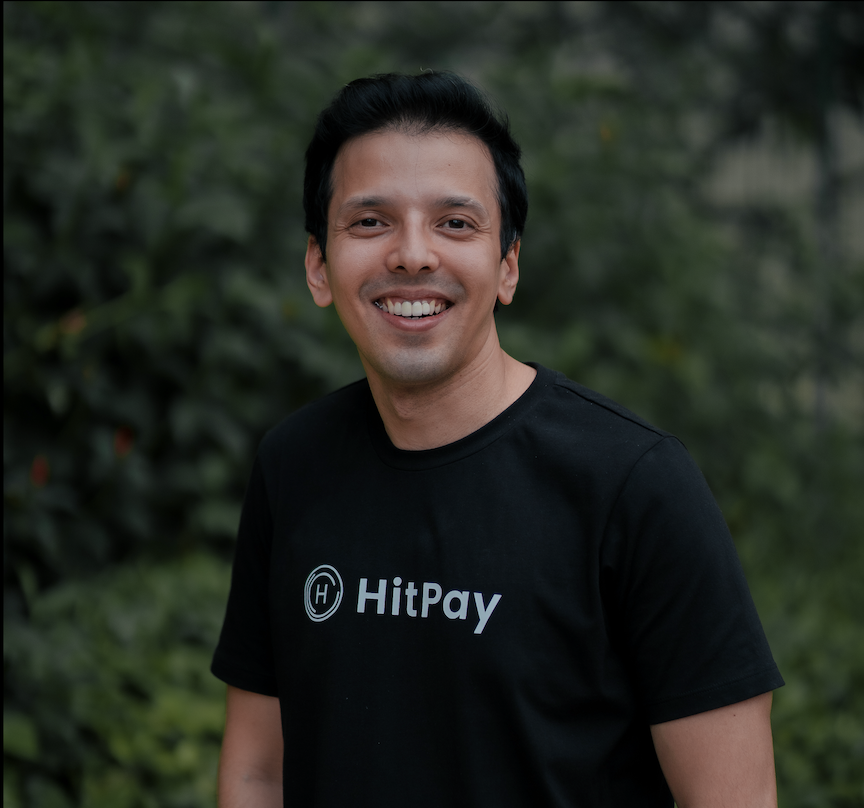
Aditya Haripurkar, Co-Founder and CEO of HitPay
HitPay’s regulatory coverage with local authorities—including licensing from the Bangko Sentral ng Pilipinas (BSP), Bank Negara Malaysia (BNM), and the Monetary Authority of Singapore (MAS)—enables platforms like Superbench to plug directly into an established financial framework rather than building separate, high-maintenance compliant checkout pipelines.
“Getting a customer from ‘I’m interested’ to actually booking and paying is where platforms tend to lose people, because the tools in between are fragmented,” said Jingjing Zhong, Co-Founder of Superbench. “A customer who has a great conversation and then hits a clunky checkout, or a payment method they don’t recognize, remembers the checkout, not the conversation.”
“Every AI tool a small business adopts eventually touches money—a deposit for a service, a card payment at checkout, or a refund,” added Aditya Haripurkar, Co-Founder and CEO of HitPay. “That layer requires strict compliance, fraud prevention, and fund settlement across currencies. None of that can be improvised.”
Market availability
The integrated solution is currently live and available for B2C service businesses across Singapore, Malaysia, the Philippines, Australia, and the UAE, with initial rollout focused on sectors such as home services, tuition centers, and aesthetic clinics.