

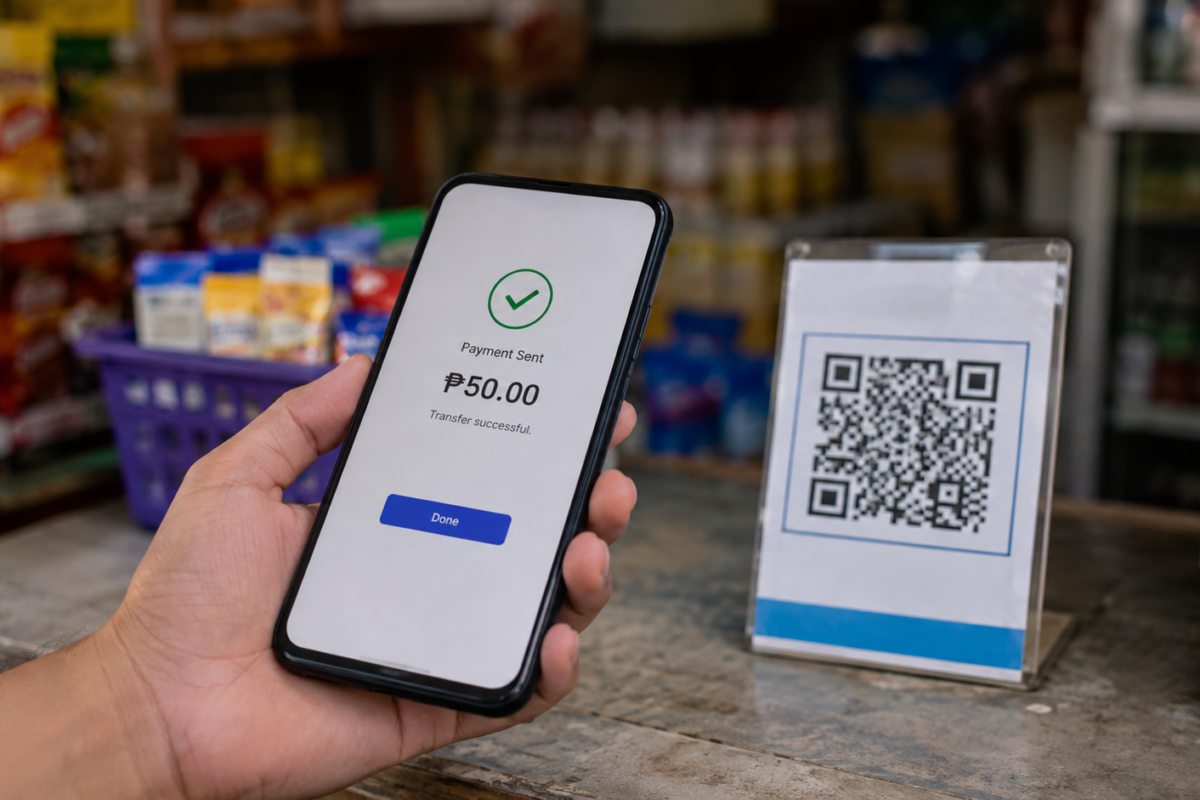
Filipinos are not simply using InstaPay more often. They appear to be using it for increasingly smaller amounts.
Transaction volume through InstaPay climbed from 99.4 million in March 2024 to 693 million in March 2026, according to Bangko Sentral ng Pilipinas data. That is an almost sevenfold increase in just two years.
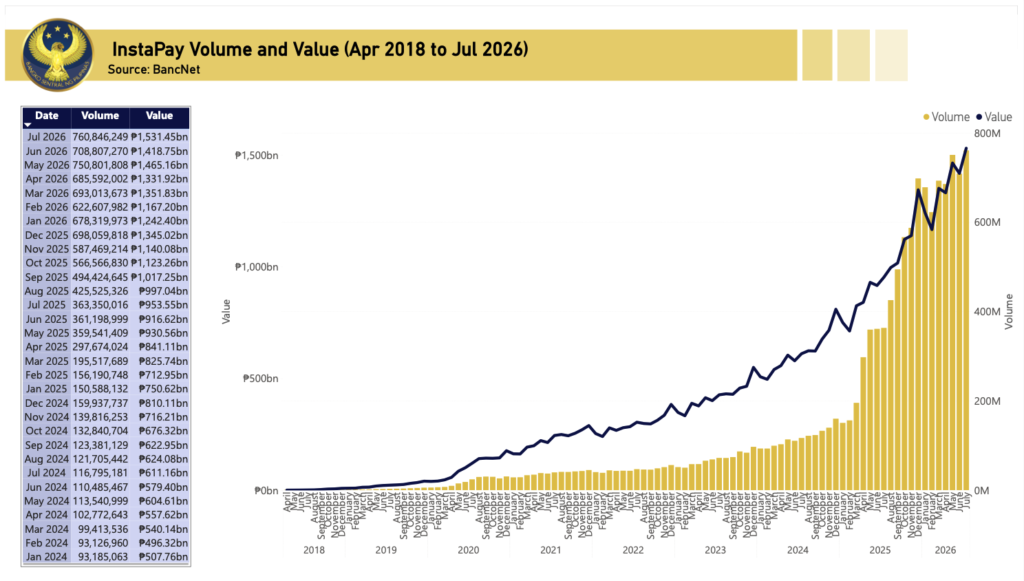
The value of those transactions also increased, but nowhere near as quickly. InstaPay moved ₱1.35 trillion in March 2026, around 2.5 times the ₱540.14 billion recorded in March 2024.
That difference produces one of the clearest signs yet of how Filipinos are changing the way they move money digitally.
The average amount represented by each InstaPay transaction fell from about ₱5,430 in March 2024 to roughly ₱1,950 in March 2026.
More transfers, but much smaller amounts
The decline does not mean every InstaPay transaction is a small consumer payment. Transaction averages cannot identify the purpose behind individual transfers.
But the trend suggests that InstaPay is increasingly being used for routine, relatively low-value money movement rather than only occasional bank-to-bank transfers.
That can include sending money between personal accounts, splitting expenses, paying small merchants, transferring money to family members or moving funds between a bank and an e-wallet.
The pattern was already visible in the full-year numbers.
InstaPay processed about 4.66 billion transactions worth ₱11.55 trillion in 2025, according to the BSP’s Peso RTGS Payment System Report. That works out to an average of roughly ₱2,480 per transaction.
In 2024, the corresponding average was about ₱5,220.
In other words, transaction frequency is accelerating much faster than the amount of money being transferred.
PESONet is moving in the opposite direction

PESONet continues to occupy a very different part of the payments market.
BSP figures show its transaction volume increased from 7.77 million in March 2024 to 11.05 million in March 2026. Transaction value, however, rose from ₱735.42 billion to ₱1.42 trillion over the same period.
That lifted the average PESONet transaction from approximately ₱94,600 to more than ₱128,000.
The divergence fits the design of the two payment rails.
InstaPay provides real-time transfers and is built around low-value transactions, while PESONet uses batch processing and is commonly used for larger transfers such as payroll, supplier payments and corporate disbursements.
For full-year 2025, PESONet processed only 117.25 million transactions compared with InstaPay’s 4.66 billion. Yet PESONet still moved more money overall, at ₱13.19 trillion compared with InstaPay’s ₱11.55 trillion.
The average PESONet transaction for the year was about ₱112,500, roughly 45 times the average InstaPay transaction.
Digital transfers are becoming ordinary spending infrastructure
The numbers show that the growth of digital payments is no longer just about convincing consumers to try electronic transfers.
Digital payments already accounted for 57.4% of Philippine retail payment volume in 2024, according to the BSP’s e-payments measurement report.
What is changing now is how frequently those rails are being used.
InstaPay’s growth increasingly resembles the behavior of an everyday payment network, characterized by enormous transaction counts and progressively smaller average transfers.
PESONet, meanwhile, continues to handle far fewer transactions but substantially larger amounts.
Instead of one electronic transfer system replacing the other, the Philippine payments market appears to be dividing into clearer roles: InstaPay for frequent, immediate movement of smaller amounts and PESONet for larger, planned transfers.
That separation may be one of the clearest signs that digital payments have moved beyond adoption and into ordinary financial behavior.