
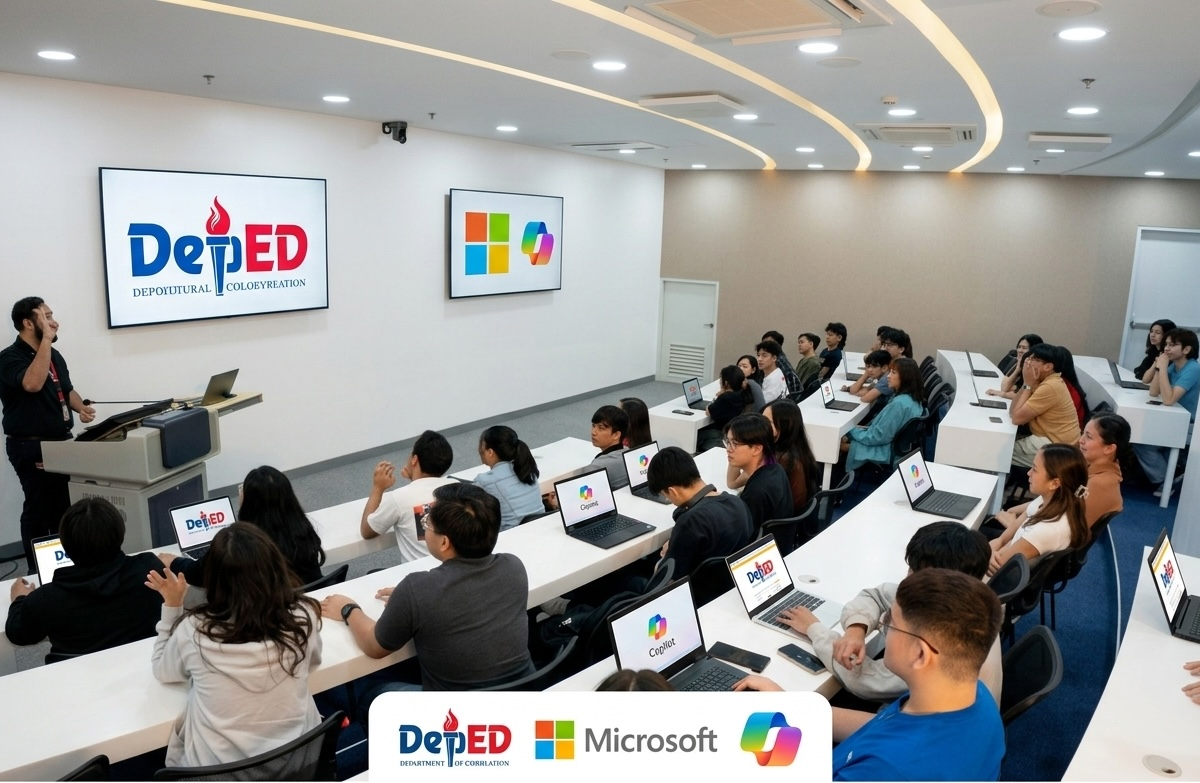
The Department of Education (DepEd) and Microsoft are expanding their partnership to bring artificial intelligence tools to more Filipino public school teachers, with 1 million educators set to gain access to Microsoft Copilot.
The renewed partnership is aimed at helping teachers reduce administrative work, prepare lessons, personalize instruction and use data to better respond to students as AI becomes increasingly integrated into education and the workplace.
Education Secretary Sonny Angara said the initiative is also intended to support learning recovery while preparing Filipino students for an increasingly AI-driven economy.
“Our learners deserve an education system that is ready for the future,” Angara said. “Through our partnership with Microsoft, we are bringing AI tools to one million Filipino teachers to help them save time, engage learners better, and strengthen teaching in the classroom.”
The announcement builds on several years of collaboration between DepEd and Microsoft covering digital learning, teacher development and foundational literacy.
More than 175,000 educators already reached
The push toward broader AI adoption has already begun.
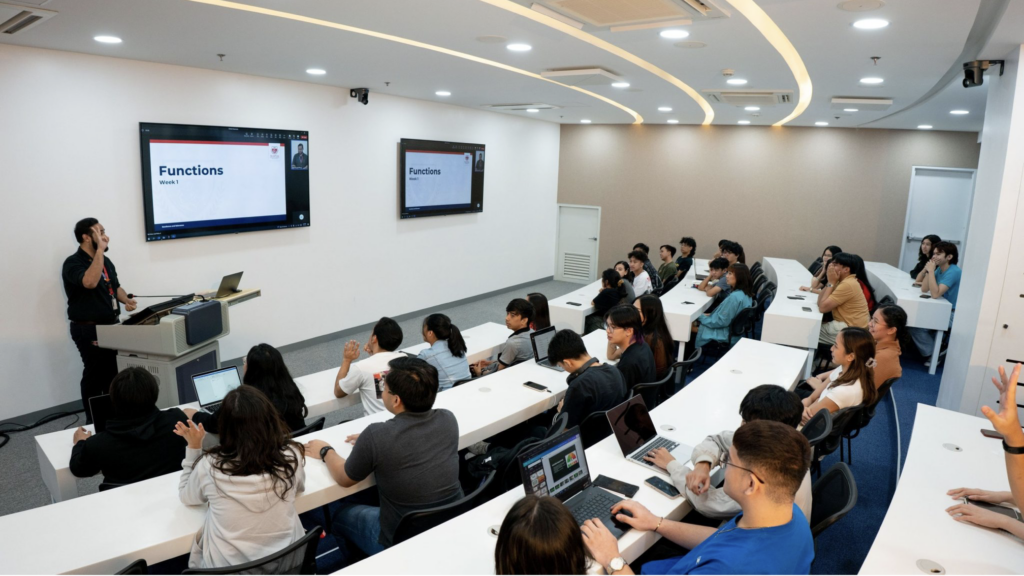
Earlier this year, DepEd and Microsoft launched a nationwide AI skilling program designed to help teachers use Microsoft Copilot Chat in classroom and administrative work.
The flagship training event attracted nearly 75,000 live attendees, while registrations exceeded 175,000 educators.
The strong response prompted DepEd’s National Educators’ Academy of the Philippines (NEAP) to extend the program through an asynchronous training phase for registered participants.
The training focuses on practical applications of AI, including drafting communications, preparing curriculum-aligned lesson plans and assessments, and summarizing student progress.
DepEd and Microsoft said the program also emphasizes responsible AI use, with teachers encouraged to treat the technology as a support tool rather than a replacement for professional judgment.
The broader rollout of Copilot is expected to build on this training by giving more public school teachers access to an AI assistant they can use in their daily work.
AI tools being used to support literacy recovery
The partnership is also moving beyond teacher productivity.
Under DepEd’s Academic Recovery and Accessible Learning (ARAL) Program, Microsoft’s Reading Progress and Reading Coach tools are being used to help teachers identify reading difficulties and provide earlier interventions.
The tools complement formal assessments such as the Philippine Informal Reading Inventory (Phil-IRI) by allowing students to undertake more frequent oral reading exercises. The system can surface information on word recognition, omissions, mispronunciations and reading pace, giving teachers additional data to guide interventions.
During a 21-week pilot involving 3,431 students across eight regions, the program analyzed 8,381 reading submissions and trained more than 2,100 teachers.
Teacher satisfaction reached 91.5%.
Among students who were reassessed during the pilot, 780 showed reading progress. Of these, 319 moved up between Phil-IRI proficiency bands, while 461 improved within their existing band.
The results were recognized during the DepEd-Microsoft AI-Powered Learning Initiative Recognition Day, where more than 100 teachers and 25 schools received recognition.
Marcelino Veloso III, DepEd undersecretary for Information and Communications Technology, said technology should ultimately give teachers more time to focus on their students.
“When technology helps reduce administrative burden, it gives teachers more space to guide, encourage, and intervene in ways that are thoughtful and human,” Veloso said.
AI adoption builds on existing digital infrastructure
The initiative comes as DepEd continues to expand the digital foundations needed to support technology-enabled education.
These include investments in school internet connectivity, ICT equipment, smart classrooms, laptops and other devices for teachers.
The Microsoft partnership adds AI capabilities on top of these investments, potentially allowing educators to make greater use of digital resources and student data in day-to-day instruction.
For DepEd, the initiative also supports its broader education priorities, including improving learning environments, addressing teacher welfare, strengthening learning delivery and preparing students for future jobs.
Education becomes another front for AI adoption
The partnership reflects a wider shift in how AI is being introduced into essential public services.
For schools, the immediate opportunity is not simply to give teachers access to another technology platform. AI tools can potentially reduce repetitive administrative work while helping educators develop lessons, assessments and interventions more efficiently.
The challenge, however, will be ensuring that access is matched by training, responsible-use policies and reliable digital infrastructure.
With 1 million public school teachers targeted for access to Microsoft Copilot, the scale of the initiative makes teacher readiness particularly important.
Microsoft ASEAN President Mayank Wadhwa said the company sees education as a key area where AI can have an impact in the Philippines.
By putting Copilot in the hands of public school teachers, Microsoft said it hopes to help educators save time, strengthen learning and prepare Filipino students for industries and careers where AI will increasingly play a role.
For the Philippines, the initiative places AI not only in the hands of technology companies and businesses, but increasingly in the hands of the people responsible for preparing the next generation of workers.
The bigger test now is whether access to AI can translate into better teaching, stronger learning outcomes and a more future-ready Filipino workforce.