Sanas Philippines is expanding its presence in the country as the speech-AI company looks to bring more real-time artificial intelligence tools into one of the world’s largest business process outsourcing markets.
The company announced that Jack Madrid, the current President and CEO of the IT and Business Process Association of the Philippines (IBPAP), will become its Philippine ambassador in October, following the end of his IBPAP tenure on October 10. Madrid will be succeeded by IBPAP President and CEO-designate Celeste B. Ilagan effective October 11.
Meanwhile, Chris Venturina will join Sanas as director of business development.
Sanas said the appointments are part of a broader effort to deepen relationships with enterprises, BPO providers and technology partners in the Philippines, where the IT-BPM industry employs about 1.9 million workers and generates more than $40 billion annually.

IT and Business Process Association of the Philippines President and CEO Jack Madrid
Unlike AI systems designed to automate customer conversations altogether, Sanas focuses on technology that operates during calls between human agents and customers.
AI changes the call while it is happening
At the center of Sanas’ platform is Accent Translation, software that can process an agent’s speech in real time and modify how the accent sounds before the audio reaches the customer.
According to Sanas’ product documentation, its technology can process Philippine-accented English and produce US or UK English output while retaining characteristics of the agent’s voice such as pitch and frequency.

The company says conversation data and voice samples used by its desktop Accent Translation product are processed on the device in real time and are not stored.
Recent versions have expanded the technology further. Sanas introduced a universal Accent Translation model this year and added the ability to process incoming accents, meaning an agent can also hear modified customer speech to improve comprehension during a conversation.
Accent translation, however, is only one component of a broader speech-AI platform.
Sanas is building an AI layer around the human agent
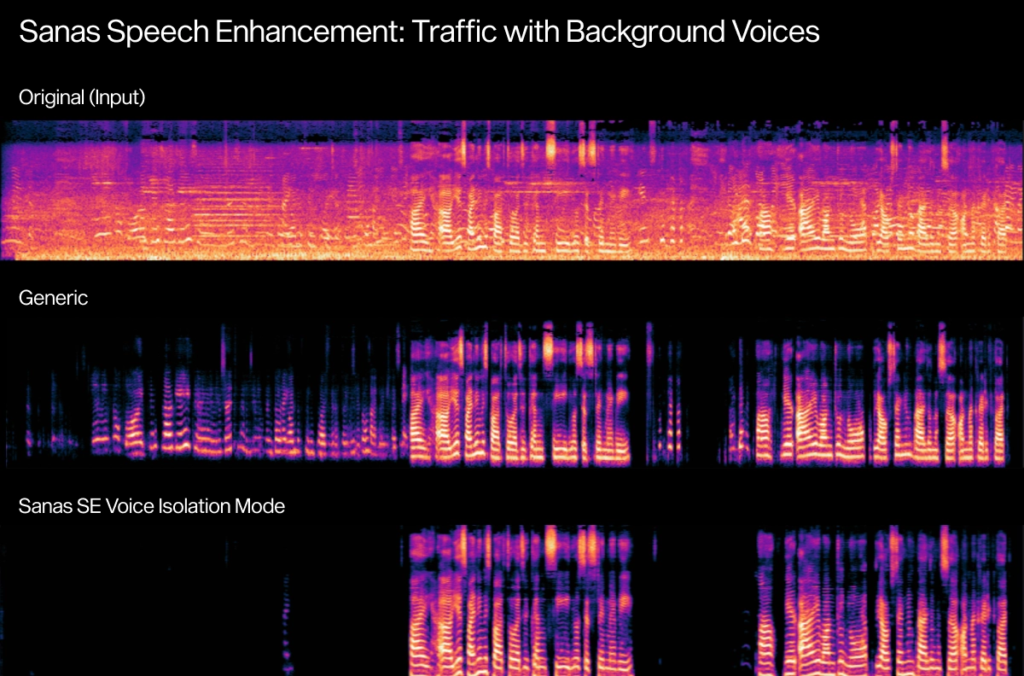
Sanas also offers Speech Enhancement, which processes calls to reduce noise and improve audio quality, and Language Translation, which translates conversations between languages while attempting to preserve the speaker’s voice, tone and intent.
Its newer Speech Intelligence product adds real-time transcription, conversation analytics and automatic compliance alerts. Sanas says personally identifiable information can be automatically redacted from transcripts.
Taken together, the technologies point toward a different form of AI adoption inside contact centers.
Instead of replacing the worker speaking to a customer, software can increasingly sit between the two participants, processing what each person hears while also analyzing the conversation.
Sanas describes itself as a real-time speech layer and says it currently works with more than 200 enterprises worldwide, processing millions of live voice conversations each day, including conversations handled by Filipino professionals.
Philippine BPOs face a different AI transition
The expansion comes as BPO operators are being pushed to integrate AI while protecting the human expertise on which much of the Philippine outsourcing industry has been built.
Madrid said discussions around AI in the Philippines should extend beyond what technology can replace and consider what it can help Filipino workers do better.
That distinction could become increasingly important for the local industry.
Generative AI and automated customer-service systems may take over some interactions, but technologies such as Accent Translation suggest that other jobs could instead become AI-assisted, with software improving communication while the human agent continues handling the customer.
Sanas’ deeper Philippine push will provide another test of whether that model can gain wider adoption in a market where voice-based customer service remains a major source of employment and export revenue.