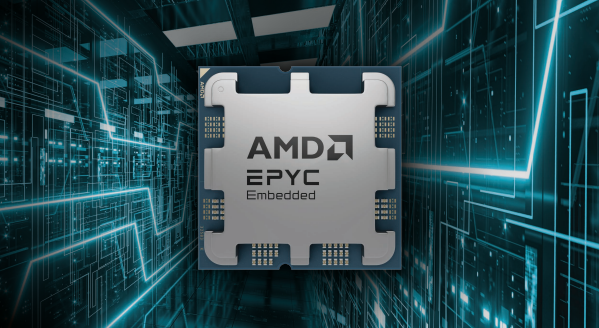
In a significant move to power the next wave of intelligent devices, AMD has officially unveiled its EPYC Embedded 4005 Series processors.
These new chips are not destined for your home PC or a massive data center; instead, they are precision-engineered for the rapidly expanding world of “edge computing.” This means they’re built to bring powerful, real-time processing closer to where data is generated — in factory robots, smart city sensors, and crucial network security appliances.
The launch tackles a growing challenge in the tech world: the need for immense computational power in compact, efficient, and affordable packages. As more devices connect to the internet, sending every piece of data to a distant cloud server creates delays, or latency.

For applications like a next-generation firewall inspecting data packets for threats or an industrial robot making a split-second decision, that delay is unacceptable. The EPYC Embedded 4005 Series is AMD’s answer, designed to think fast, right on the spot.
Powering the speed and trust of fintech
This push for low-latency processing has profound implications for the fintech industry.
In a world where financial transactions are measured in milliseconds, speed and security are paramount. The EPYC Embedded 4005’s ability to process data with minimal delay makes it an ideal engine for high-performance network security appliances that protect banking systems.

These processors can power advanced firewalls and intrusion detection systems that scan for fraudulent activity in real-time, without creating a bottleneck for legitimate transactions.
For applications like secure point-of-sale systems or edge servers processing high-frequency trading data, the combination of high-speed cores and robust, built-in AMD Infinity Guard security features offers a powerful defense against sophisticated cyberattacks, ensuring both speed and trust.
Under the hood: A blend of power and longevity
At the heart of the new series is AMD’s cutting-edge “Zen 5″ architecture, cramming up to 16 high-frequency cores into a compact design.
This raw power is paired with a massive L3 cache — up to 128 MB — which acts like a high-speed waiting room for data, ensuring the cores are never left waiting. This design is specifically tailored to accelerate tasks that are sensitive to delays.

Furthermore, AMD recognizes that embedded systems aren’t replaced every couple of years. These devices are often deployed in hard-to-reach locations and expected to run flawlessly for years.
To meet this demand, AMD is promising a seven-year manufacturing availability for the 4005 Series, giving businesses the stability they need for long-term projects. The processors are also fortified with Reliability, Availability, and Serviceability (RAS) features, like error-correcting memory support, to maximize uptime and prevent data corruption.
For system designers, AMD has made integration a key priority. The new chips use the versatile AM5 socket, which is already common across other AMD product lines. This streamlines the design process, reduces engineering complexity, and allows companies to easily upgrade their existing systems in the future without starting from scratch.
With support for the latest technologies like PCIe Gen 5 for high-speed connectivity and DDR5 memory, the EPYC Embedded 4005 Series is a platform built not just for today’s needs, but for the demands of tomorrow’s increasingly connected world.