For generations, opening a bank account was one of the first steps into the formal financial system. For many Filipinos today, that first step increasingly happens somewhere else: on a smartphone.
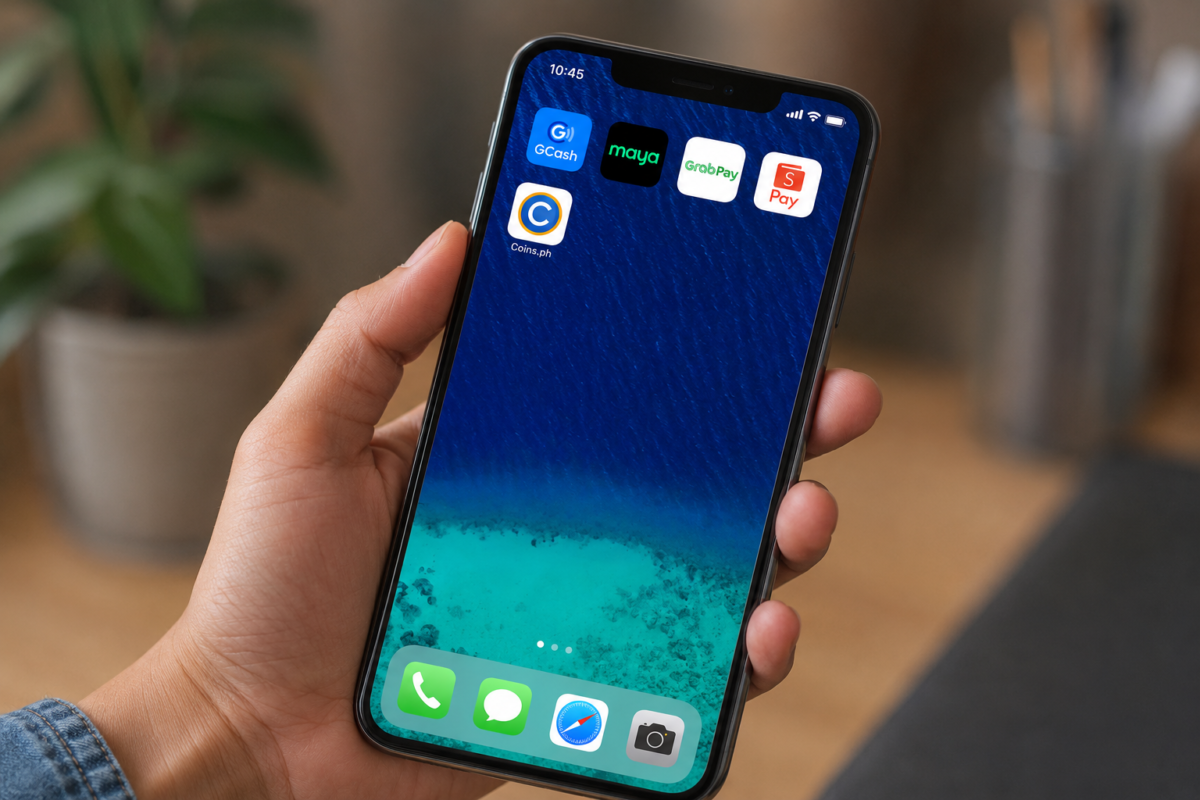
Nearly half, or 46%, of Filipinos surveyed for TransUnion Philippines’ 2026 Credit Perception Index said an e-wallet was their first financial product, according to coverage of the latest index. Only 20% cited a traditional bank account as their starting point.
That may be the more consequential finding behind the continued rise of fintech adoption in the country.
TransUnion Philippines reported that 93% of respondents use at least one fintech product. E-wallet usage stood at 80%, up four percentage points from 2025, while 52% of Filipinos reported using a digital bank.
But having an e-wallet is not necessarily the same thing as becoming fully financially included.
The bigger question is what happens after someone downloads that first financial app.
The financial journey is starting somewhere different
An e-wallet solves a relatively simple but important problem: it gives people a convenient way to receive, store and move money without requiring the traditional experience of visiting a bank branch.
That can make it particularly effective as an entry point.
A person may initially create an account to send money to relatives, receive payments, buy mobile load, pay a bill or make a QR payment. They do not necessarily think of themselves as entering a larger financial ecosystem.
But once the account exists, the possible journey becomes much wider.
An e-wallet user can eventually move from digital payments into savings, insurance, investments and credit, either through products offered within the same ecosystem or through connected financial institutions.
That is where e-wallet adoption can become more significant than another digital-payment statistic.
The Bangko Sentral ng Pilipinas describes transaction accounts as a gateway to broader financial services, including savings, credit, insurance, investments and remittances.
The difference now is that the first transaction account many consumers encounter may have an e-wallet interface rather than a bank logo and branch network behind it.
An e-wallet is still not the same as a savings account
There is an important distinction.
Under BSP rules on electronic money, e-money is maintained in a non-interest-bearing, non-deposit transaction account. E-money itself is not considered a bank deposit.
That means opening and actively using an e-wallet should not automatically be interpreted as the end goal of financial inclusion.
IMAGE CREDIT: GCash
A consumer who primarily uses an e-wallet to receive money and immediately cash it out may technically have gained access to digital finance, but may not yet be building savings, accessing appropriately priced credit or using financial products that help build longer-term resilience.
This creates a different challenge for the financial industry.
The first hurdle used to be getting consumers into the financial system. Increasingly, the challenge may be helping them move deeper into it.
From payments to savings, then credit
TransUnion‘s results suggest that this progression may already be happening.
According to TransUnion’s 2026 findings, knowledge of digital banks rose 15 percentage points to 80%, while favorability increased 14 points to 79%. Both figures surpassed the corresponding scores for traditional banks.
Trust is also becoming less of a dividing line.
Traditional banks remained ahead in perceived safety at 88%, but digital banks were close behind at 84%, an 11-percentage-point improvement from the previous year.
More importantly, future borrowing intent increased most for digital banks, rising 11 percentage points. Intent to borrow from traditional banks increased eight points, while credit cards gained six points.
Borrowing intent from family and friends, meanwhile, declined 11 points to 45%, its lowest level since the index began in 2023.
That could indicate a gradual shift in how consumers think about formal financial services.
Someone whose first interaction with finance was sending ₱500 through an e-wallet may eventually become comfortable keeping savings in a digital bank, applying for formal credit and using other regulated financial products.
For banks and fintech companies, the opportunity is therefore not simply acquiring more users. It is helping users progress from transactions toward healthier and more productive financial relationships.
Access does not automatically produce inclusion
There are reasons to be cautious about assuming that widespread app adoption has solved the financial inclusion problem.
Separate coverage of the TransUnion index reported that the Credit Perception Index score among unbanked Filipinos fell to 65 in 2026, compared with 75 for the general population. General credit knowledge among the unbanked also declined to 48%.
Information remains another barrier.
TransUnion found that one in four respondents had difficulty finding educational materials about credit and financial products. Among them, 60% struggled to determine which information sources they could trust, while 44% said available materials were too complicated or confusing.
Consumers also remain highly sensitive to how financial products are designed.
Transparency was the leading factor respondents said could strengthen trust in financial products at 56%, followed by fair or low interest rates at 53% and security and fraud protection at 52%.
Those findings matter if e-wallets are increasingly becoming the front door to finance.
The experience consumers have after walking through that door will determine whether digital finance becomes a pathway toward savings, responsible credit and financial security or simply another convenient way to spend and transfer money.
The next fintech battle may happen after onboarding
Philippine fintech has spent years solving access.
Smartphones have made payments available far beyond physical bank branches. E-wallets made digital transactions familiar. Digital banks are now pushing savings and lending further into the same mobile environment.
The next phase may be harder.
Financial providers will have to convince consumers not only to open accounts but to keep money in them, build savings, understand credit, avoid inappropriate debt and gradually use products that fit their financial needs.
For an industry accustomed to measuring downloads, registrations and monthly active users, the more meaningful metric may eventually be progression.
How many first-time e-wallet users become savers?
How many develop access to affordable formal credit?
How many begin using insurance or investment products?
And how many remain users of a transaction account without moving any further?
The fact that 46% of Filipinos surveyed now say an e-wallet was their first financial product suggests that fintech has already changed where the financial journey begins.
Whether it changes where that journey ultimately leads will be the more important test.