

Philippine financial services are becoming increasingly digital, but for Palawan Group of Companies, keeping up with fintech is no longer simply about adding technology.
It is about understanding how Filipinos are changing the way they manage money — and what that means for the products, services and experiences they will expect next.
That was the central theme of the Palawan Marketing Summit 2026, a two-day gathering in Pasig City that brought together financial industry leaders, economists, consumer researchers, technology experts and Palawan Group executives under the theme “Build to Scale: Shaping the Future.”
Now in its second year, the summit explored how fintech, digital payments, regulation, economic conditions, consumer behavior and emerging technologies are reshaping the financial services landscape.
More importantly, the discussions looked beyond what is changing to a more difficult question: How can financial institutions turn those changes into better decisions and more relevant services for Filipino consumers?
Digital finance is expanding — but access is only the beginning

Kristine Orlina, Deputy Director of the Bangko Sentral ng Pilipinas‘ Financial Inclusion Office
The first day focused on the broader forces transforming financial services, from digital payments and financial inclusion to regulation and the Philippine economic outlook.
Lito Villanueva, chairman of FinTech Alliance.PH and executive vice president and chief innovation and inclusion officer at RCBC, opened the discussion with an overview of emerging fintech trends, innovation and national priorities.
His presentation was followed by perspectives from the Bangko Sentral ng Pilipinas (BSP), with Atty. Bridget Rose M. Mesina-Romero, director of the BSP’s Payments Policy & Development Department, discussing developments in digital payments.
Kristine D. Orlina, deputy director of the BSP’s Financial Inclusion Office, meanwhile, examined the state of financial inclusion in the Philippines.
Data presented during the summit showed that digital payments accounted for 57.4% of retail payment volume in 2024, reflecting the growing role of digital channels in everyday financial transactions.
But the discussions also underscored that financial inclusion cannot be measured simply by whether Filipinos have access to an account or financial app.
Trust, ease of use, financial literacy and access to products that actually meet consumers’ needs remain critical to bringing more Filipinos into the formal financial system in a meaningful way.
That distinction is becoming increasingly important as traditional financial institutions and fintech companies compete not only to acquire customers, but also to become part of their customers’ longer-term financial lives.
Economic pressures add another layer

Karlo M. Castro, President and CEO of Palawan Group of Companies
The conversation then moved beyond technology to the economic environment shaping both businesses and consumers.
Marco Miguel Javier, strategist and vice president for economics and market research at BPI Global Markets, discussed macroeconomic trends that could influence businesses in 2027.
Patrick Tuohy, global head of sales and marketing at Goldstrom, provided a perspective on the gold market, including the trends and risks affecting the asset.
For Palawan Group President and CEO Karlo M. Castro, these shifts reinforce the need to understand the market while keeping customers at the center of business decisions.
“Building to scale is not simply about growing bigger. It is about building the right capabilities to respond to a changing market and, ultimately, create greater value for the Filipinos we serve. The better we understand our customers and the environment around them, the better positioned we are to build for what comes next.”
That approach reflects a financial industry dealing with several changes at once: consumers are becoming more digital, technology is moving faster, regulations are evolving and economic pressures continue to influence household financial decisions.
Filipino consumers becoming more digital — and more discerning

Participants engage at the Palawan Marketing Summit 2026 as speakers discuss fintech trends, consumer behavior, and the future of financial services.
If the first day focused on the forces changing financial services, the second turned the spotlight on the consumer.
Lance Katigbak of Boston Consulting Group presented findings from the Filipino Consumer Today study, offering insights into how Filipinos are making decisions amid changing economic and social conditions.
Karl Magpayo of Social Weather Stations followed with insights into the usage, attitudes and imagery associated with Palawan’s brands.
Eva Claravall of Kantar then examined financial behaviors through focus group discussions and UAI studies involving pawning and e-wallet customers.
Kantar’s broader consumer research highlighted four ways Filipinos respond to financial pressures: pagtitipid, pagtulong, pagbabalanse and paghahanda—cutting back, helping others, balancing competing needs and preparing for what comes next.
The findings point to a consumer who may be increasingly comfortable with digital financial tools but remains heavily influenced by practical financial realities, family considerations and trust.
That creates a challenge for financial institutions.
A digital product may be convenient, but convenience alone does not guarantee loyalty—or even continued use.
Winning attention is becoming harder
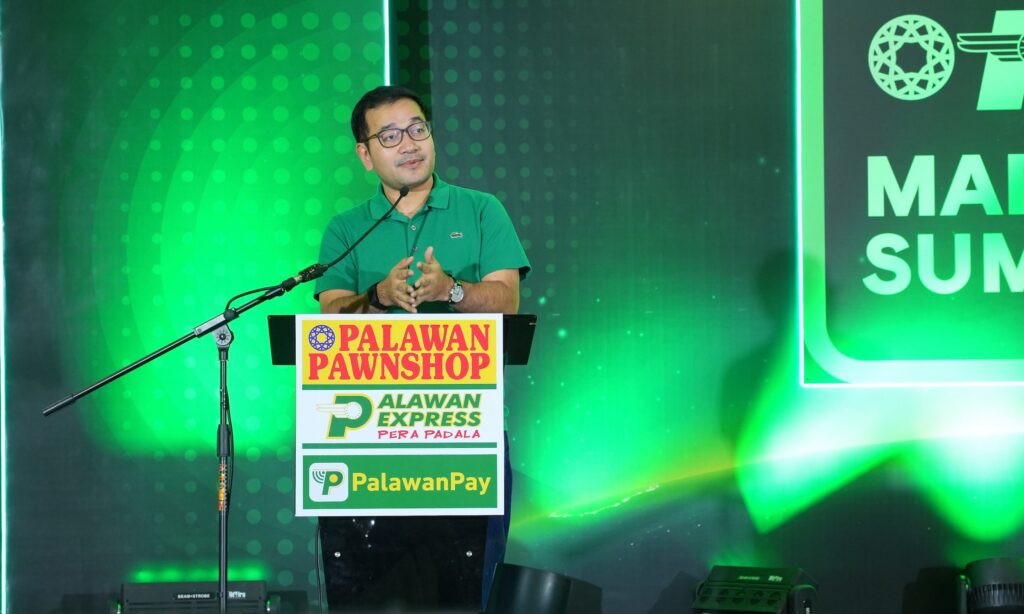
Bernard V. Kaibigan, Chief Marketing Officer of Palawan Group of Companies
The summit also examined how Filipinos discover and interact with brands in an increasingly crowded digital environment.
John Yamsuan, associate director for consumer insights at NielsenIQ Philippines, discussed Filipino media consumption, while Chay Mondejar-Saputil, head of channel partnerships at ByteDance | TikTok Philippines, examined the growing attention economy and how brands can remain relevant as consumers divide their attention across an expanding number of platforms.
The next generation of consumers was also part of the discussion.
Jonathan Yabut, founder and managing director of JY Consultancy & Ventures, explored Gen Z and the use of AI in generational marketing.
Donald Lim, president of the Management Association of the Philippines and chief digital marketing strategist at Mansmith and Fielders, looked at how AI, data and technology are shaping the future customer.
Together, the sessions painted a picture of a Filipino consumer who is becoming more digital and selective, while still making financial decisions through the lens of affordability, trust, family and everyday needs.
For Bernard V. Kaibigan, chief marketing officer of Palawan Group, understanding those changes is critical to remaining relevant.
“The consumer is changing, and we have to change with them. Data and technology help us understand these shifts, but what matters is how we turn those insights into more relevant products, services, and experiences. At the end of the day, it is about making decisions that create real value for our Sukis.”
From fintech adoption to financial relationships
The discussions at the summit point to a broader shift in the financial services industry.
For years, fintech’s biggest promise has been access—making payments, remittances, savings and other services available through smartphones and digital platforms.
The next challenge could be deeper engagement.
Financial institutions need to understand not only how consumers transact, but why they choose particular financial products, what prevents them from using more services and what ultimately earns their trust.
For a company such as Palawan Group, which operates across pawning, remittances, payments and other financial services, that means connecting physical and digital experiences rather than treating them as competing channels.
The company’s “BrickTech” approach reflects this strategy, combining its extensive physical network with digital services through PalawanPay.
The company’s e-wallet arm allows customers to access services such as bill payments, mobile load top-ups, pawn renewals and QR Ph scan-to-pay transactions through an app, while its physical branches and PalawanPay Money Shops continue to provide an important touchpoint for customers.
The result is a financial ecosystem that allows customers to choose how they want to transact—whether through a branch or a smartphone.
Building for what comes next

Palawan Group leaders, summit participants, gather at the 2026 Marketing Summit to learn, collaborate, and build for the future.
The message emerging from the two-day summit was not simply that the financial industry needs to adopt more technology.
It is that technology, data and innovation only matter if they help financial institutions understand consumers better and respond to their changing needs.
For Palawan Group, “Build to Scale” therefore goes beyond expanding the business.
It means building the capabilities to respond to a financial landscape where digital adoption is accelerating, consumers are becoming more discerning and economic and regulatory conditions can shift quickly.
The challenge now is turning those insights into action.
As Filipino consumers move between physical branches, mobile apps, digital payments and an expanding range of financial products, the institutions that understand where consumers are going —not just where they are today — may be best positioned for the next phase of Philippine finance.