Don’t look now but if you thought that your purchases are safe because you’ve been ordering from the same online seller many times over, think again.
In a survey conducted between February to April this year, it was found that almost seven out of 10 — or 68.95 percent — phishing attacks in the Philippines have targeted finance-related transactions. According to cybersecurity firm Kaspersky, which conducted the survey, cases of finance-related phishing attempts during this period were highest in the Philippines compared to its Southeast Asian neighbors.
Phishing is a type of Internet fraud that seeks to acquire a user’s credentials by deception. It includes theft of passwords, credit card numbers, bank account details, and other confidential information.
The portion of finance-related phishing attempts during this same period was 65.90 percent in Indonesia, 55.67 percent in Singapore, 55.63 percent in Thailand, 50.58 percent in Malaysia, and 36.12 in Vietnam.
PH most hit by finance-related phishing attacks
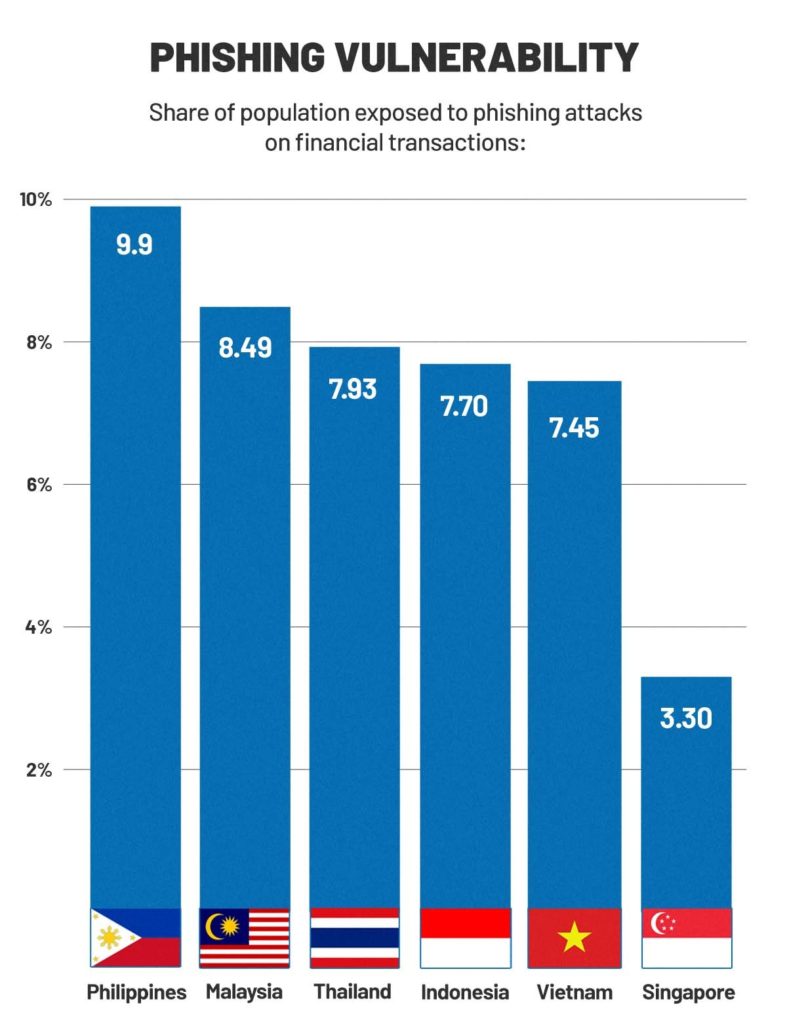
In a separate report released by Kaspersky in the same period last year, it was learned that the Philippines was the most hit by phishing attacks in the region with 9.9% vulnerability followed by Malaysia at 8.49%. Rounding out the list are Thailand at 7.93%, Indonesia at 7.70%, Vietnam at 7.45%, and Singapore at only 3.30%.
“Phishing messages usually take the form of fake notifications from banks, providers, e-pay systems, and other organizations,” Kaspersky explained. “These notifications will try to encourage a recipient, for one reason or another, to urgently enter or update their personal data. Such excuses usually often end up to data loss, system breakdown, etc.”
Rise of finance-related phishing attacks
Kaspersky detected and blocked phishing attacks against three financial categories in the region last year. These categories included banks, e-commerce stores, and payment systems.
Statistics from the same survey showed that in all three categories during the same three-month period, there were one in two —58.50% — phishing attempts against payment systems in the Philippines such as credit cards, debit cards, as well as mobile payment applications, and e-wallets.
The same data from Kaspersky revealed that phishing attempts against banks in the Philippines were only 2.17% — the lowest among Southeast Asian countries — while phishing attempts against e-commerce shops in the country were the second-lowest among the other countries (8.28%).
“The percentages are from anonymized data based on the triggering of the deterministic component in Kaspersky’s Anti-Phishing system on user computers,” the cybersecurity firm said in a statement. “The component detects all pages with phishing content that the user has tried to open by following a link in an e-mail message or on the web, as long as links to these pages are present in the Kaspersky database.”