
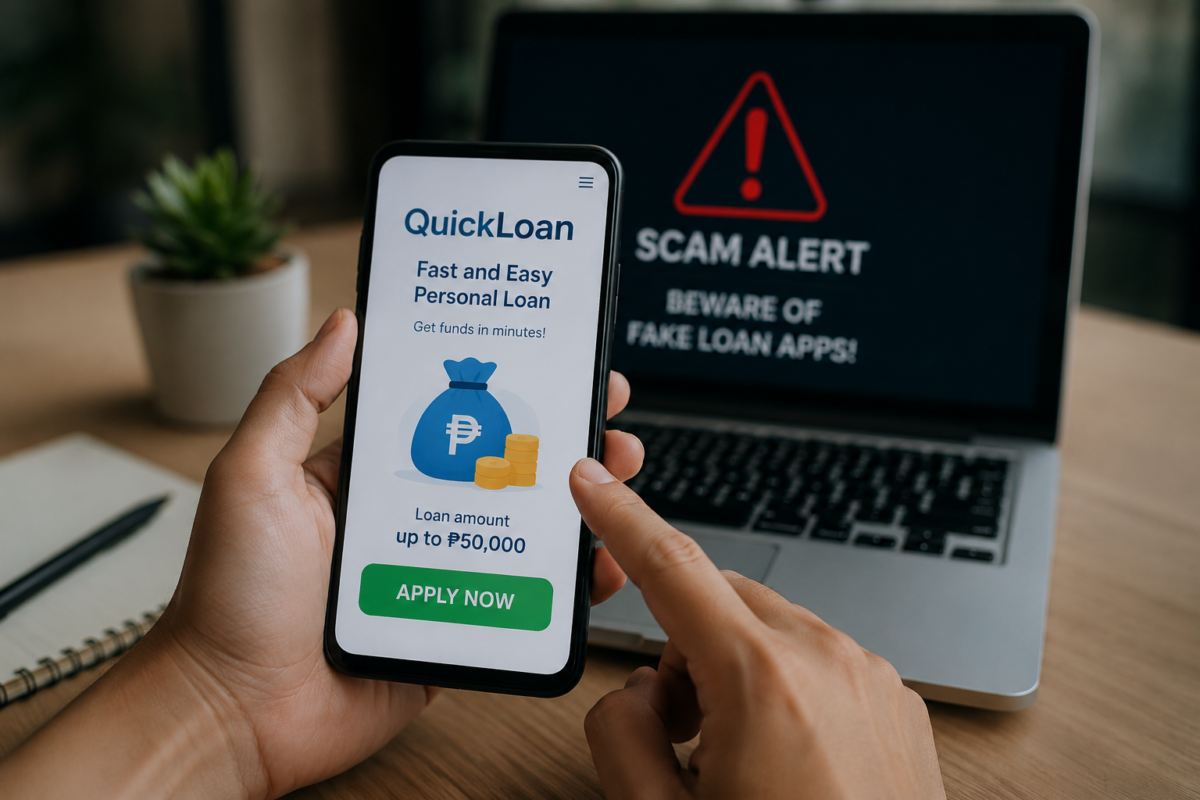
Fake loan apps in the Philippines are becoming harder to identify as scammers increasingly copy the names, logos, and online identities of legitimate lenders.
This poses a growing risk for borrowers, as fraudulent actors replicate established lending companies through mobile applications, websites, and social media pages that appear legitimate at first glance.
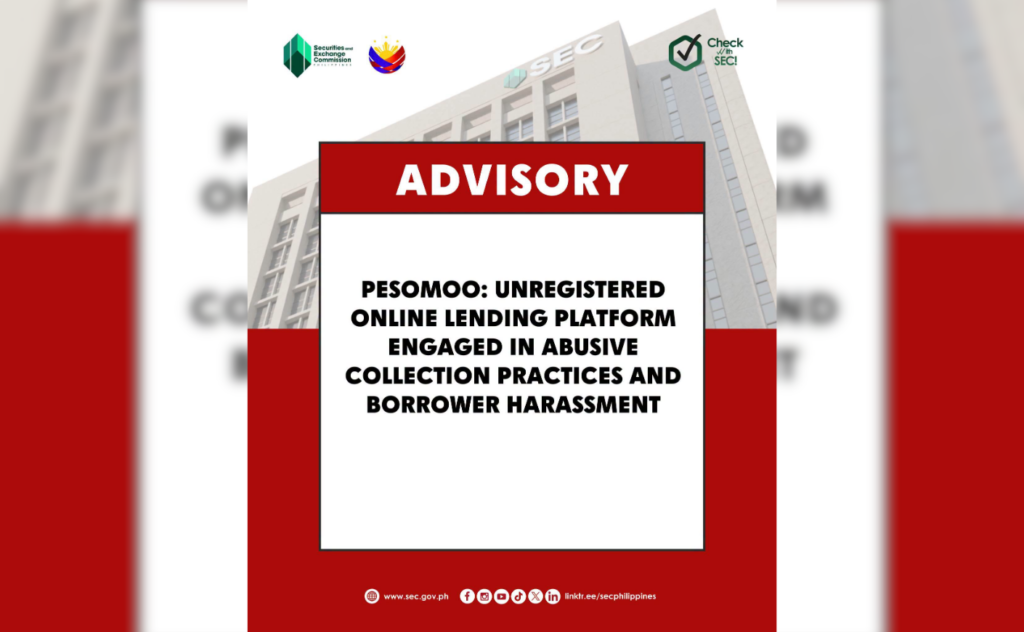
The Securities and Exchange Commission (SEC) issued another public advisory on August 20 warning consumers about unauthorized online lending platforms, mobile applications, and websites. The warning follows a string of advisories involving digital channels allegedly using the identities of legitimate lenders without authorization.
One recent case involved a fraudulent Facebook page impersonating “PondoCash” — a legitimate online lending platform operated by registered lender Empire Peak Lending Investors Inc. The company told the SEC that it did not own, operate, or authorize the Facebook page in question.
For borrowers, this creates a more difficult problem than simply avoiding an unknown lending app.
The name may be real. The company may be registered. The Certificate of Authority may even exist.
But the app, website or Facebook page asking for your information may still have nothing to do with that company.
Check the company behind the loan app
The first step is to find the legal name of the company supposedly providing the loan.
A lending platform’s consumer-facing brand may be different from the corporate name registered with the SEC. An app can therefore be called one thing while the actual lender operating it is registered under another name.
Borrowers should look for information such as the company’s legal name, SEC registration number and Certificate of Authority number.
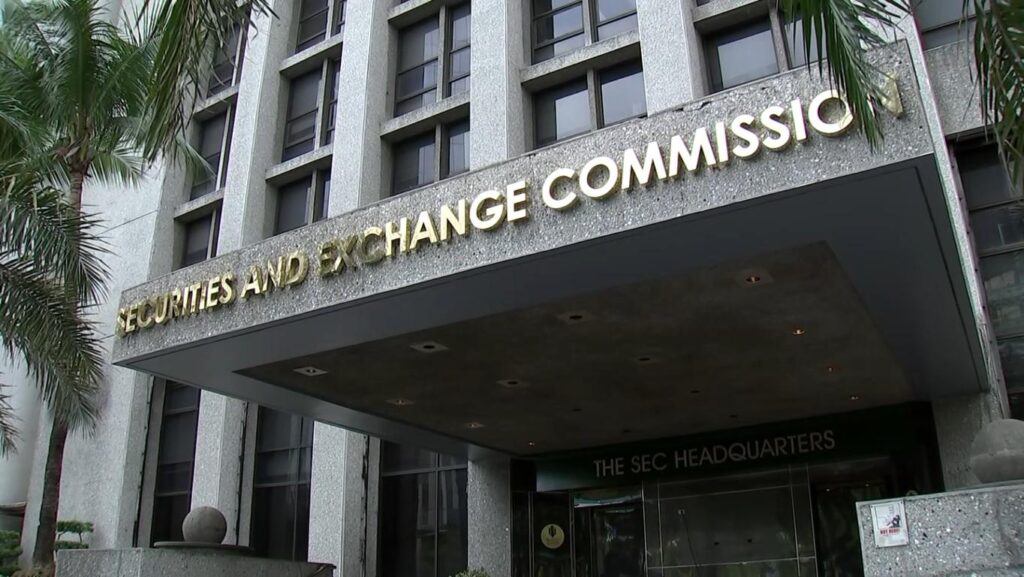
Then verify those details through the SEC rather than relying solely on information displayed inside the app or on its website.
This matters because scammers can copy registration numbers, addresses and other corporate details from legitimate companies. The SEC has previously encountered unauthorized operators misrepresenting themselves as registered lenders and using genuine companies’ identities in advance-fee loan schemes.
Check the loan platform separately
Finding the company in an SEC database is only part of the verification process.
The SEC’s own guidance for borrowers tells consumers to verify the lending or financing company and the online lending platform they are dealing with.
The SEC maintains information on registered lending and financing companies as well as a separate List of Recorded Online Lending Platforms.
In practical terms, a borrower should be able to match three key elements:
- The name of the lending or financing company
- Its authority to operate as a lender
- The specific app, website, or online platform through which it offers loans
If a legitimate lender appears in SEC records but the app using its name does not match the lender’s official platform, do not assume the app is genuine.
Do not trust a Facebook page just because the branding looks right
A cloned social media page can reproduce a company’s logo, promotional graphics, loan offers, and even contact information.
Instead of applying through a link found in an advertisement, message, or unfamiliar Facebook page, borrowers should search for the lender’s official website independently and use the links provided there.
Compare the phone numbers, email addresses, website domains, and social media accounts with those published through the lender’s verified channels.
On Facebook, borrowers can also review a page’s transparency information. A recently created page, repeated name changes, or an account whose history does not match the lender it claims to represent should warrant additional scrutiny.
The important question is not just whether a page looks like the lender. It is whether the lender itself identifies that page as one of its official channels.
An advance fee is a major warning sign
One of the clearest red flags comes when a supposed lender asks a borrower to send money before releasing a loan.
The payment may be described as a processing fee, insurance payment, verification fee, security deposit or account activation charge.
The SEC’s borrower advisory specifically warns against advance-fee loan scams and states that lending or financing companies should not demand an advance payment before releasing the borrowed money.
A borrower should be particularly cautious when the payment is being requested through a personal e-wallet or bank account belonging to an individual rather than through the lender’s established payment channels.
Look at what the app wants to access
App permissions can provide another warning.
Loan applications legitimately need personal information to verify borrowers and assess applications. That does not mean every request for access to a phone is reasonable.
The National Privacy Commission (NPC) says application permissions should be suitable, necessary, and not excessive for their stated purpose. Camera or photo access, for example, may be used for know-your-customer verification, but access should no longer continue once the purpose has been fulfilled.
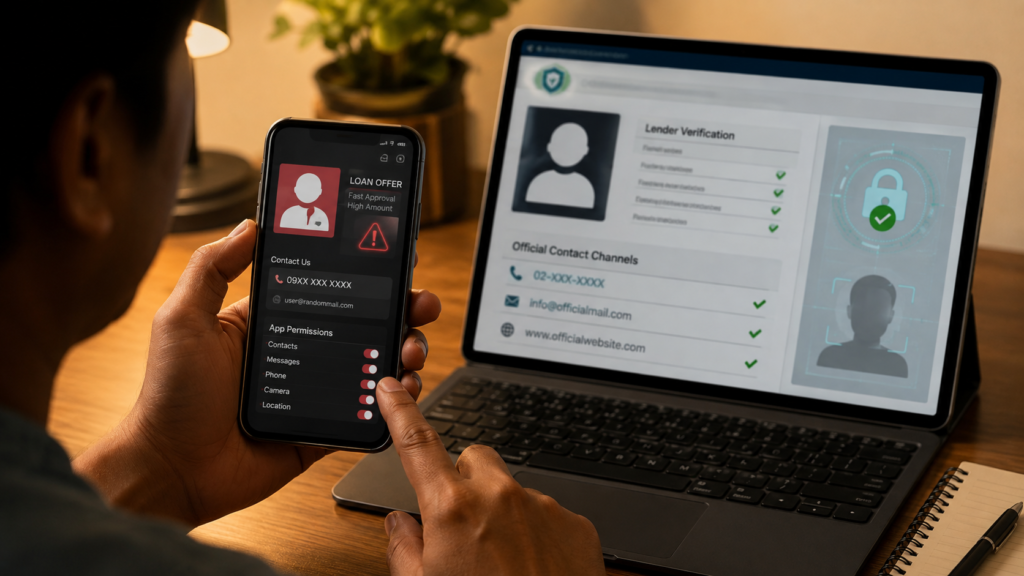
The NPC has also prohibited online lenders from harvesting borrowers’ phone and social-media contact lists for harassment and debt collection.
An app demanding broad access to contacts, files, photos, location data, or other information unrelated to the loan process deserves closer scrutiny, particularly if users cannot proceed without granting those permissions.
Before sending an ID, verify first
The risk from a fake loan app is not limited to losing an advance fee.
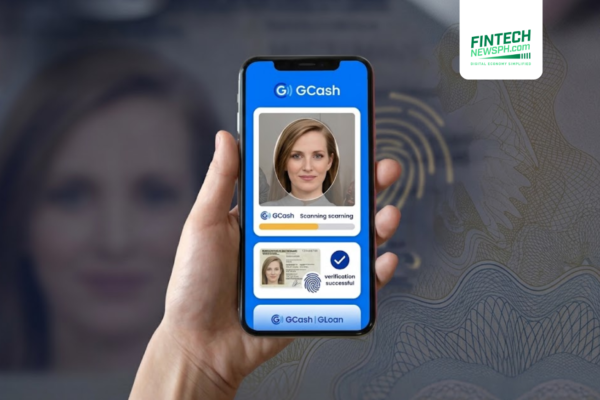
A borrower may provide a government ID, selfie, address, phone number, employment information, bank or e-wallet details, and other data before discovering that the platform was fraudulent.
That information can potentially be used for phishing, impersonation, unauthorized transactions, or other scams.
This is why verification should happen before uploading identification documents, granting phone permissions, or transferring money.
A familiar logo is no longer enough.
Before borrowing online, Filipinos should verify both sides of the transaction: Is the company legally authorized to lend, and is this exact app, website, or social media account really operated by that company?
As identity cloning becomes more convincing, that second question may be the one that prevents a legitimate lender’s name from giving a scammer undeserved credibility.