
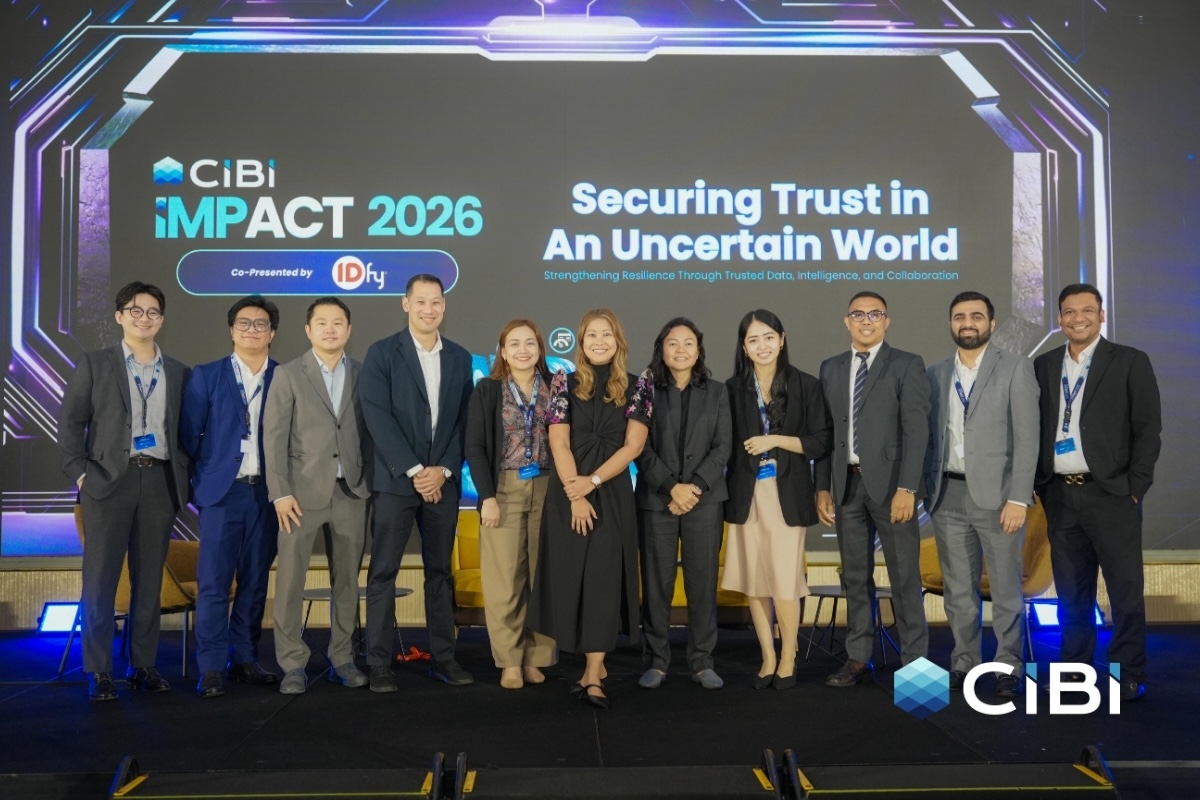
Trusted data is becoming critical for Philippine businesses as leaders navigate economic uncertainty, rapid technological change, and increasingly complex operating environments, according to discussions at the CIBI Impact 2026 forum.
Philippine businesses have access to more information than ever before. From financial and customer data to operational records and digital intelligence, organizations can collect and process information at a scale that was difficult to imagine years ago.
But having more data does not automatically result in better decisions.
As businesses face shifting economic conditions, geopolitical risks, technological disruption, and increasingly interconnected operations, the bigger challenge is determining which information is credible, understanding it in context, and using it responsibly.
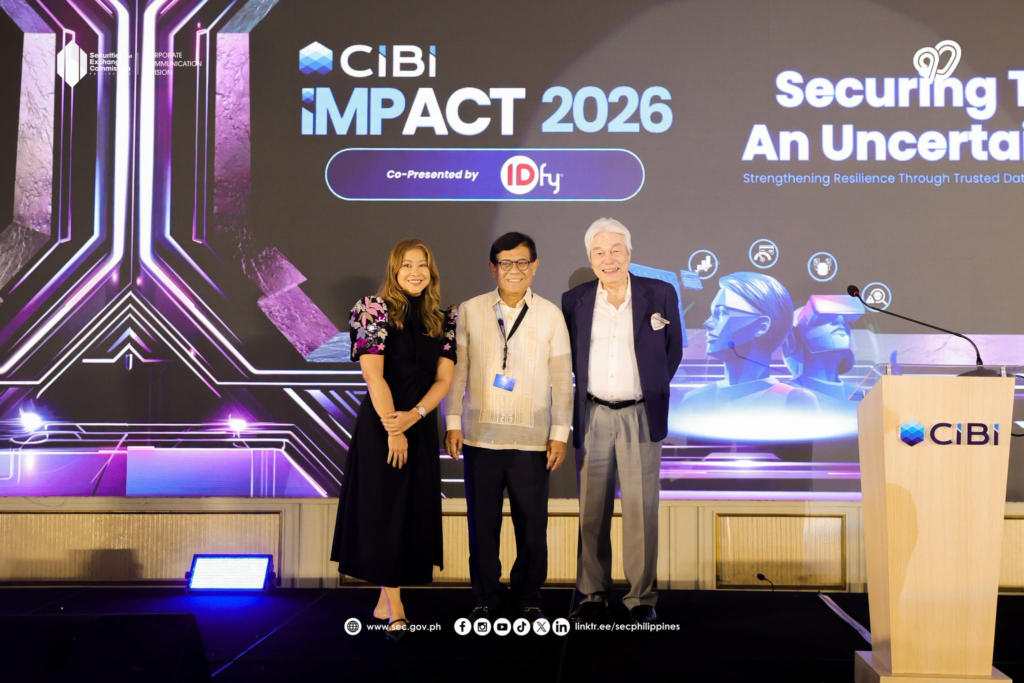
This was among the key themes discussed during CIBI Impact 2026, CIBI Information Inc.’s flagship thought leadership forum, which brought together leaders from the public and private sectors to examine the changing nature of business resilience and decision-making.
Established in 1982 under the Central Bank of the Philippines, CIBI serves as the country’s pioneering credit reporting agency and acts as a credit intelligence partner to over 500 organizations.
More data does not always mean better decisions
For business leaders, information is only useful when it provides a sufficiently complete picture of the situation they are trying to understand.
Companies may have access to data from multiple departments, platforms, partners, customers, and external sources. Yet fragmented information can make it difficult to identify connections between risks and opportunities.

Pia Arellano, President and CEO of CIBI Information Inc., said organizations should focus less on the volume of information and more on its quality and context.
“Simply having more data isn’t the answer. What matters is having the right data, with enough depth, breadth, and context to see the whole picture. Because when the picture is incomplete, then the decision will also be incomplete,” Arellano said.
The issue can affect a wide range of business decisions, including investments, partnerships, employee hiring, risk assessment, and the deployment of artificial intelligence.
A decision based on incomplete information can create consequences that extend beyond a single department.
Financial risks can affect operations, operational decisions can influence customer experiences, and choices involving technology can create reputational or compliance concerns as risk, customer experience, operations, and commercial priorities become increasingly interconnected.
Trusted data matters as uncertainty increases
The need for reliable information becomes even more important when businesses are operating in unpredictable conditions.
Economic pressures, geopolitical shifts, technological changes, and recurring disruptions can force companies to make decisions without having access to perfect information.
In these situations, resilience is not simply about having contingency plans. It also depends on an organization’s ability to determine what is known, recognize what remains uncertain, and make accountable decisions using the best available information.
Former Trade Secretary and Bangko Sentral ng Pilipinas Monetary Board Member Peter Favila emphasized the importance of adaptability.
“Resilience is not simply the ability to survive disruption; it is the ability to adapt, make sound decisions, and continue moving forward despite uncertainty,” Favila said.
This puts trusted data closer to the center of business resilience. When leaders can rely on credible information, they are better positioned to assess risks, identify opportunities, and respond when circumstances change.
AI raises the stakes for business decisions
The growing adoption of artificial intelligence is adding another layer to the challenge.
AI systems can process massive amounts of information, identify patterns, generate insights, and automate certain decisions. These capabilities can help organizations operate more efficiently, but they can also magnify the consequences of poor-quality information.

If an AI system receives incomplete, inaccurate, or misleading data, faster processing does not necessarily produce a better outcome. Decisions made faster on incomplete or unreliable information can simply allow organizations to make mistakes more quickly.
Rene Buenaventura, President of Pin An Holdings Corporation and Cliveden Management Corporation, said businesses must ensure that technological speed is accompanied by responsible oversight.
“Technology without sound judgment can amplify our mistakes just as easily as it can amplify our capabilities,” Buenaventura said. “Speed must be accompanied by accountability, automation must be accompanied by oversight, and intelligence must be accompanied by judgment.”
The point is particularly relevant as companies increasingly integrate AI into customer service, financial analysis, fraud detection, recruitment, marketing, and other business functions.
AI can help organizations process information faster, but the responsibility for decisions remains with people.
Human judgment remains essential
The growing role of technology does not eliminate the need for human judgment. Instead, it can make sound judgment even more important.

Francis Estrada, Chairman of CIBI, highlighted the distinction between what technology can process and what business leaders ultimately have to decide. “Algorithms process data, but people exercise judgment. Systems can flag risk, but leaders must decide how to respond,” Estrada said.
This distinction matters because data does not exist in isolation. Numbers and records require context, while automated systems operate according to the information and parameters provided to them.
A business may have a sophisticated analytics platform, for example, but leaders still need to determine whether the information being analyzed is reliable and relevant to the decision at hand.
This means companies need both technological capabilities and processes that establish accountability for how information is collected, interpreted, and used.
Trust becomes part of business infrastructure
The discussions at CIBI Impact 2026 point to a broader shift in how companies should think about information.
Data is often treated as an asset that supports technology and analytics. But as more business processes become digital and automated, trusted information increasingly functions as infrastructure for decision-making itself.
Businesses depend on information when deciding where to invest, which partners to work with, how to assess customers, how to manage risks, and how to respond to market changes.
Estrada described trust as an important component of the broader economic system. “Trust is not a soft concept. It is a fundamental piece of economic infrastructure,” he said.
For Philippine businesses, this means building systems that do more than collect information. Organizations also need mechanisms for verifying information, connecting data from different sources, and understanding the context behind it.
The challenge is turning information into action
The growing availability of data presents an opportunity for businesses, but it also creates a new responsibility.
Organizations need to determine what information deserves to be trusted and how that information should influence decisions. This becomes increasingly important as companies adopt AI and automation that can turn information into action at unprecedented speed.
The goal, therefore, is not necessarily to accumulate the largest amount of data.
Instead, businesses need to develop the ability to distinguish credible information from unreliable information, understand the broader picture, and combine technology with human judgment.
For companies navigating uncertainty, these capabilities could become a competitive advantage.
The businesses best prepared for an unpredictable environment may not be those with the most data or the fastest technology. They may be those with the strongest foundations for trusted data, responsible decision-making, and accountable action.