Filipino travelers can now receive eligible overseas tax refunds directly into their GCash wallets, extending the Philippine e-wallet’s role beyond domestic payments and remittances into another part of the cross-border financial system.
GCash has rolled out its Digital Tax Refund feature, allowing qualified users to receive refunds from purchases made in 16 countries directly in Philippine pesos. The service is powered by Alipay+ and tax refund operator Global Blue.
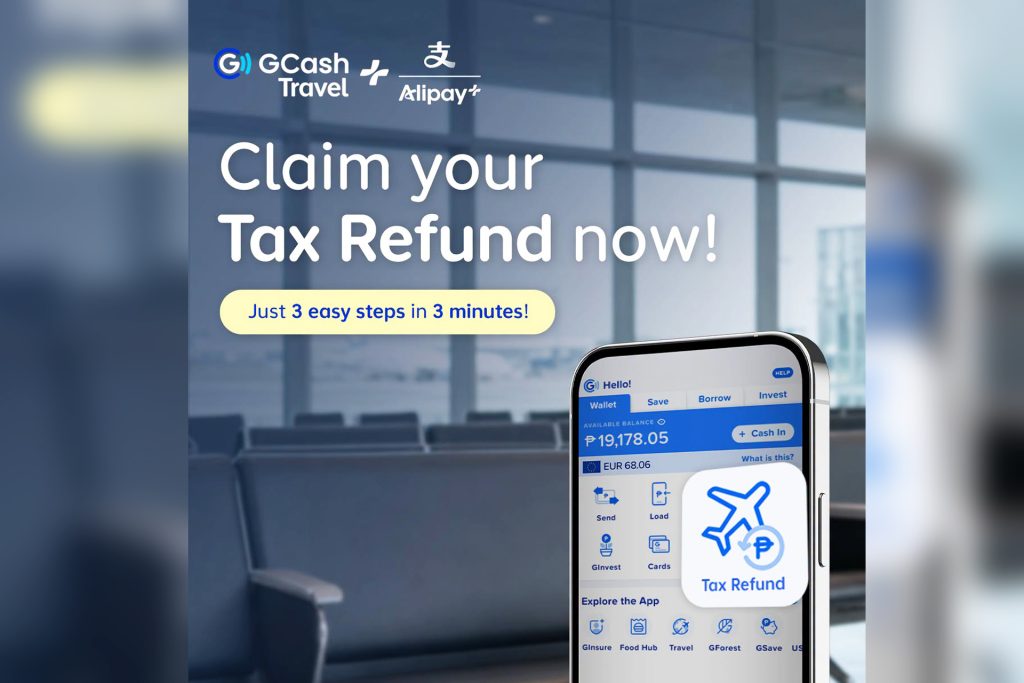
The feature is initially available in Italy, Germany, the Netherlands, Argentina, Austria, Denmark, Estonia, Finland, France, Greece, Saudi Arabia, Latvia, Norway, Portugal, Sweden and Switzerland, with GCash saying more markets are expected to follow.
For consumers, the immediate appeal is convenience. But the rollout also shows how Philippine e-wallets are increasingly being connected to financial transactions that begin outside the country.
How does an overseas tax refund end up in GCash?
Travelers eligible for a value-added tax or goods and services tax refund still have to follow the tax refund rules of the country they are visiting.
According to the GCash Help Center, travelers first submit their tax-free form and supporting documents for customs validation at the airport. These can include their passport, flight ticket, shopping receipt and unused purchased goods.
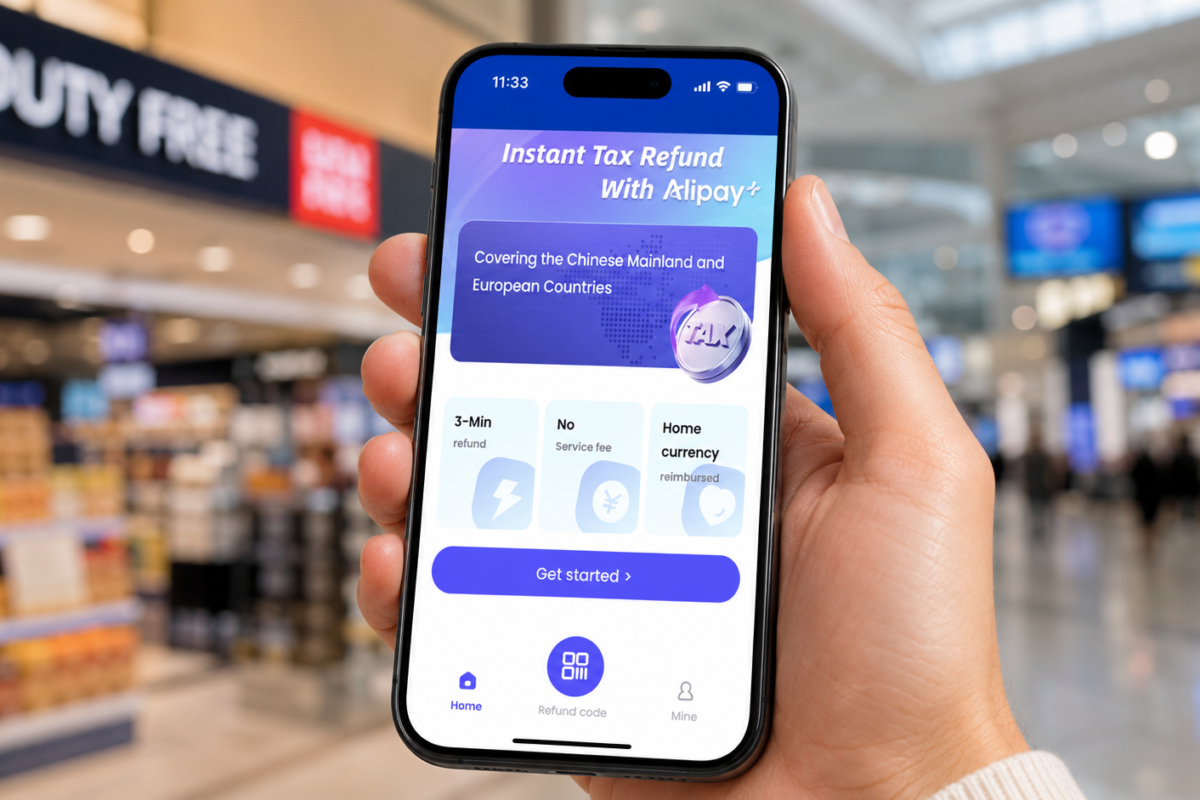
Once the refund is approved, the traveler opens the Tax Refund feature inside GCash and generates a personal QR code. The airport tax refund counter scans that code, after which the refund can be credited directly to the user’s wallet in Philippine pesos.
Behind that relatively simple QR transaction is a wider cross-border payment chain.
Alipay+’s technical documentation explains that its tax refund product uses an Original Credit Transaction, which can be initiated by the tax refund service provider or its acquiring partner to credit money directly to the balance of a participating Alipay+ wallet.
In GCash’s case, Global Blue handles the tax refund side while Alipay+ provides the infrastructure that connects the overseas refund process to the GCash wallet.
That effectively allows money originating from a foreign tax refund system to be settled into an account that a Filipino traveler already uses at home.
Refunds arrive directly in Philippine pesos
GCash says approved refunds are converted into Philippine pesos and credited to the wallet immediately after processing, with users also receiving a transaction notification.
The GCash Help Center states that there is no extra fee charged for receiving the refund through the feature. However, that does not necessarily mean travelers will receive the full tax amount originally charged on their purchase.
GCash notes that the refund counter handles the final refund amount and exchange rate. Tax refund operators may also have their own deductions or processing rules before the money reaches the wallet.
The service is also subject to normal GCash wallet and transaction limits. Users who have already reached their applicable limits may have to choose another refund method, such as a credit card or bank transfer.
GCash is becoming more than a domestic wallet
Tax refunds may appear to be a relatively narrow travel feature, but they fit into a broader shift in how Philippine e-wallets are being used.
Digital wallets were initially built largely around local cash transfers, bills payments and merchant transactions. Their networks are increasingly being extended overseas through QR payments, remittances and integrations with international payment platforms.
A tax refund adds another direction to that money flow.
Instead of a Filipino user sending money overseas or an overseas Filipino sending money home, a foreign financial transaction can now terminate directly in a Philippine peso wallet.
For GCash, that makes the wallet more useful across the full lifecycle of an international trip. The same account can increasingly be used to pay merchants abroad, manage travel-related transactions and now receive money generated from eligible foreign purchases.
For the wider payments industry, it is another example of how the boundary between a local e-wallet and a cross-border financial account is becoming less distinct.
The bigger question may no longer be whether Filipinos can use their domestic wallets outside the Philippines, but how many financial transactions traditionally handled by banks, cards and cash can eventually move into those wallets as well.