

Asialink MSME lending continued its upward trajectory in the first half of 2026, pushing the financing group’s assets under management (AUM) to a record ₱50.2 billion as demand for business credit expands among Filipino entrepreneurs.
According to figures released by the company and verified as of end-June 2026, Asialink Group of Companies’ AUM increased 20% from ₱41.873 billion during the same period in 2025.
Micro, small, and medium enterprises accounted for 60% of the recorded portfolio, representing more than 165,000 active MSME clients with an average loan ticket size of ₱450,000.
The remaining 40% comprised retail borrowers accessing various personal and vehicle loan products.
The growth points to a wider shift in Philippine business financing, with non-bank lenders providing essential liquidity to entrepreneurs who might otherwise struggle to qualify for conventional bank loans.
MSMEs and retail borrowers drive expansion

Asialink operates primarily through its flagship financing businesses: Asialink Finance Corporation, Global Dominion Financing Inc., and South Asialink Finance Corporation.
Its core offerings include MSME business financing, collateral-backed loans, and vehicle financing, providing unbanked and underbanked borrowers access to credit outside traditional banking channels.
Despite the swift growth of its credit portfolio, Asialink maintained healthy asset quality, reporting a steady non-performing loan (NPL) ratio of 2% as of end-June 2026.
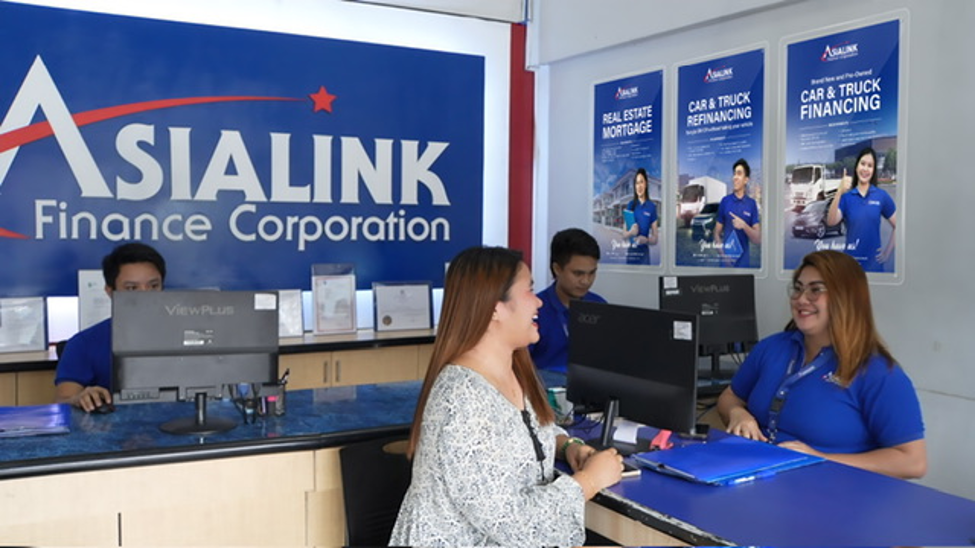
IMAGE CREDIT: Asialink
“We congratulate all our hard-working staff and set of leaders for working together to reach this milestone for the Group despite the macroeconomic environment,” said Robert B. Jordan, Jr., Group CEO of the Asialink Group of Companies. “With this new achievement, we are even more determined to contribute to sustainable economic development and nation-building.”
Major international institutions back expansion
To support its long-term network expansion and meet increasing credit demand, the homegrown conglomerate has secured substantial credit facilities from global financial partners.
These include a US$135 million (₱7.6 billion) facility from the International Finance Corporation (IFC) focused on advancing local MSME financing, alongside a US$165 million (₱9.6 billion) facility from the Asian Development Bank (ADB) to expand credit access across underserved business segments.
Additionally, the group secured a US$75 million (₱4.4 billion) facility from Standard Chartered Bank dedicated to strengthening its overall lending capacity, as well as a ₱500 million sustainability-linked social credit facility from Cathay United Bank reported in May 2026, earmarked specifically for rural MSMEs and women-owned enterprises.
The active backing of international development institutions underscores how non-bank channels are becoming vital conduits for deploying institutional capital directly into the local real economy.
Expanding choices in non-bank credit lending
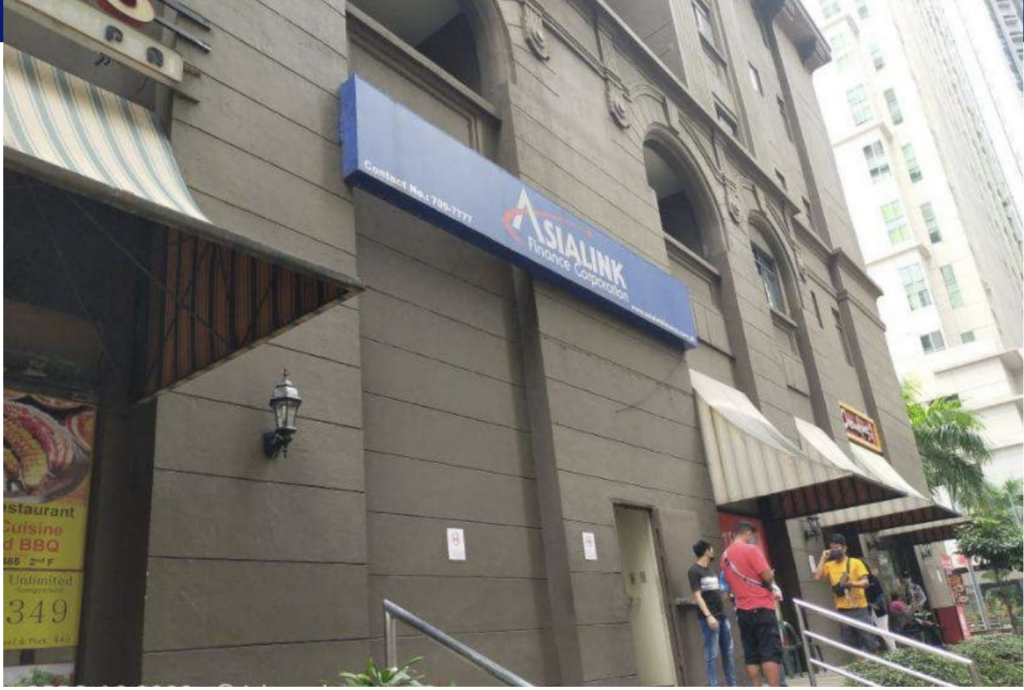
IMAGE CREDIT: Asialink
While expanded access provides critical support to growing businesses, borrowing costs, collateral requirements, and repayment structures continue to vary across financial products.
MSME owners are encouraged to weigh overall financing terms against expected business returns when taking on new debt.
What is changing, however, is the broader accessibility of credit.
As Asialink passes the ₱50 billion mark, Philippine MSME financing is increasingly moving beyond traditional bank branch networks, offering entrepreneurs flexible routes to fund inventory, equipment, vehicles, and enterprise growth.