
by Manith Parikh, Founder and CEO, The Binary Holdings
Disclaimer: This article is a contributed piece submitted by Manit Parikh. The views and opinions expressed are those of the author and do not necessarily reflect those of FintechNewsPH.
Southeast Asians are among the most digitally active populations in the world. Filipinos spend an average of 54 hours a week on connected media, nearly eight hours a day, in a market where 98.6 percent of the population owns a smartphone (Digital 2026, We Are Social and Meltwater).
Yet across the deployments and markets we study, the average digital wallet session runs about 2.3 minutes. Users open the app to pay, top up, or send money. The task completes. They leave.
By the standard of interface design, that is success. Wallets were engineered to finish transactions fast, and they do. By the standard of business economics, it is a ceiling, and it is starting to bind.
Industry projections, including from Bain & Company and the e-Conomy SEA series, point to substantial growth in Southeast Asia’s digital financial services through 2030. Very little of that growth will come from payment fees, which are thin and compressing.
It will come from lending, insurance, commerce, and advertising: businesses that depend on knowing users beyond their transactions and reaching them between transactions. A 2.3-minute session produces neither the data nor the surface area.
What the two-minute session costs
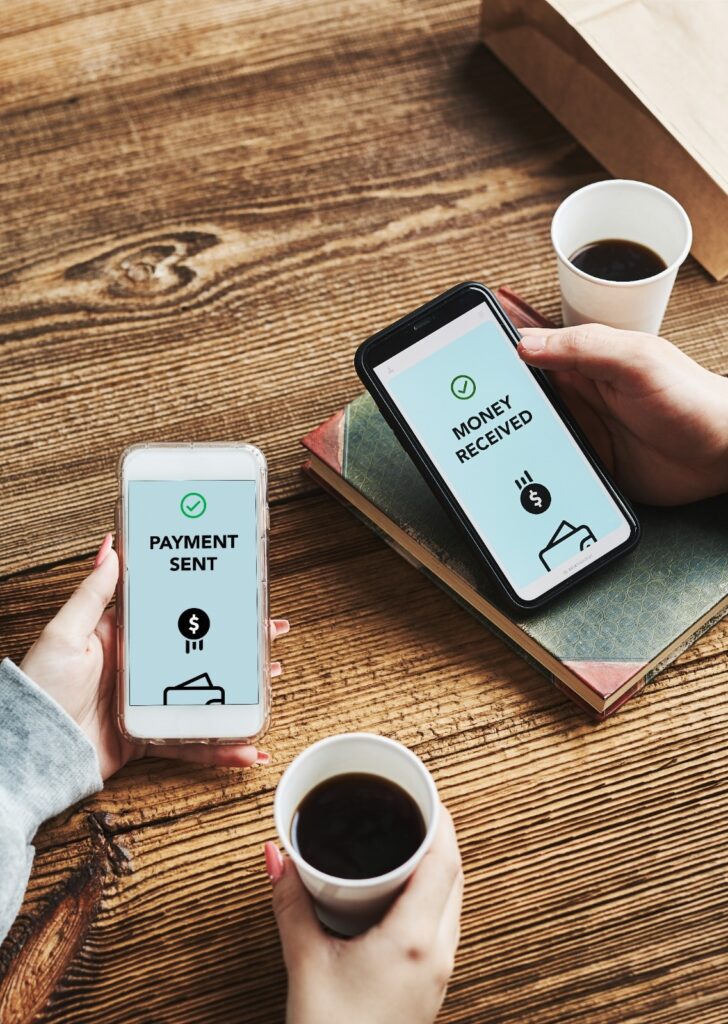
A transaction log tells you what a user paid. It cannot tell you what they will want next.
Credit underwriting, product recommendations, and merchant offers all depend on behavioral signals that a pay-and-exit pattern never generates. Wallet operators sitting on tens of millions of registered users often know remarkably little about them.
Discovery suffers for the same reason. Operators have spent years adding investment products, insurance, and pay-later options that sit in menus most users never open, because users are gone the moment the payment clears. This is usually diagnosed as a product problem. It is a distribution problem: there is no moment in the session when the user is available to be introduced to anything.
The strategic risk compounds quietly. A wallet that remains a pure utility gets treated like one. The platforms that own daily attention become the interface, and the wallet becomes a settlement pipe underneath someone else’s customer relationship.
The rails that are missing
The reflex response has been front-end features: cashback tiers, stickers, a mini-game in a tab. Most of it underdelivers for one reason: bolted-on features ask users to build a new habit, and new habits are the most expensive thing in consumer technology.
What works looks less like paint and more like plumbing. Three capabilities matter.
First, engagement embedded where users already are. Content, casual games, and local merchant vouchers layered into the screens of the existing app, under the operator’s own brand; no new download, no new behavior, no disruption to the core payment flow.
Second, a closed value loop. Activity earns points funded by merchants and advertisers rather than by the user’s cash, redeemable for airtime, data, groceries, and everyday goods. For prepaid, lower-income users, this converts time into purchasing power. In markets where a family outing can consume a meaningful share of monthly income, that changes what a wallet is for.
Third, settlement at micro scale. Every content view, game session, and voucher claim is a small transaction that has to clear. Across hundreds of millions of users, that is an infrastructure problem, not a feature problem.
Our own network at The Binary Holdings settles around 1.8 billion of these micro-transactions a month across Indonesia, Vietnam, the Philippines, Bangladesh, Sri Lanka, Nigeria and Ethiopia. The revenue matters, but the real signal is in throughput — the transactions per second we sustain and the infrastructure load-bearing capacity underneath it.
That scale is what makes our blockchain distinct: an ability to clear micro-transactions at a volume and velocity others cannot match.
The same closed loop extends across markets from Asia to Africa, resulting in millions of micro-transactions and settlements sent instantly against a unique identifier. The cross-border figure specifically shows that users can send small amounts of value (sometimes only a few dollars) directly to another person using a phone number.
These transfers may be too small to process economically through conventional cross-border payment channels, but purpose-built infrastructure can make them viable.
Engagement is the inclusion mechanism

GSMA counts 3.1 billion people, 38 percent of the world’s population, who live within mobile internet coverage but do not use it. That is not a coverage gap. It is a usage gap, and at its core an incentive gap.
In most markets, opening an account is no longer the hard part. Telcos have already verified the identity of every SIM they sell, so basic wallet accounts can be opened in minutes. But an open account alone does not mean financial inclusion. If the account is registered but rarely used, it offers little practical benefit.
Real inclusion begins when people have a clear reason to use the wallet regularly. Rewards and other earning opportunities can provide that reason while, with the right consent and safeguards, creating a record of activity that may help users access credit and other financial services over time.
The allocation question
The question for fintech and mobile wallet operators is where the next dollar of investment goes: another front-end feature, or the rails underneath. Features are replicated by competitors within weeks. Engagement infrastructure compounds, because behavioral data accumulates and optimization improves with scale.
There is also a build-versus-partner decision. Running content operations, game distribution, merchant voucher supply, and the optimization layer that ties them together sits far from a payment company’s core competency, and funding it internally competes directly with the core roadmap. This is why the models gaining traction are embedded and revenue-based rather than capex heavy.
One discipline matters above all: the goal is not to become a superapp. Breadth without an anchor produces a cluttered directory. Start with one high-frequency behavior users already have, attach real value to it, and let that earn the right to expand.
The first decade of digital wallets was about winning the payment digitisation race at the moment of each transaction. The next will be decided in the minutes around it. The wallets that grow into platforms will be the ones people open when there is nothing to pay.
—
About The Binary Holdings
The Binary Holdings builds the infrastructure layer for emerging markets, helping telecommunications operators and financial institutions turn everyday customer interactions into measurable value.
Its vertical AI infrastructure sits between foundation models and the applications used by hundreds of millions of people, transforming transaction and behavioral data into actionable intelligence that can improve customer engagement, retention, and average revenue per user (ARPU).
The company’s technology embeds directly into national-scale operator applications, requiring no new downloads, accounts, or subscriptions. Through BinaryOS, Binary Network, BNII·ARIA, and Atlas, The Binary Holdings creates a closed intelligence loop that captures, verifies, reasons over, and turns behavioral signals into decisions operators can act on.
By working with the organizations that already connect millions of people across underserved markets, The Binary Holdings is building a consented, national-scale intelligence layer designed to become more valuable with every partner, deployment, and market added.