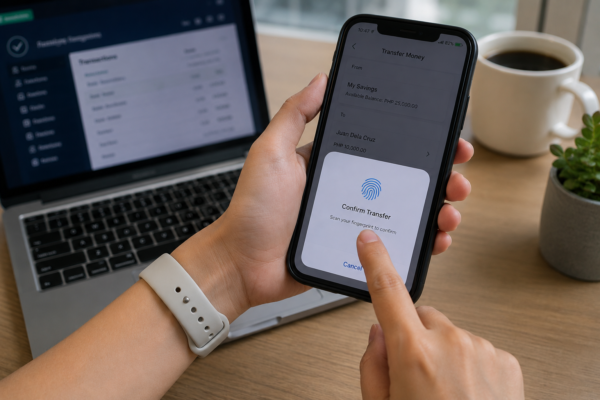


For many Filipinos, paying monthly bills is still a routine that depends on reminders, calendar alerts, or simply remembering the due date. Miss one payment, and it could mean late fees, service interruptions, or unnecessary stress.
That may gradually change with the introduction of Direct Debit PH, the country’s new interoperable direct debit facility launched by the Bangko Sentral ng Pilipinas (BSP) and the Philippine Payments Management Inc. (PPMI) on July 29, 2026.
Rather than reminding consumers to pay their bills every month, the new system allows them to authorize recurring payments directly from their bank accounts—while keeping control over when and how much can be collected.
What is Direct Debit PH?
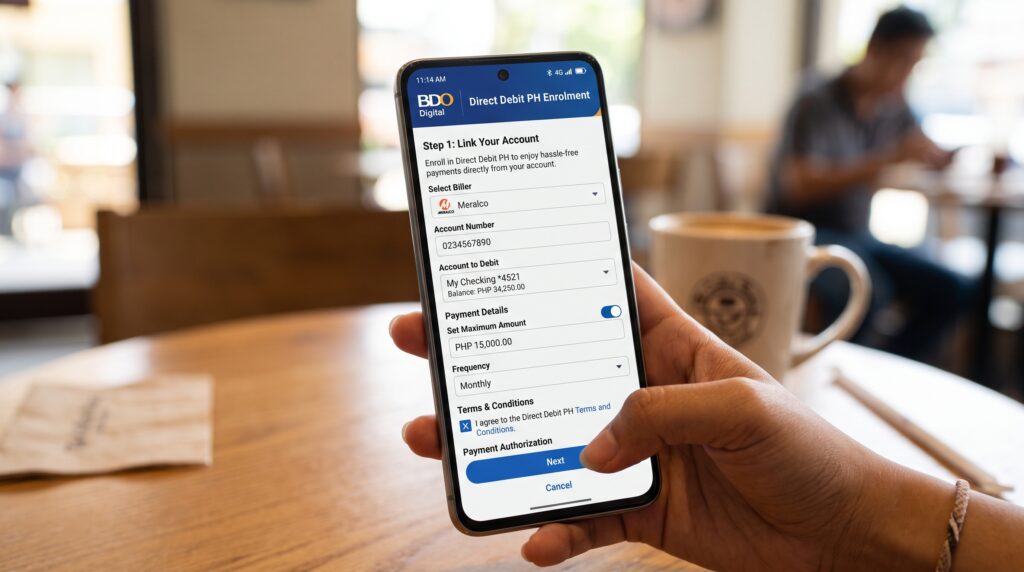
IMAGE CREDIT: freepik.com
Direct Debit PH is a standardized payment service that enables consumers to authorize participating companies to automatically collect payments from their bank accounts on agreed schedules.
Instead of logging into online banking every month to settle electricity, water, insurance premiums, tuition fees, or subscription services, customers simply provide a one-time authorization, known as a mandate.
Once approved, payments are automatically debited whenever they become due.
Unlike many existing auto-debit arrangements linked to credit cards, the authorization is managed through the customer’s bank rather than the merchant. This gives consumers greater visibility into active mandates and allows them to revoke or modify them through their participating financial institution.
How does it work?
The process is straightforward.
A customer agrees to let a participating organization collect recurring payments from a designated bank account. During enrollment, the customer sets the payment conditions, including:
- the account to be debited;
- the validity period of the authorization;
- the maximum amount that may be collected; and
- other payment conditions agreed upon by both parties.
For example, a homeowner paying monthly dues, a customer settling insurance premiums with companies such as Sun Life, Manulife, or AXA Philippines, or a parent paying recurring tuition fees could authorize automatic payments without needing to manually initiate every transaction.
Similarly, recurring utility payments for companies such as Meralco, Maynilad, or Manila Water may eventually become candidates for Direct Debit PH as more billers join the network. However, consumers should first verify whether their service providers already support Direct Debit PH before enrolling.onsumers should verify whether their service providers already support Direct Debit PH before enrolling.)
Which financial institutions support Direct Debit PH?

IMAGE CREDIT: freepik.com
The system was first piloted in early 2026 by four universal banks:
- BDO Unibank
- Bank of the Philippine Islands (BPI)
- China Banking Corporation (China Bank)
- Rizal Commercial Banking Corporation (RCBC)
At its public launch, participating institutions expanded to include:
- AllBank
- Bank of the Philippine Islands (BPI)
- China Banking Corporation
- GoTyme Bank
- GCash operator G-Xchange Inc.
- MariBank Philippines
- ShopeePay Philippines
- Union Bank of the Philippines
The mix of traditional banks, digital banks, and electronic wallet providers reflects the BSP’s push toward interoperability, allowing customers to transact across different financial institutions instead of remaining within closed payment ecosystems.
What are the advantages?
For consumers with predictable monthly expenses, Direct Debit PH offers several practical benefits.
Fewer missed payments — Once a mandate is established, recurring bills can be paid automatically on schedule, reducing the risk of forgetting payment deadlines.
More control than traditional auto-debit — Unlike many credit card auto-debit arrangements that often require customers to coordinate directly with merchants to cancel recurring charges, Direct Debit PH gives consumers the ability to revoke their authorization through their participating bank. According to PPMI, customers also determine how long the authorization remains valid and the maximum amount that may be debited.
Better visibility — Customers can view and manage their active payment mandates through participating financial institutions, making it easier to monitor recurring obligations.
What Direct Debit PH does not solve
IMAGE CREDIT: shutterstock.com
While Direct Debit PH simplifies recurring payments, it does not eliminate the need for proper budgeting.
Automatic payments still require sufficient funds in the linked account. If the balance is insufficient on the scheduled collection date, the transaction may fail, potentially resulting in penalties or service interruptions depending on the biller’s policies.
This is particularly relevant for households whose monthly expenses fluctuate significantly. Electricity bills, for instance, often increase during the summer months when air-conditioning usage rises.
Consumers should ensure that their account balance can accommodate these seasonal changes before relying entirely on automated collections.
Part of a broader digital payments strategy
Direct Debit PH was introduced alongside InstaPay Cash-In and InstaPay for Business, two additional payment innovations launched by the BSP and PPMI during the same event.
Together, the three initiatives aim to strengthen the country’s interoperable digital payments ecosystem and support the BSP’s objective of increasing digital retail payment transactions to 60%–70% of total retail payment volume by 2028.
Rather than representing isolated payment products, they form part of a broader effort to make digital payments more convenient for consumers while reducing dependence on cash and manual payment processes.
Why businesses should pay attention
IMAGE CREDIT: shutterstock.com
While Direct Debit PH is designed to make recurring payments easier for consumers, its long-term impact could be just as significant for banks, fintech companies, and billers.
For banks, the interoperable payment facility creates another digital payment rail that encourages customers to keep funds within deposit accounts while reducing reliance on manual fund transfers and over-the-counter payments. It also strengthens customer engagement by allowing financial institutions to become the primary point for managing recurring payment authorizations.
For billers — including utilities, insurance providers, telecommunications companies, educational institutions, healthcare providers, and subscription-based businesses — Direct Debit PH has the potential to improve collection efficiency. Recurring payment mandates can help reduce missed due dates, minimize payment friction, and support more predictable cash flows.
Fintech companies and payment service providers could also benefit as more businesses seek to integrate automated payment capabilities into their digital platforms. Over time, the service may encourage broader adoption of value-added financial services, including digital invoicing, recurring billing, and embedded payment solutions.
As more financial institutions and merchants connect to the network, Direct Debit PH could become an important piece of the country’s evolving digital payments infrastructure, benefiting not only consumers but the broader financial ecosystem as well.
Should you enroll?
For consumers with stable income and recurring fixed expenses, Direct Debit PH offers a convenient way to automate routine payments while maintaining greater control over recurring authorizations.
Those with highly variable monthly bills, however, may prefer to monitor the first few payment cycles before enrolling all of their recurring obligations.
As more banks, e-wallets, insurers, utilities, schools, and subscription providers join the network, Direct Debit PH has the potential to become one of the country’s most practical digital payment services—not because it introduces an entirely new way to pay, but because it makes one of the most repetitive financial tasks significantly easier.
Whether it becomes widely adopted will depend on how quickly both financial institutions and billers embrace the platform, and whether consumers gain enough confidence to let recurring payments happen automatically rather than manually every month.