

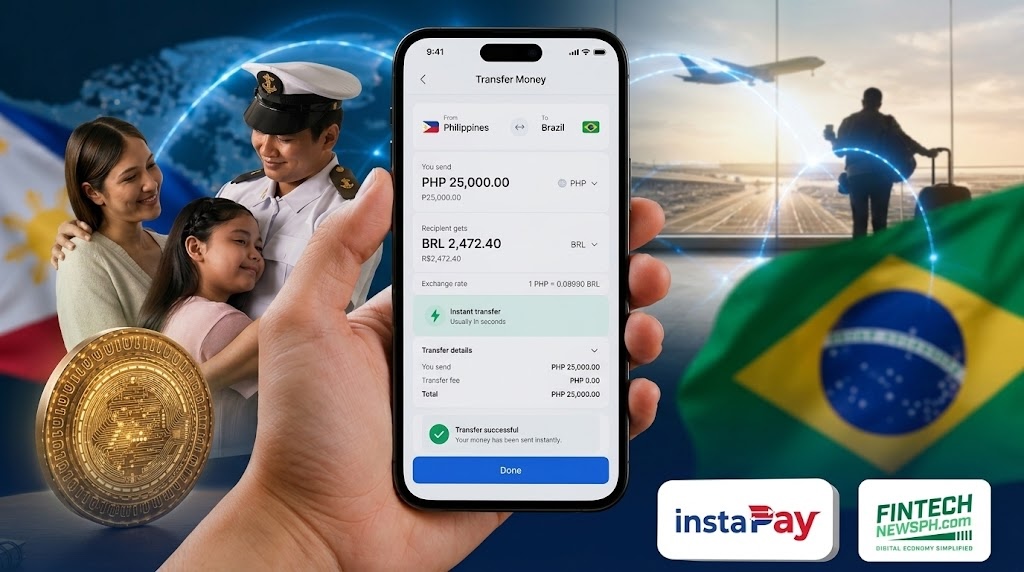
InstaPay cross-border payments could eventually make sending money from the Philippines to other countries feel much like making an ordinary domestic bank transfer.
That possibility moved back into focus after Brazil’s central bank announced it is exploring ways to connect Pix, the country’s instant payment system, with similar platforms overseas.
Brazil has not officially joined Project Nexus, but its exploration reflects a broader shift toward linking national instant payment systems — something the Philippines is already actively pursuing through InstaPay and Project Nexus.
From local transfers to an international network
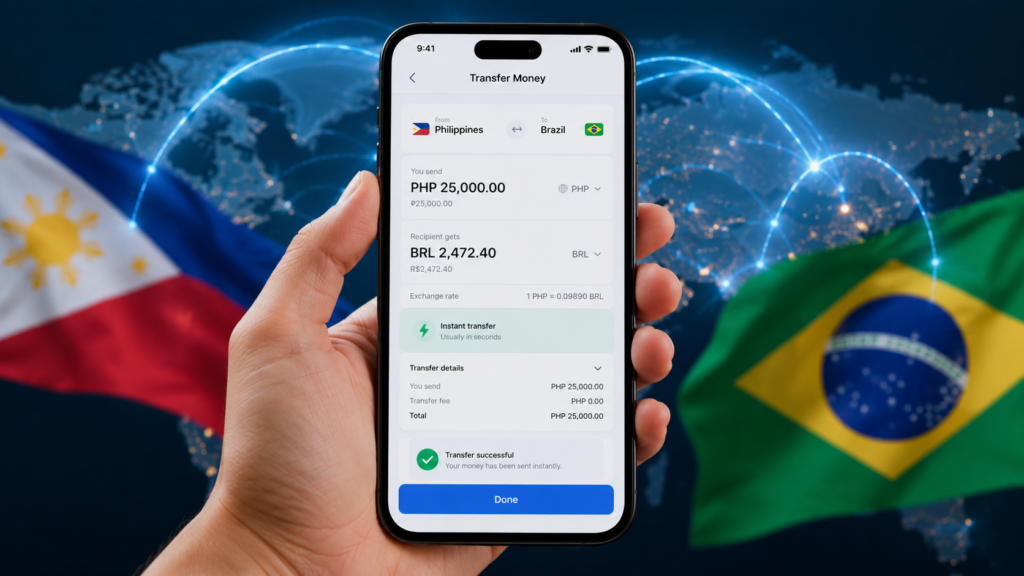
IMAGE CREDIT: Project Nexus
Filipinos mostly know InstaPay as the system that allows near-instant transfers between participating banks and e-wallets.
Project Nexus is designed to extend that concept across borders. Instead of countries building custom technical connections for every foreign payment system they wish to reach, Nexus allows domestic fast-payment systems to connect through a single shared hub.
The Bank for International Settlements notes that this model is designed to let cross-border payments reach recipients in around 60 seconds in most cases.
For the Philippines, InstaPay would serve as the domestic payment rail. Bangko Sentral ng Pilipinas (BSP) Governor Eli Remolona Jr. previously explained that fast payment systems like InstaPay could connect to Nexus and communicate with similar systems abroad.
The initiative has since moved beyond concept testing. India, Malaysia, the Philippines, Singapore, and Thailand established Nexus Global Payments, with Indonesia later joining as a fellow member.
How an international InstaPay transfer would work
Consumers won’t need a separate Nexus app.
Under the current Nexus technical framework, payments can be initiated directly through participating banks and payment providers using the domestic apps customers already use.
A sender could enter the recipient’s account information or a supported alias (like a phone number). The payment then travels through the connected instant-payment systems of both countries.
Foreign exchange is also built into the process.
Nexus allows payment providers to fetch live foreign exchange quotes before a transaction is completed. Customers can see the exchange rate, applicable fees, and exact amount the recipient will get before approving the transfer.
In practice, a cross-border InstaPay won’t just be a domestic transfer operating overseas — it acts as an interoperability layer connecting different countries’ payment infrastructures.
Transforming the remittance landscape
For the Philippines, remittances are the most practical use case. Millions of Filipinos rely on cross-border payments for family support, freelance income, online commerce, and payments to foreign suppliers.
Connecting domestic instant-payment networks could reduce the number of intermediaries involved in moving money between countries, dramatically improving speed and transparency.
This won’t make international transfers entirely free, as Nexus still accounts for foreign exchange costs and provider fees. However, the system is designed to make those costs upfront and clear before the user confirms a payment.
The next frontier for fast payments
Brazil’s experience demonstrates how far instant payments can grow.
Reuters reported that Pix processed nearly 80 billion transactions in 2025 and has become deeply integrated into everyday commerce.
Now, Brazil is looking outward.
For the Philippines, the question is no longer whether instant payments can become part of everyday life — InstaPay has already proven that domestically.
The real test is whether cross-border rails like Nexus can deliver the same seamless experience when sending money across oceans.