Cryptocurrency investing in the Philippines once revolved around dramatic price rallies, viral tokens, play-to-earn games, and the fear of missing the next big opportunity.
That enthusiasm has not completely disappeared. Filipino traders continue to participate in the market despite its volatility, as highlighted by a BusinessWorld report on local crypto activity. What has changed is the environment surrounding those investments.
Regulators are taking a firmer position against unauthorized platforms. Banks and licensed financial companies are entering the market. Meanwhile, the conversation is expanding beyond speculative coins toward tokenized bonds, funds, real estate, and other assets connected to the traditional financial system.
Crypto in the Philippines is no longer just a story about hype. It is increasingly becoming a test of whether digital assets can earn a permanent and regulated place in Filipino investment portfolios.
Bitcoin remains the starting point
For many retail investors, Bitcoin and Ethereum remain the most recognizable ways to gain exposure to cryptocurrency.
Their familiarity matters in a market crowded with thousands of tokens. Investors who experienced the collapse of play-to-earn projects, failed exchanges, and heavily promoted coins are now more likely to question what gives an asset value, where it can be traded, and whether the platform holding it is properly regulated.
This does not mean speculation has ended. Cryptocurrency prices remain highly volatile, and investors continue to respond to global market rallies, social media trends, and expectations surrounding institutional adoption.
However, the market is becoming less forgiving of projects that offer little beyond marketing. The stronger interest in established assets suggests that at least some investors are prioritizing liquidity, longevity, and easier access over the possibility of unusually high short-term returns.
Regulation is changing where Filipinos invest
The most important shift may be happening at the platform level.
Filipinos previously had relatively easy access to large offshore exchanges, even when those companies did not hold Philippine registrations. Regulatory enforcement has since become more visible, with authorities warning against companies that provide virtual-asset services without the necessary local authorization.
The Bangko Sentral ng Pilipinas maintains an updated list of registered virtual asset service providers. These institutions are expected to comply with requirements covering anti-money laundering controls, consumer protection, cybersecurity, risk management, and the safeguarding of customer assets.
A license does not remove the risk of losing money when cryptocurrency prices decline. It does, however, provide a regulatory structure around the company offering the service.
This distinction is becoming more important as investors weigh convenience against the risks of sending money to overseas platforms with limited local accountability.
GoTyme brings crypto inside a banking app
GoTyme Bank offers one example of how regulated access is moving closer to mainstream finance.
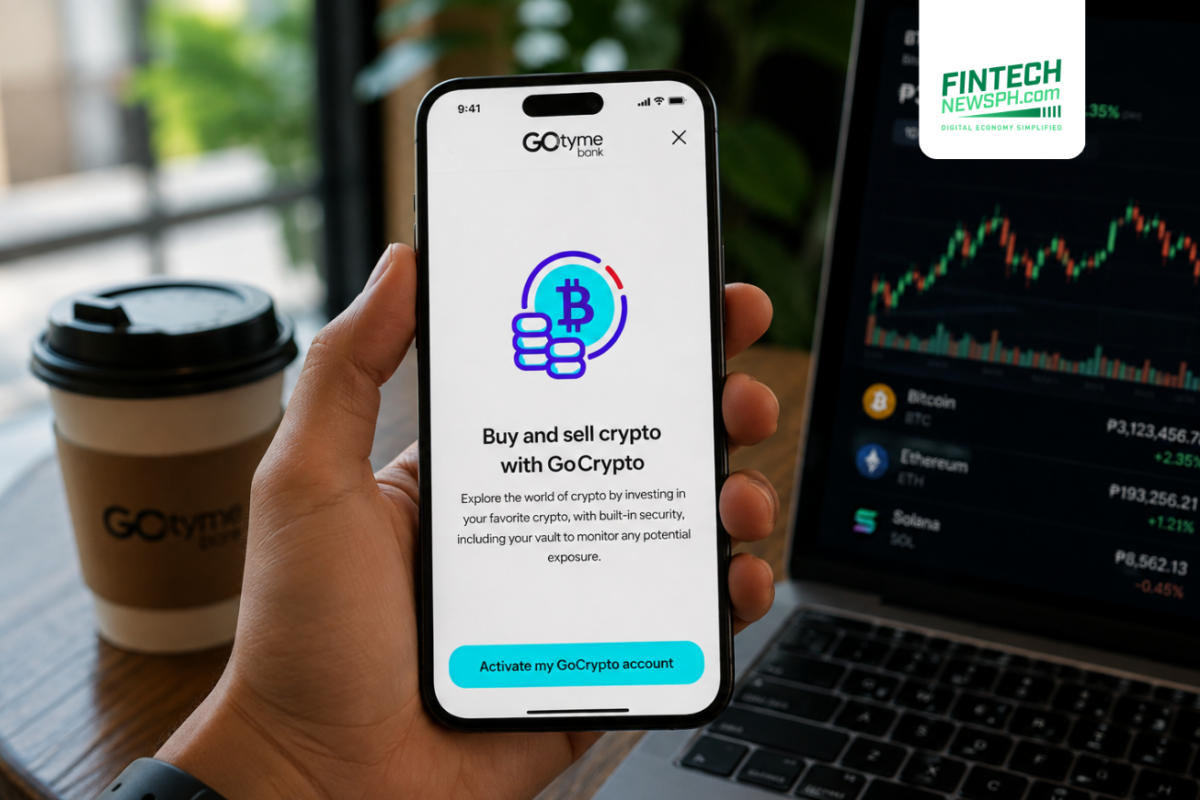
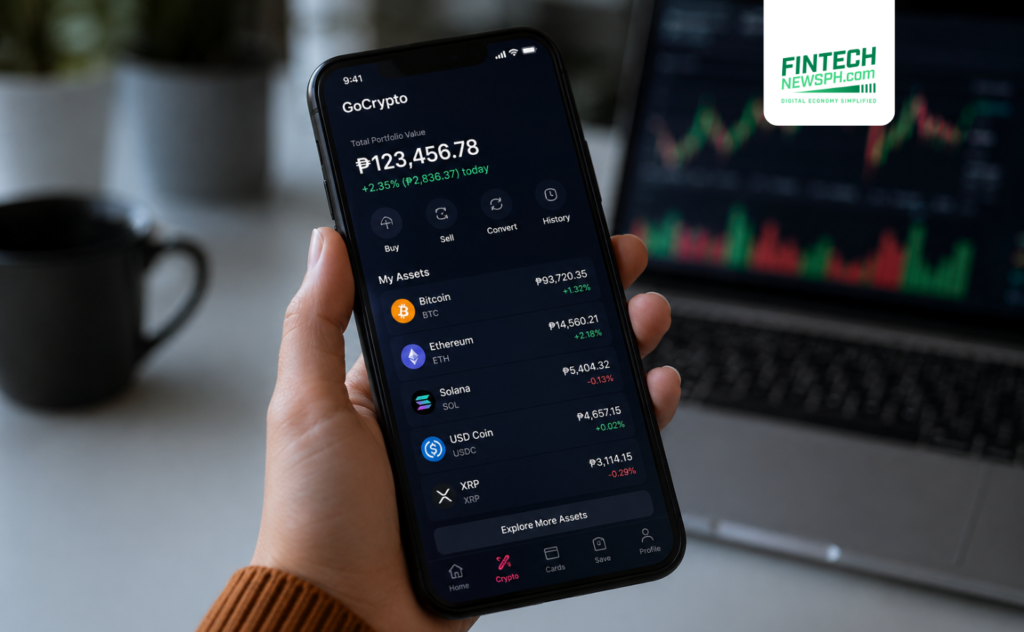
The digital bank launched GoCrypto nationwide in November 2025, allowing eligible customers to buy and sell 11 digital assets without creating a separate account with a third-party crypto exchange. The service places crypto investing alongside the savings, payments, and money-management features that customers already use.
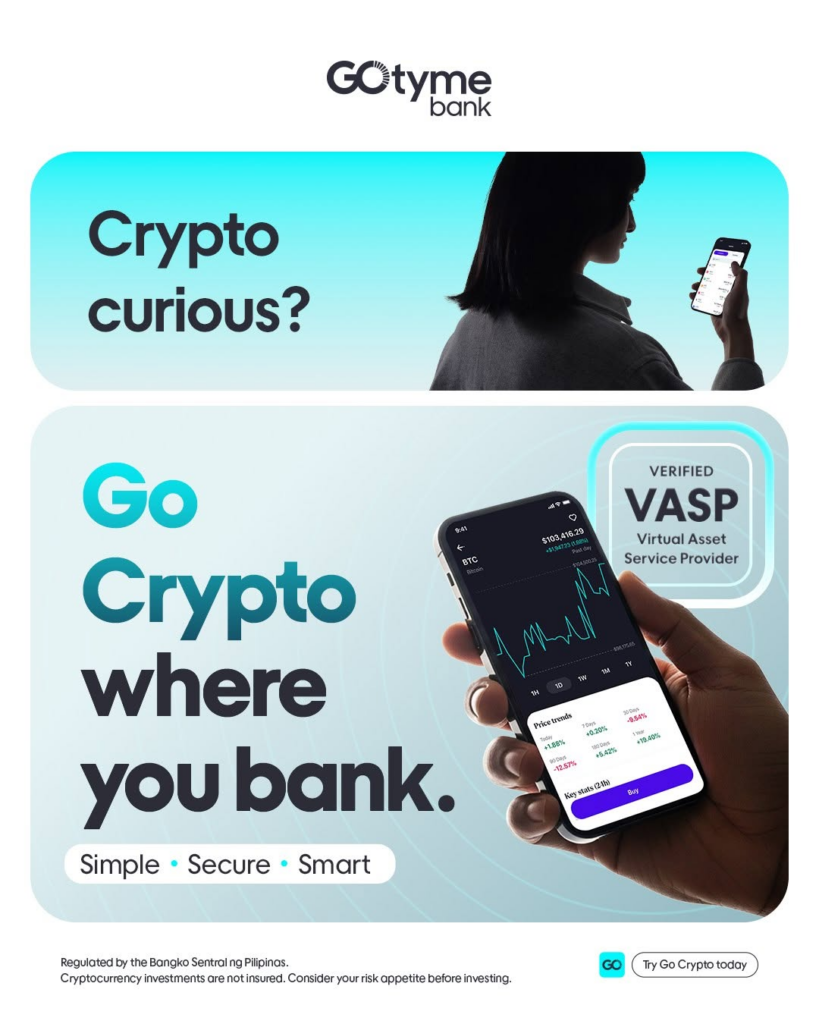
GoTyme partnered with US-based financial technology company Alpaca to support its crypto-trading infrastructure. Importantly, GoTyme itself is included among the BSP’s active bank VASPs, placing the local service under central bank supervision.
That arrangement reflects a broader change in how cryptocurrency may reach Filipino consumers. Instead of asking users to move funds to an unfamiliar exchange, the investment feature is built into a regulated banking environment with established identity verification and customer-support channels.
GoTyme has said that digital assets offered through the service undergo due diligence before being made available. Still, investors must remember that crypto holdings are not equivalent to ordinary bank deposits and are not protected from market losses simply because they can be purchased through a banking app.
The bank’s entry into crypto is therefore less about making the asset class safe and more about making access more accountable and understandable.
Tokenization is widening the conversation
Cryptocurrency is also beginning to overlap with another emerging field: tokenized finance.
Tokenization involves creating digital representations of assets or financial rights on a blockchain. Depending on the structure, a token could represent part of a government bond, investment fund, property, commodity, or private-market asset.
A report featured by ANC projected that the Philippine tokenized-asset market could reach at least $60 billion by 2030, citing the country’s strong use of e-wallets and growing interest in digital investments. The estimate comes from Project Bayani, an industry research initiative examining how tokenization could expand Filipino access to government bonds, funds, and real-world assets.
This is different from buying a token based mainly on expectations that its price will rise. A properly structured tokenized asset is tied to an underlying financial instrument or ownership right.
The opportunity is significant, especially if expensive assets can be divided into smaller investment amounts. The risks are equally important. Investors must understand who owns or holds the underlying asset, what legal rights the token provides, where it can be traded, and what happens if the issuer or platform fails.
Trust is becoming part of the investment decision
Filipino participation in crypto has survived market crashes, regulatory warnings, and the decline of several trends that once appeared unstoppable.
The next phase will likely be quieter. Investors may continue buying Bitcoin and other major cryptocurrencies, but they will increasingly encounter them through licensed banks, local VASPs, and investment platforms with clearer compliance requirements.
At the same time, tokenized bonds and other real-world assets could blur the line between traditional investing and blockchain-based finance.
The hype has not disappeared. It is simply no longer enough. As crypto moves closer to the regulated financial system, the more important questions are where the asset is held, who supervises the provider, what rights the investor receives, and whether the investment has value beyond the attention surrounding it.