
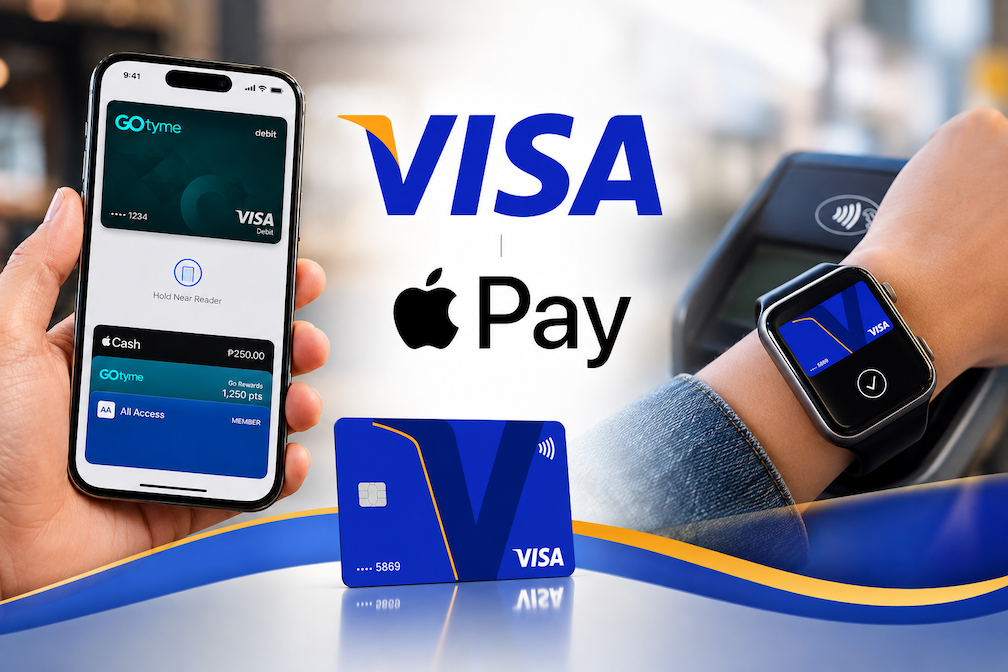
Yesterday, we reported on Visa‘s official launch of Apple Pay in the Philippines, giving eligible Visa cardholders a new way to make contactless payments using their Apple devices.
The rollout answered one question that Filipino Apple users had been asking for months, but it also raised another: Why did Apple Pay arrive years after many of the country’s regional neighbors — and months after Google Pay became available locally?
Bringing Apple Pay to a new market involves far more than simply making the service available.
Before customers can begin adding their cards to Apple Wallet, participating banks must complete technical integration, establish customer verification procedures, implement tokenization, conduct security testing, and coordinate with global payment networks.
Earlier this year, FinTech Alliance PH Founding Chairman Lito Villanueva said Apple Pay was expected to launch within the third quarter of 2026, noting that financial institutions still needed time to complete those technical requirements while bringing more major issuers into the service.
That work happens largely behind the scenes, but it determines how quickly banks are able to support Apple’s digital wallet.
More than Apple’s decision
The rollout also reflects the way Apple Pay operates within the Philippine financial system.
The Bangko Sentral ng Pilipinas (BSP) has previously clarified that Apple Pay and Google Pay function as technology service providers rather than operators of payment systems because they do not hold customer funds.
As a result, the platforms are not required to register separately as operators of payment systems. Participating banks and other regulated financial institutions remain responsible for issuing payment cards, verifying customers, maintaining accounts, and complying with Philippine banking regulations. Apple, meanwhile, provides the technology that allows those cards to be securely stored and used on compatible devices.
This arrangement means Apple Pay’s rollout depends not only on Apple’s readiness but also on how quickly participating financial institutions complete their own integration and enable eligible card products for customers.
Apple Pay serves a different role
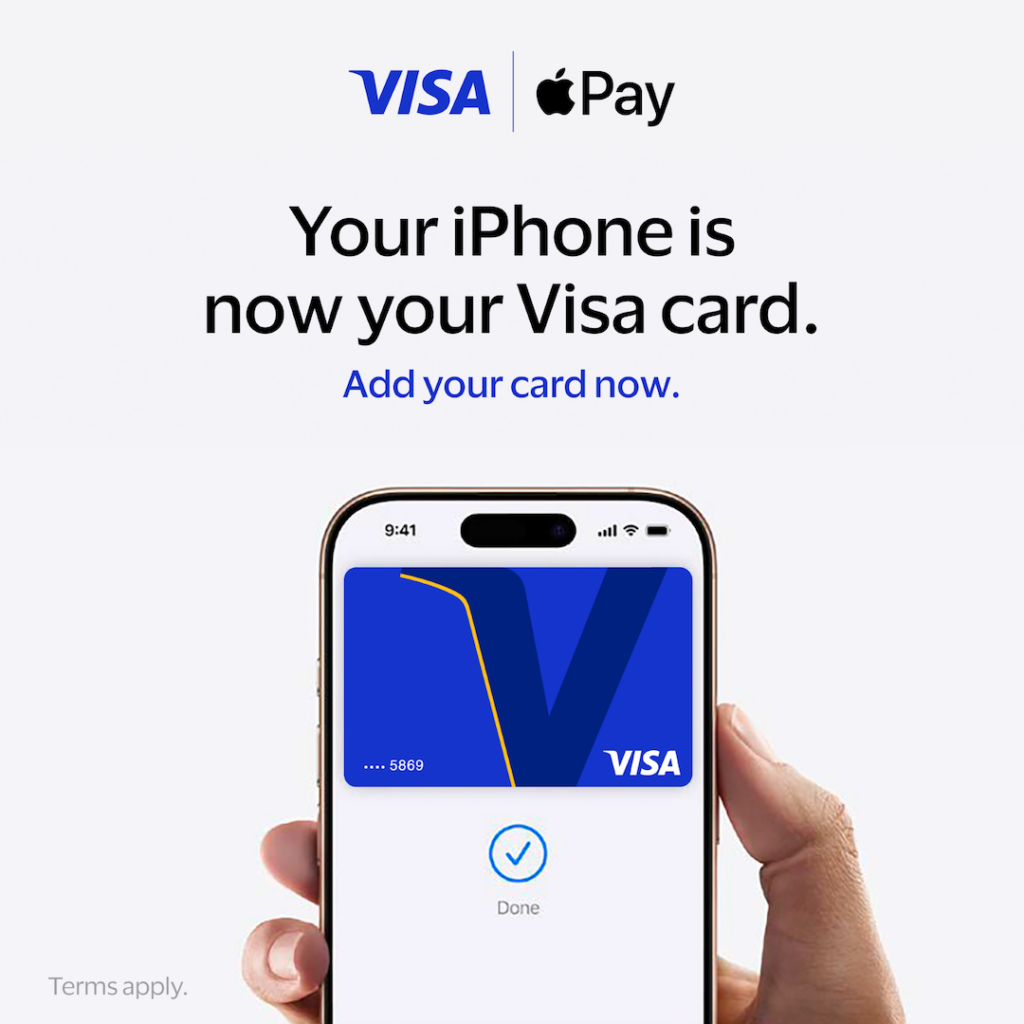
IMAGE CREDIT: Visa
Apple Pay enters a market already dominated by GCash and Maya, but it is not designed to replace either platform.
Unlike stored-value e-wallets, Apple Pay does not require users to open another account or maintain a separate wallet balance. It simply digitizes an eligible debit or credit card already issued by a participating bank, allowing purchases to be charged directly to that existing account or credit line.
GCash and Maya have developed into broader financial platforms that extend well beyond payments. In addition to transfers and merchant payments, both offer services such as bills payment, savings, lending, investments, insurance, and QR Ph transactions that have become part of many Filipinos’ daily routines.
Apple Pay, by comparison, focuses on making existing bank cards easier to use.
That distinction means its early adopters are likely to be consumers who already rely on debit and credit cards rather than those who primarily use e-wallets for everyday transactions.
Merchant acceptance remains the next hurdle

Hardware is unlikely to be the biggest obstacle.
Many merchants already operate NFC-enabled payment terminals capable of accepting contactless card payments, meaning Apple Pay can work without requiring retailers to install new equipment.
The experience at checkout, however, may vary.
Some stores continue asking customers to insert physical cards or use QR codes even when their terminals already support contactless payments. In many cases, those practices reflect existing checkout procedures or cashier familiarity rather than technical limitations.
Industry observers say broader adoption will depend not only on more banks supporting Apple Pay but also on acquiring banks, payment processors, retailers, and frontline staff becoming more accustomed to mobile contactless payments.
Security remains central to the experience
Apple has long positioned security as one of Apple Pay’s defining features.
Rather than storing or transmitting the actual card number during a transaction, Apple Pay generates a unique Device Account Number that is securely stored within the device’s Secure Element. Each payment must also be authenticated using Face ID, Touch ID, or the device passcode before it can be completed.
The approach reduces the exposure of sensitive card information during transactions, although consumers are still encouraged to follow standard security practices.
Users should continue protecting their Apple Account credentials, banking passwords, one-time passwords, and device passcodes. Lost devices should be placed in Lost Mode through Apple’s Find My service, while unauthorized transactions should be reported immediately to the issuing bank.
Customers should also remain cautious of phishing messages claiming that Apple Pay activation requires passwords, one-time passwords, or complete card details. Banks have consistently reminded customers that legitimate verification processes do not require sharing those credentials with another person.
Another option — not a replacement
Apple Pay’s arrival expands the number of digital payment options available to Filipino consumers, but it is unlikely to reshape the market overnight.
GCash, Maya, and QR Ph remain deeply embedded in day-to-day commerce, particularly for person-to-person transfers, bills payment, and QR-based merchant transactions. Apple Pay addresses a different need by allowing eligible bank cards to be used more conveniently through an Apple device.
As more banks enable additional card products and more merchants grow comfortable accepting mobile contactless payments, Apple Pay is expected to become a more familiar payment option for iPhone users.
Its arrival does not signal the end of local e-wallets. Instead, it reflects the continued evolution of the Philippine payments ecosystem, where consumers increasingly have multiple ways to pay depending on how and where they transact.