The Securities and Exchange Commission (SEC) is introducing blockchain technology into everyday corporate compliance through VERITAS, a platform for digitally signing and authenticating company documents.
Under SEC Memorandum Circular No. 23, Series of 2026, VERITAS will allow authorized individuals to digitally sign and authenticate SEC-related documents through the SEC Check mobile application.
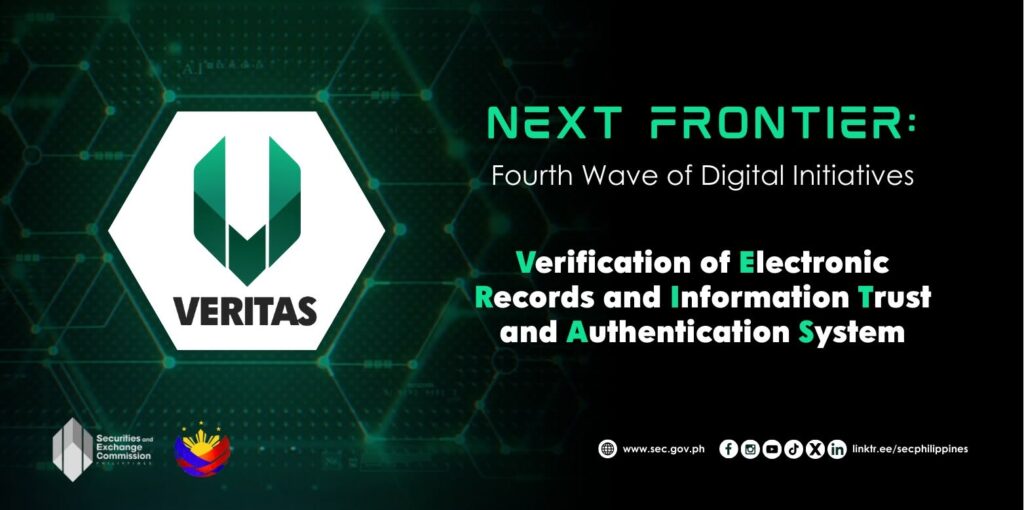
The system represents a practical use of blockchain outside cryptocurrency. Instead of transferring digital assets, the technology records who signed a corporate document, when it was signed, and whether the file was altered afterward.
How VERITAS verifies corporate documents
VERITAS is connected to eSECURE, the SEC’s digital identity and credentialing system. Before using the platform, a signatory must have an active and credentialed eSECURE account obtained through electronic Know Your Customer procedures.
The system may be used by incorporators, directors, officers, authorized representatives, and other individuals designated to sign documents for corporations, partnerships, and other SEC-registered entities.
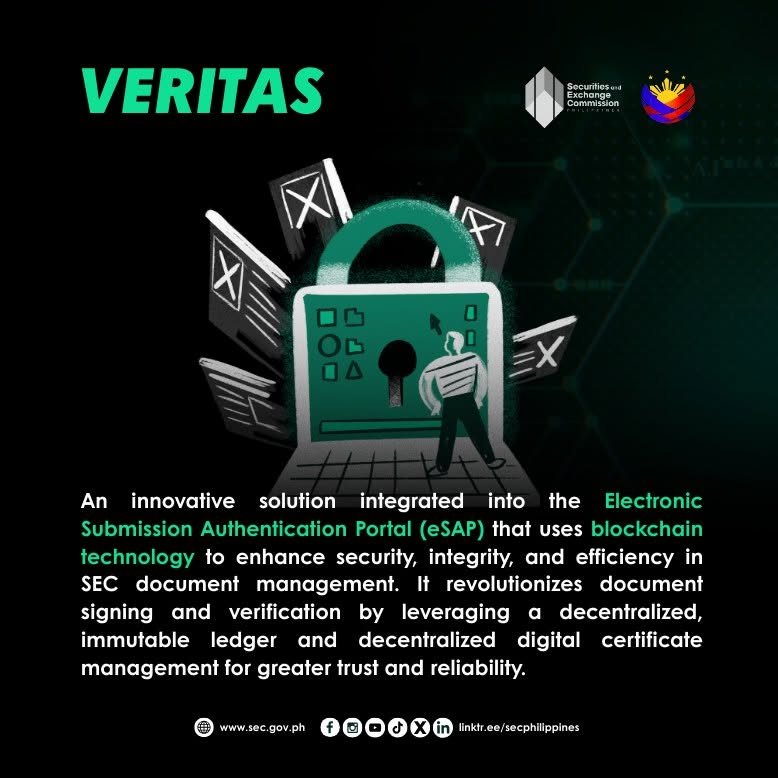
When a document is uploaded, VERITAS generates a cryptographic hash, which serves as a unique digital fingerprint of the file. Each authorized signatory then signs the document using credentials generated through the platform.
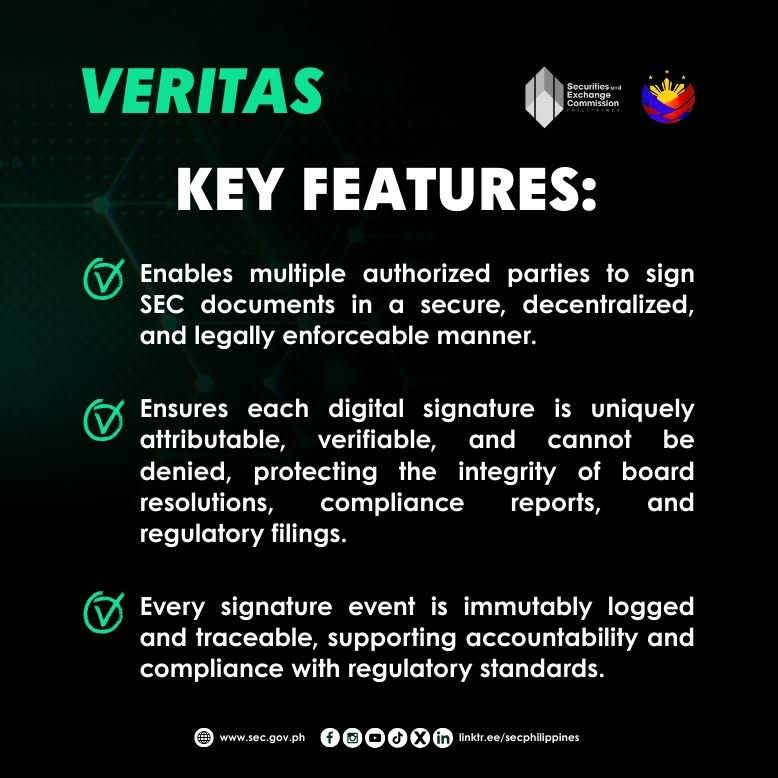
VERITAS records each signing event on its blockchain. The recorded details include the encrypted identity of the signatory, the date and time of signing, the IP address, and the corresponding transaction number.
Once all required signatures have been completed, the SEC attaches a visible digital certificate seal issued through the Department of Information and Communications Technology’s Philippine National Public Key Infrastructure. A QR code is also placed on each page for verification.
If someone changes the document afterward, the altered file will produce a different digital fingerprint. This allows the system to detect that it no longer matches the version recorded on the blockchain.
Documents that may be processed through VERITAS include Articles of Incorporation, By-Laws, Certificates of Authentication, and other documents that the SEC may later approve for digital authentication.
Digital copies become the official record
Documents properly signed and authenticated through VERITAS will be accepted for SEC transactions and will generally carry the same legal effect as signed and notarized paper documents.
The authenticated digital file will be treated as the official and original record. Hard copies will no longer be required unless another law or SEC regulation specifically requires physical submission.
Users may verify a document by uploading its digital copy to VERITAS or the Electronic Submission Authentication Portal. The system can flag files that are not recorded on the blockchain, have incomplete signatures, lack the SEC’s digital certificate, or contain invalid verification details.
However, successful authentication does not automatically mean that the contents of a filing comply with corporate laws and regulations. VERITAS-signed documents will remain subject to SEC evaluation, audit, and legal review.
In other words, the platform verifies the document and its signatories—not the accuracy or legality of every statement contained in the filing.
Companies must manage their signing credentials
While VERITAS can reduce paperwork and make remote signing easier, it also gives corporate signatories greater responsibility for protecting their digital credentials.
Users must secure their Document Signing Certificates, registered devices, passphrases, and recovery QR codes. Although the system provides a social recovery mechanism for certain access problems, the SEC cannot access or recover a user’s private key.
Companies may therefore need internal procedures covering lost devices, compromised credentials, departing officers, and changes in authorized signatories. These controls will become particularly important when several people are required to sign the same corporate document.
Records placed on the blockchain are permanent. If a signed document contains an error, the company cannot simply edit or delete the existing record. It must prepare the corrected document and repeat the signing process, with the latest submission presumed to be the official filing.
VERITAS will initially be optional and free to use. The existing Philippine National Public Key Infrastructure (PNPKI)-based authentication process through eSAP will also remain available.
The SEC may eventually require VERITAS for particular entities or types of filings, but this would require a separate issuance following public consultation.