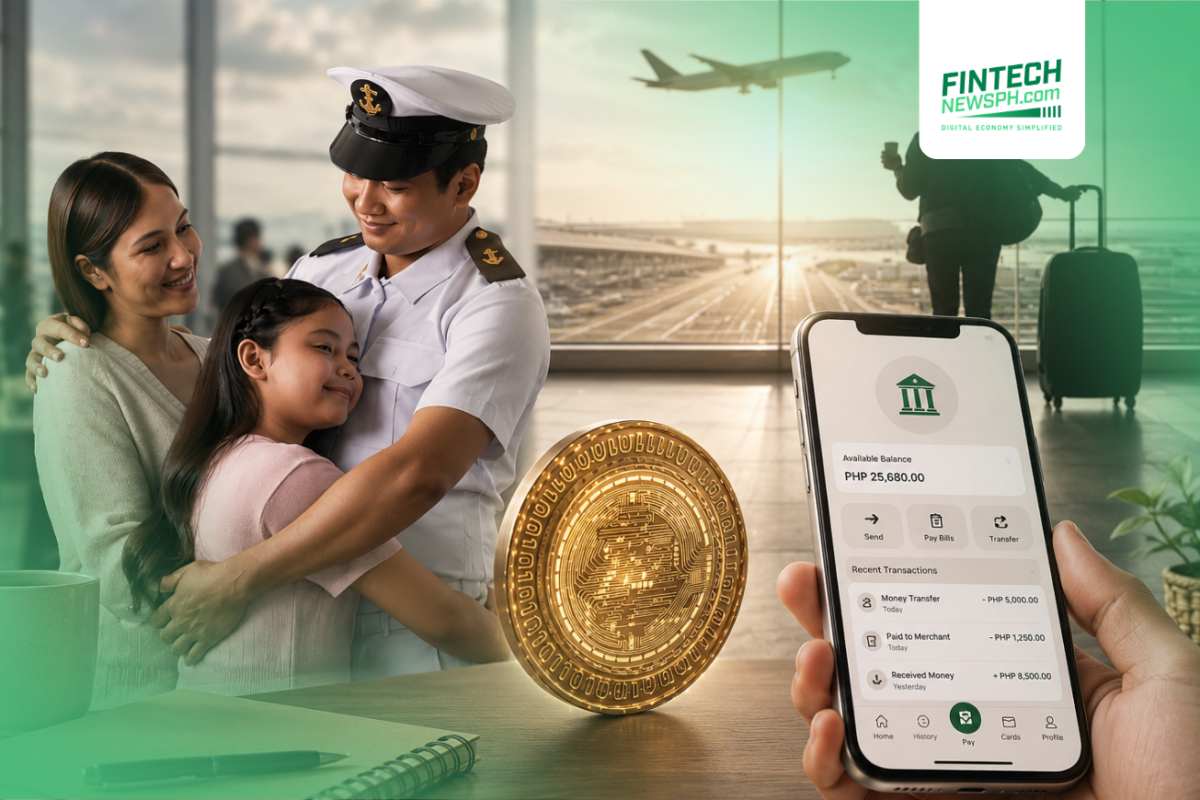
For millions of Overseas Filipino Workers (OFWs), every peso saved on remittance fees makes a difference. As digital assets become more practical, stablecoin remittances are emerging as a faster and potentially cheaper alternative to traditional money transfers.
What was once considered a niche cryptocurrency use case is steadily becoming part of the global payments conversation. Today, several digital wallet providers and licensed virtual asset platforms already allow users to send and receive dollar-backed stablecoins, with funds converted into Philippine pesos through local exchanges, banks, or e-wallets.
While adoption remains in its early stages, stablecoin remittances could reshape how Filipinos receive money from abroad.
Interest in stablecoin remittances has grown as global payment companies, banks, and fintech firms increasingly explore blockchain-based settlement to reduce transfer costs and speed up cross-border transactions.
Several jurisdictions have also begun developing regulatory frameworks for stablecoins, signaling that the technology is gradually moving beyond cryptocurrency trading into mainstream financial services.
What are stablecoin remittances?
Stablecoins are cryptocurrencies designed to maintain a stable value by being backed by reserve assets such as the U.S. dollar. Popular examples include USD Coin (USDC) and other dollar-pegged digital tokens.
Unlike highly volatile cryptocurrencies, stablecoins aim to preserve their purchasing power, making them more suitable for payments and cross-border transfers.
In a typical stablecoin remittance transaction, an OFW purchases stablecoins abroad and transfers them through a blockchain network. The recipient then converts those tokens into Philippine pesos using a licensed exchange or compatible digital wallet.
Instead of relying on multiple correspondent banks and intermediaries, value moves directly through blockchain infrastructure before being converted into local currency.
Why stablecoins appeal to OFWs
The Philippines remains one of the world’s largest remittance recipients, making transfer costs a significant concern for many families.

Traditional remittance services often involve several layers of charges, including transfer fees, foreign exchange spreads, and cash-out costs. These expenses can reduce the amount ultimately received by beneficiaries.
Stablecoin transfers simplify the process by allowing value to move across blockchain networks almost instantly before being converted into Philippine pesos for local use.
If supported by efficient cash-out channels, this model has the potential to lower overall remittance costs while shortening settlement times from days to just minutes.
The regulatory landscape in the Philippines
The Philippines has developed one of Southeast Asia’s more established regulatory environments for digital assets.

The Bangko Sentral ng Pilipinas (BSP) licenses Virtual Asset Service Providers (VASPs) that facilitate cryptocurrency trading, custody, and conversions between digital assets and Philippine pesos. These regulated entities provide the critical on-ramp and off-ramp infrastructure needed for stablecoin remittances.
At the same time, cryptocurrencies are not recognized as legal tender in the Philippines. Oversight remains shared between the BSP, which supervises payment and financial institutions, and the Securities and Exchange Commission (SEC), which oversees digital asset investment products and securities-related activities.
This regulatory framework provides greater consumer protection than unregulated peer-to-peer transfers, although risks still remain.
Risks consumers should understand
1. Stablecoins are only as stable as their reserves.
Dollar-backed tokens depend on the quality and transparency of the assets backing them. If confidence in those reserves weakens or an issuer experiences financial problems, the token could temporarily lose its one-to-one value with the U.S. dollar—a situation commonly referred to as a “depeg.” Consumers should use reputable stablecoins issued by organizations that regularly publish independent reserve attestations.
2. Cash-out costs can reduce savings.
Lower blockchain transaction fees do not automatically translate into lower overall remittance costs. Recipients still need to convert stablecoins into pesos before spending them. Exchange fees, withdrawal charges, or e-wallet cash-out fees can reduce or even eliminate the savings achieved during the transfer itself. For many users, comparing the total end-to-end cost remains more important than focusing solely on blockchain transaction fees.
3. Crypto scams continue to target Filipinos.
As digital asset adoption grows, so do fraud attempts. Fake wallet applications, phishing websites, impersonation scams, and fraudulent investment schemes continue to target cryptocurrency users in the Philippines. Consumers should only use BSP-licensed platforms and verify wallet addresses before sending funds. Education remains one of the strongest protections against digital asset fraud.
What to watch in the coming years
One of the biggest questions surrounding stablecoin remittances is how regulators will measure their impact on the country’s remittance industry.
If blockchain-based transfers become widely adopted, policymakers may eventually need new reporting frameworks that accurately capture stablecoin remittance volumes alongside traditional remittance channels.
For OFWs, however, the decision remains practical rather than technological.
Before switching providers, compare the total cost, from the amount sent abroad to the final peso amount received. Testing the process with a small transfer first can help users evaluate transaction speed, fees, and reliability before sending larger amounts.
The future of cross-border transfers
Stablecoin remittances are unlikely to replace traditional remittance providers overnight, but they are introducing new competition into one of the Philippines’ most important financial services.
As blockchain infrastructure matures and regulated digital asset platforms continue expanding, stablecoin remittances could become an increasingly attractive option for OFWs seeking faster settlement, lower fees, and greater flexibility.
For now, their success will depend not only on the technology itself but also on strong regulation, trusted service providers, and consumer confidence.
—
Disclaimer: This article is based on publicly available information from licensed virtual asset service providers (VASPs), regulatory guidance from the Bangko Sentral ng Pilipinas (BSP) and the Securities and Exchange Commission (SEC), and other credible industry sources discussing stablecoin remittances and cross-border digital payments. It has been edited for clarity and journalistic style. FintechNewsPH publishes this article for informational and educational purposes only and does not endorse any financial product, stablecoin, cryptocurrency, virtual asset service provider, exchange, digital wallet, or remittance platform. Nothing in this article should be construed as financial, legal, tax, or investment advice. Readers are encouraged to conduct their own research and use only licensed and regulated financial service providers before making any financial decisions.