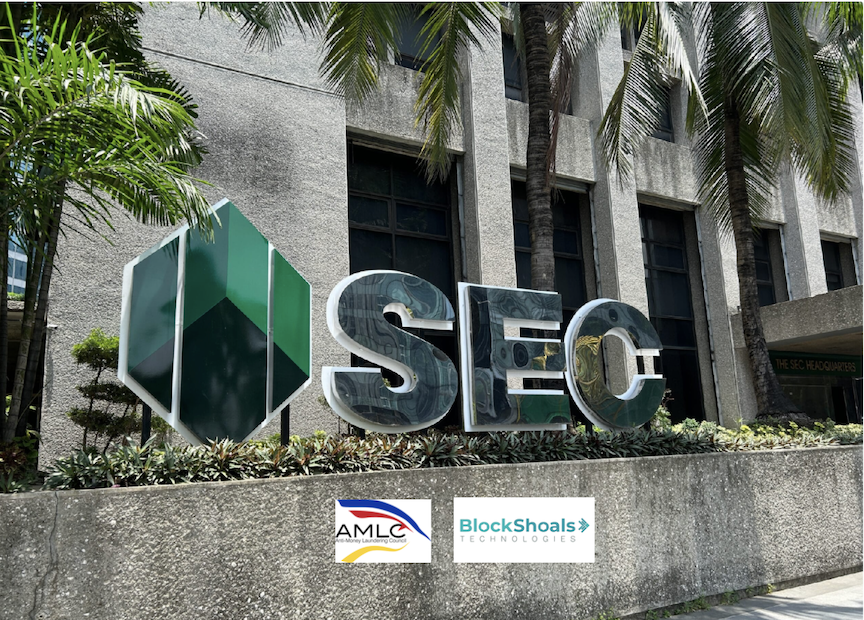
Crypto-asset intermediary BlockShoals Technologies Inc. (BlockShoals) has secured registration with the Anti-Money Laundering Council (AMLC) as a covered person under the Anti-Money Laundering Act of 2001 (AMLA), reinforcing its compliance with the Philippines’ evolving regulatory framework for digital assets.
The company announced the registration as part of its efforts to provide greater transparency as it continues operating under the Securities and Exchange Commission’s (SEC) Strategic Regulatory Sandbox (StratBox).
BlockShoals is participating in the sandbox as a Crypto-Asset Intermediary (CAI) under SEC Memorandum Circular No. 9, Series of 2024, which established the StratBox framework for emerging financial technologies. It also operates under the Rules on Crypto-Asset Service Providers (CASPs) contained in SEC Memorandum Circular No. 4, Series of 2025.
The SEC issued BlockShoals its Notice to Proceed with Testing on April 14, 2026, while the AMLC granted the company its Certificate of Registration on June 18, 2026.
AMLC registration strengthens crypto compliance and accountability
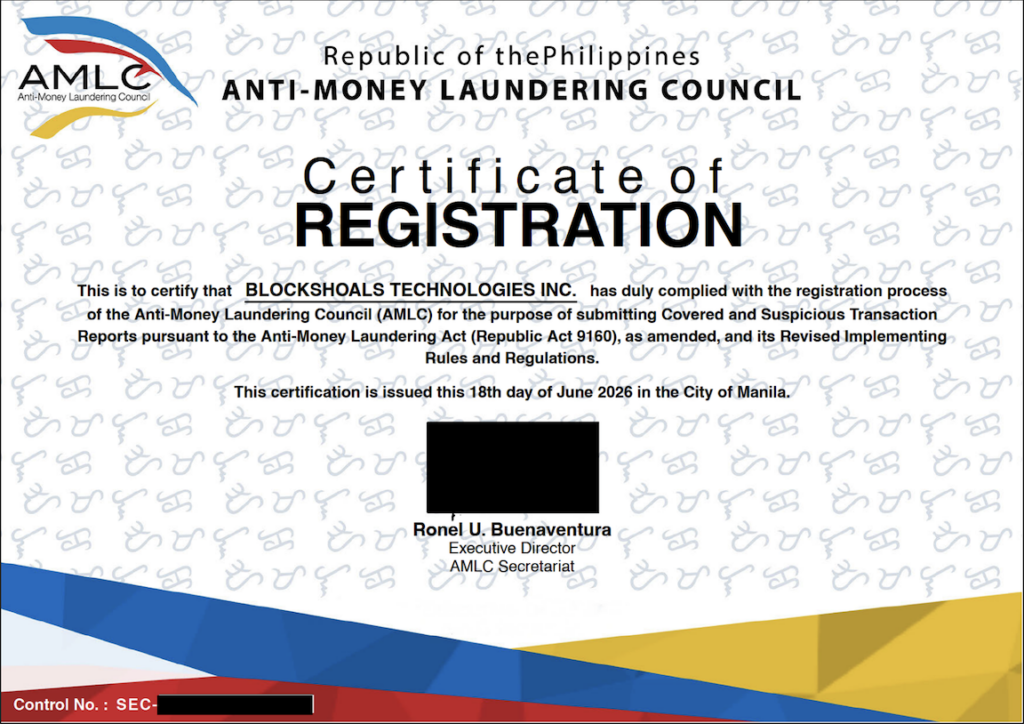
IMAGE CREDIT: BlockShoals
Under the CASP Rules, crypto-asset service providers are classified as covered persons under the AMLA. This means they are required to comply with anti-money laundering, counter-terrorism financing, and counter-proliferation financing regulations and are subject to oversight by both the SEC and the AMLC.
Arden Consult, legal counsel to BlockShoals, emphasized that the company’s AMLC registration is held independently and is not tied to any partner or third party.
“BlockShoals holds this AMLC registration in its own name. As a CAI providing crypto-asset service, BlockShoals is a CASP and under the CASP Rules, every CASP is treated directly as a covered person. That status is entirely owned by BlockShoals; it does not depend on, and is not borrowed from, any partner or other company.”
The firm added that the registration reflects its commitment to meeting the compliance obligations required of covered persons under Philippine law.
These include conducting customer due diligence, monitoring transactions, maintaining records, and submitting covered and suspicious transaction reports to the AMLC when required.
The crypto-asset intermediary said it also welcomes continued regulatory oversight as it works to build a secure and trusted environment for crypto users in the Philippines.
The registration comes as Philippine regulators continue to strengthen the country’s framework for digital assets. The SEC’s CASP Rules establish licensing and compliance requirements for crypto-asset service providers, while the StratBox allows companies to test innovative products and services under regulatory supervision before broader market deployment.
For crypto firms seeking to operate in the country, AML compliance has become a key component of the regulatory framework, reflecting broader efforts to combat financial crime while supporting responsible innovation in the digital asset sector.
—
Disclaimer: This article is for informational purposes only and should not be considered financial, investment, or legal advice. Crypto-assets are highly volatile and involve substantial risks. The Bangko Sentral ng Pilipinas (BSP) does not recognize cryptocurrencies as legal tender, while the Securities and Exchange Commission (SEC) reminds the public to transact only with entities operating within applicable Philippine regulations. Readers should conduct their own due diligence and understand the risks before buying, selling, or using crypto-assets.