
For much of the past decade, competition in Philippine fintech played out where consumers could see it.
Digital banks fought for deposits. E-wallets raced to acquire users. Fintech startups competed to offer faster onboarding, lower fees, and more convenient ways to pay, borrow, or invest.
But the industry’s next growth story may be unfolding somewhere far less visible.
Banks and fintech firms are increasingly shifting their attention to embedded finance, Banking-as-a-Service (BaaS), and API-driven platforms that allow financial services to be built directly into e-commerce sites, marketplaces, business software, and digital applications.
Rather than asking customers to open a separate banking app, companies are bringing financial products to where users already spend their time. The result is what many in the industry describe as an “invisible banking layer”—one where payments, lending, savings, insurance, and investments happen quietly in the background of everyday digital experiences.
As the Philippines’ digital economy continues to expand, this shift could reshape not only how financial services are delivered, but also how banks and fintech companies compete.
Banking without looking like a bank
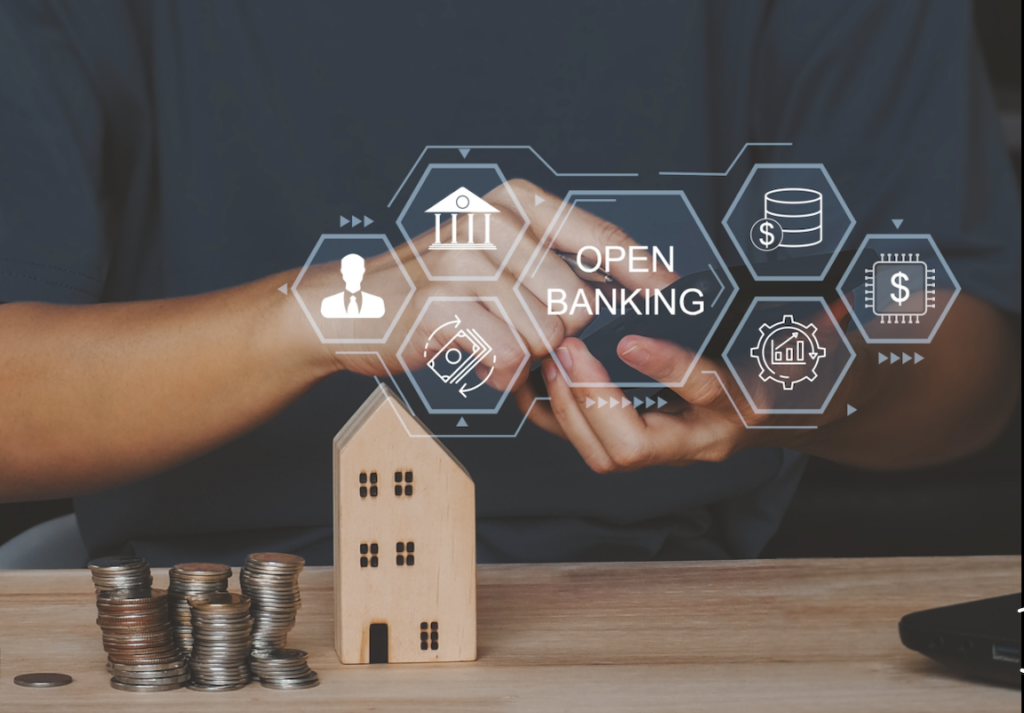
IMAGE CREDIT: Freepik
‘The seeds of embedded finance were planted during the pandemic.
As lockdowns accelerated e-commerce and digital payments, Filipinos became more comfortable managing their finances online. QR payments, digital wallets, online lending platforms, and cashless transactions quickly became part of everyday life.
The next step has been making those financial services almost invisible.
Instead of leaving an online marketplace to apply for financing or opening a banking app to complete a payment, consumers can now access financial products directly within the platforms they are already using.
That seamless experience is the essence of embedded finance.
In simple terms, embedded finance integrates regulated financial services into non-financial platforms, allowing consumers to borrow, save, pay, insure purchases, or invest without leaving the apps they already use.
Many Filipinos are already using it

IMAGE CREDIT: GCash
While embedded finance is often discussed as the future of banking, it has already become part of everyday life for many Filipinos.
Platforms such as GCash and Maya have evolved beyond digital payments by incorporating savings, credit, insurance, and investment products into a single ecosystem.
The same trend is reshaping e-commerce.
Buy Now, Pay Later (BNPL) providers such as BillEase and Cashalo now allow shoppers to split purchases into installments directly at checkout, removing the need to apply separately for a traditional loan.
For consumers, the experience is faster and more convenient. For merchants, fewer steps at checkout can translate into higher conversion rates and fewer abandoned carts.
The technology behind the scenes
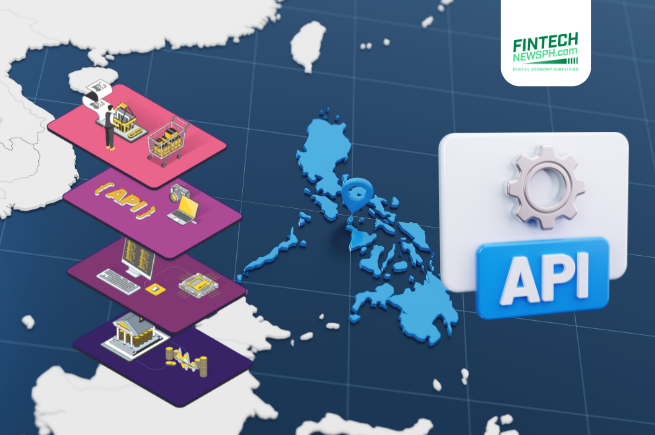
Powering embedded finance is a growing network of application programming interfaces, or APIs.
These digital connections allow financial institutions to securely integrate services such as payments, account opening, lending, identity verification, insurance, and card issuance into third-party platforms.
That means a marketplace can offer merchant financing, a logistics platform can provide instant payouts, or a ride-hailing app can bundle payments with micro-insurance—all without becoming a bank itself.
For most users, the licensed financial institution remains largely invisible.
The financial service simply becomes part of the customer journey.
Banks are becoming infrastructure providers

IMAGE CREDIT: Freepik
Embedded finance is also changing the traditional role of banks.
Historically, banks controlled both the financial infrastructure and the customer relationship. Today, those responsibilities are increasingly split.
Through Banking-as-a-Service models, banks provide the regulated infrastructure while fintech firms, retailers, and digital platforms own the customer experience.
This allows non-financial companies to launch financial products more quickly while giving banks access to customers they might never have reached through their own channels.
As a result, competition is moving away from consumer-facing apps and toward the infrastructure powering them.
Reliable APIs, compliance capabilities, lending platforms, and payment rails are becoming just as strategically important as mobile applications.
A bigger opportunity for MSMEs
Embedded finance could also transform access to financing for the country’s millions of micro, small, and medium enterprises (MSMEs).
Many small businesses have historically struggled to qualify for bank loans because they lack extensive credit histories or formal financial records.
Digital platforms, however, generate a different kind of data.
Sales performance, transaction histories, inventory movement, and payment behavior can all help lenders assess creditworthiness.
That creates opportunities for merchant cash advances, working capital loans, and invoice financing that are offered directly within the platforms entrepreneurs already use.
Instead of approaching a bank separately, business owners can access financing as part of their existing workflow.
Expanding financial inclusion
The implications extend well beyond convenience.
Millions of Filipinos remain underserved by traditional banking despite growing adoption of digital financial services.
Embedded finance offers another way to reach these consumers.
Rather than relying solely on conventional credit histories, lenders can use alternative data—including digital payments, e-commerce transactions, and platform activity—to better evaluate risk.
For many consumers, that could mean gaining access to financial products that were previously out of reach.
The rise of ecosystem banking and super apps
The shift also strengthens the business case for super apps.
As digital platforms evolve into one-stop ecosystems for shopping, transportation, entertainment, and lifestyle services, financial products become natural additions rather than standalone offerings.
Payments, lending, insurance, investments, and merchant services deepen customer engagement while creating new revenue streams.
Banking becomes less visible — but far more integrated into daily life.
The next phase of fintech competition
The next chapter of Philippine fintech may not be defined by another digital wallet or banking app.
Instead, it may be shaped by the infrastructure quietly connecting financial services with the country’s rapidly expanding digital economy.
For consumers, embedded finance promises simpler, more seamless experiences.
For MSMEs, it could unlock faster access to funding and digital financial tools.
And for banks and fintech companies, it represents a strategic shift — from competing for app downloads to becoming the technology powering financial services behind the scenes.
In the coming years, the companies that shape Philippine fintech may not be the ones consumers interact with every day, but the ones quietly enabling every transaction in the background.