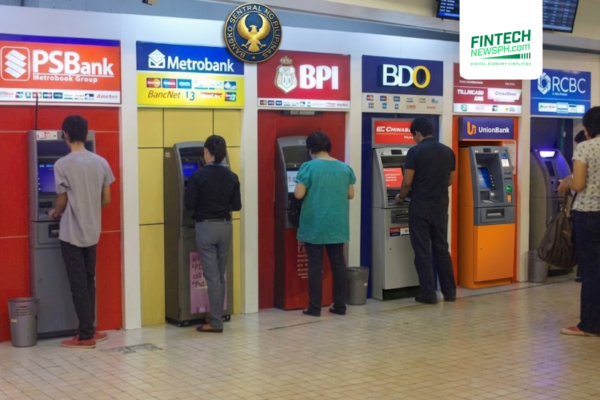


The Philippines’ push towards financial inclusion is slowly gaining ground, with a recent survey revealing that 51 percent of Filipino adults now have access to financial institutions, thanks in part to the pandemic.

This is a significant improvement as the World Bank’s Global Findex 2021 report also confirmed that the Philippines was able to establish a double-digit increase in account ownership since 2017 — either at a bank, mobile money provider, or through other financial institutions.
Except at the height of the COVID-19 pandemic in 2020, the World Bank report is usually conducted every three years.
World Bank Report Highlights
In 2017, only 34 percent of Filipino adults were reported to have financial accounts but this grew to 51% in 2021 for an increase of 17 percentage points.
The latest figure is a significant jump compared to 31 percent in 2014 or just a three-percentage point increase over the three-year period.
Breaking down the report, it was found that 30 percent of Filipino adults have bank accounts while only five percent had mobile money accounts. About 16 percent of adults had access to both. Of this number, 47 percent are women with financial accounts.
Poor Filipinos with accounts, meanwhile, now cover 34 percent of the total adult population.
The rest were unbanked Filipino adults who noted that getting an account is still too expensive.
COVID-19 has helped spur financial inclusion
The World Bank report also noted that the pandemic has spurred financial inclusion. It has driven a large number of Filipinos to do digital payments in light of the global expansion in formal financial services.
Such expansion has created new economic opportunities. It has narrowed the gender gap in account ownership while also helping build resilience so that households can better manage the financial shock brought about by the pandemic.
In fact, the World Bank said that accounts enabled financial independence and strengthened economic empowerment among women.
“In the Philippines, women who used commitment savings products that encouraged regular deposits into a personal bank account have increased their household decision-making power and shifted their spending to household goods that are relevant to their needs,” the World Bank report said.
Furthermore, the World Bank said that COVID-19 has resulted in increased use of digital payments, which is good for the country’s fintech industry in the long run.