
Inflation in the Philippines eased for the second consecutive month in August, helped by slower food price increases as domestic supply conditions improved, but price pressures remained well above the government’s target.
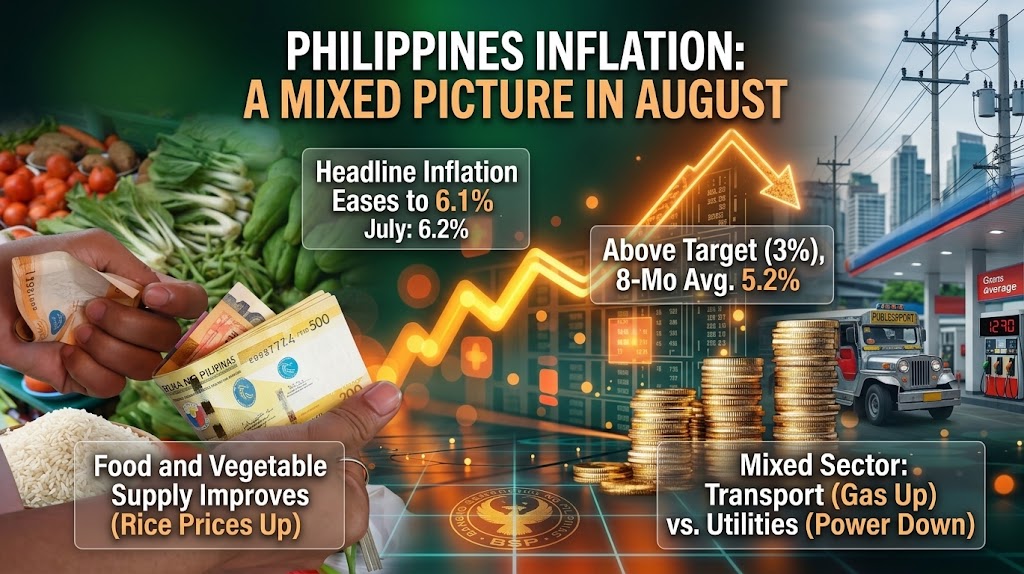
Headline inflation slowed to 6.1% in August from 6.2% in July, according to the latest data from the Bangko Sentral ng Pilipinas (BSP), with lower food inflation providing the biggest relief.
Despite the modest decline, average headline inflation for the first eight months of 2026 reached 5.2%, remaining significantly above the government’s full-year target of 3% and its tolerance range of 2% to 4%.
On a month-on-month seasonally adjusted basis, however, inflation picked up to 0.5% in August, reversing the zero growth recorded in July.
Core inflation, which strips out volatile food and energy prices, also eased slightly to 4.1% from 4.2% in July, suggesting that underlying price pressures continued to moderate, albeit gradually.
Food prices provide some relief

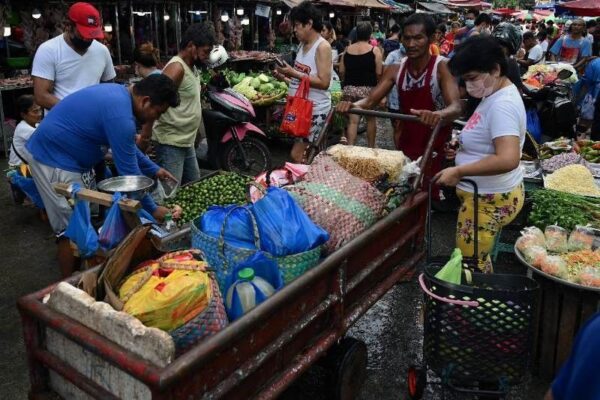
Food prices were a key factor behind August’s slower inflation, as more stable domestic supply helped bring down vegetable prices and slowed inflation for fish.
The improvement was partly offset by faster rice inflation, which was attributed in part to higher logistics costs.
For households in the lowest 30% income group, inflation remained unchanged at 8.2% in August, underscoring the heavier impact of elevated prices on lower-income families.
Utilities ease, transport costs rise
Price movements outside food were mixed during the month.
Lower electricity and water rates helped moderate inflation in the housing, water, electricity, gas and other fuels category.
Transport costs, meanwhile, moved in the opposite direction as higher global crude oil prices pushed domestic pump prices higher, resulting in faster transport inflation in August.
The latest inflation reading nevertheless remained within the BSP’s 5.5% to 6.5% forecast range for the month.
The central bank said it will continue monitoring developments that could affect the inflation outlook, particularly the impact of recent developments in the Middle East and weather-related disturbances.
The BSP said its policy decisions will remain guided by incoming economic data and its assessment of risks to the inflation outlook.
With inflation still running above target despite recent moderation, the trajectory of food, energy and transport prices will remain important to the outlook for household spending and monetary policy in the months ahead.