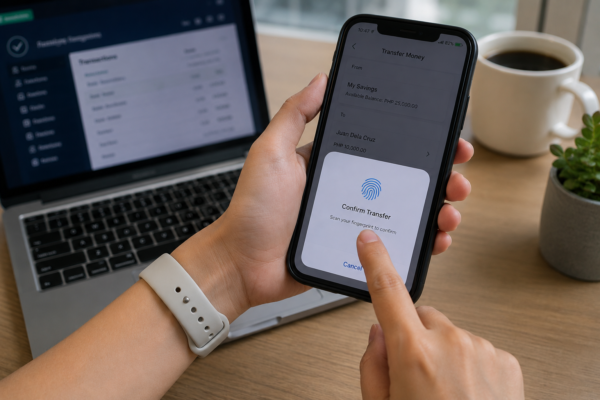


E-wallet transfers have become part of daily financial life for many Filipinos, from sending money to family members to paying merchants, bills, and online sellers.
But when a transfer fails, goes to the wrong person, appears unauthorized, or takes too long to reverse, users often face a stressful question: what should they do next?
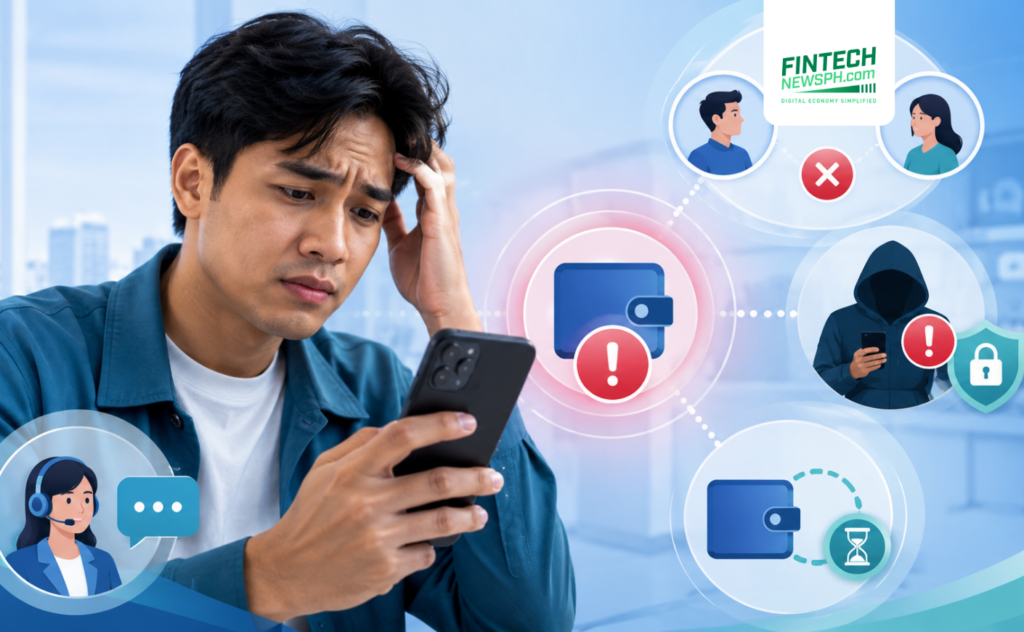
The first step is not to panic. Consumers should document the transaction, report the issue to the e-wallet provider or bank involved, and follow the formal complaint process if the concern remains unresolved.
The Bangko Sentral ng Pilipinas (BSP) reminds financial consumers that complaints should first be raised with the concerned BSP-supervised financial institution, such as a bank or e-money issuer. If the issue is not resolved, consumers may elevate the complaint through the BSP Consumer Assistance Mechanism and BSP Online Buddy.
Check the transaction details first
Before filing a report, consumers should review the transaction carefully.
This includes checking the amount, recipient details, mobile number or account number, transaction reference number, date, time, and the status shown in the app. Users should also take screenshots of the transaction page, confirmation message, error notice, email receipt, SMS alert, or chat support response.
These records matter because providers usually require sufficient information to trace a transaction. A vague report such as “my money is missing” may take longer to process than a complaint that includes the reference number, exact amount, transaction time, and account details.
Consumers should also verify whether the transfer truly failed or is simply delayed. Some transactions may appear as pending before they are completed, reversed, or updated in the user’s balance.
Report failed or delayed transfers to the provider
For failed transfers, delayed credits, or missing reversals, users should contact the e-wallet provider or bank through official customer service channels.
The complaint should clearly state what happened, when the transaction was made, how much was involved, and what resolution is being requested. For example, users may ask for confirmation of whether the transaction was completed, credited to the recipient, or queued for reversal.
Consumers should keep the case number, ticket number, email thread, or chat transcript provided by the financial institution. This will be important if the issue needs to be escalated later.
It is also safer to use only official in-app support channels, verified hotlines, official websites, or official social media pages. Users should avoid sending transaction details to unofficial pages, random commenters, or individuals claiming they can speed up reversals.
Act quickly for wrong sends
Wrong sends should be reported as soon as possible.
A wrong send may happen when a user enters an incorrect mobile number, account number, or amount. In these cases, users should immediately inform their e-wallet provider or bank and provide the transaction reference number, recipient details, amount, and time of transfer.
Users should not assume that funds can be automatically reversed. Financial institutions typically need to verify the transaction and coordinate with the receiving institution or account holder, depending on the case.
This is why consumers should always double-check the recipient name, mobile number, QR code, and amount before confirming a transfer. For large transfers, it may be safer to send a small test amount first, especially when paying a new recipient.
Secure the account if the transaction was unauthorized
Unauthorized transactions should be treated as urgent.
If a user sees a transfer they did not make, the first step is to secure the account. This may include changing the password, logging out of all devices if the app allows it, disabling linked cards or accounts, and contacting the provider to report possible account compromise.
Consumers should also check for suspicious messages, fake links, one-time PIN requests, phishing attempts, or calls from individuals pretending to be customer service agents.
A report should be filed immediately with the e-wallet provider or bank. Users should request an investigation, account protection measures, and a case reference number.
If the case involves scams, fraud, identity theft, or criminal activity, consumers may also report the matter to law enforcement agencies such as the Philippine National Police (PNP), National Bureau of Investigation (NBI), or the Cybercrime Investigation and Coordinating Center (CICC).
Escalate unresolved complaints to BSP
If the financial institution does not resolve the issue, or if the consumer is not satisfied with the response, the complaint may be escalated to the BSP.
The BSP Consumer Assistance Mechanism is a second-level recourse for complaints involving BSP-supervised institutions. Consumers may file through BSP Online Buddy (BOB), accessible via the BSP website or official Facebook page.
Consumers who cannot access BOB may submit a Complaint, Inquiry, and Request form via email. The complaint should include details of the concern, the requested resolution, contact information, a copy of the complaint filed with the financial institution, the institution’s reply (if any), and supporting documents.
The BSP also reminds consumers not to share sensitive information such as PINs, passwords, full account numbers, credit card or ATM card numbers, passports, passbooks, or identification cards that are not required for complaint processing.
Keep records until the issue is closed
Consumers should keep all records until the complaint is fully resolved.
This includes screenshots, transaction receipts, reference numbers, email responses, support tickets, call logs, and the final resolution from the provider. If the case is escalated to the BSP, the consumer should also keep the BSP reference number.
E-wallets have made money movement faster and more convenient, but speed also makes it important for consumers to act quickly when something goes wrong.
The safest approach is to document the issue, report it through official channels, secure the account when necessary, and escalate unresolved complaints through the proper consumer assistance process.