
After months of anticipation and days of quiet sightings by early users, Apple Pay has officially arrived in the Philippines, giving eligible Visa cardholders a new way to pay using their iPhone, Apple Watch, iPad, or Mac.
Visa announced on Monday that holders of eligible Visa debit and credit cards issued by participating Philippine banks can now add their cards to Apple Wallet and begin making contactless purchases through Apple Pay. The launch marks Apple’s official entry into the local mobile payments market and adds another option to the country’s growing digital payments ecosystem.
The announcement follows reports over the past two days from Filipino users who successfully linked locally issued cards to Apple Wallet and completed purchases at contactless payment terminals. Visa’s confirmation removes any remaining uncertainty that the rollout has moved beyond limited testing and is now commercially available in the country.
For Visa, the launch represents another milestone in the Philippines’ gradual transition toward digital payments.
“Apple Pay represents the next evolution of payments in the Philippines, combining ease of use, simplicity, and security in every transaction,” said Jeffrey Navarro, Country Manager for Visa Philippines.
“With Apple Pay, Filipinos and tourists alike now have seamless and secure ways to pay across shops, restaurants, travel destinations, and public transport, supporting the nation’s vision to become a cash-lite economy.”
Visa said the rollout also benefits Filipinos traveling abroad, as well as international visitors to the Philippines, where contactless card payments have become increasingly common across shopping malls, restaurants, supermarkets, pharmacies, and transport hubs.
The company cited its Global Travel Intentions Study, which found that 97% of travelers across Asia Pacific plan to carry payment cards during their trips, compared with only 17% who intend to bring foreign currency. More than a third also cited fraud protection as the primary reason for preferring cards while traveling.
More than just another digital wallet
Although Apple Pay joins a market already dominated by GCash and Maya, it serves a different purpose.
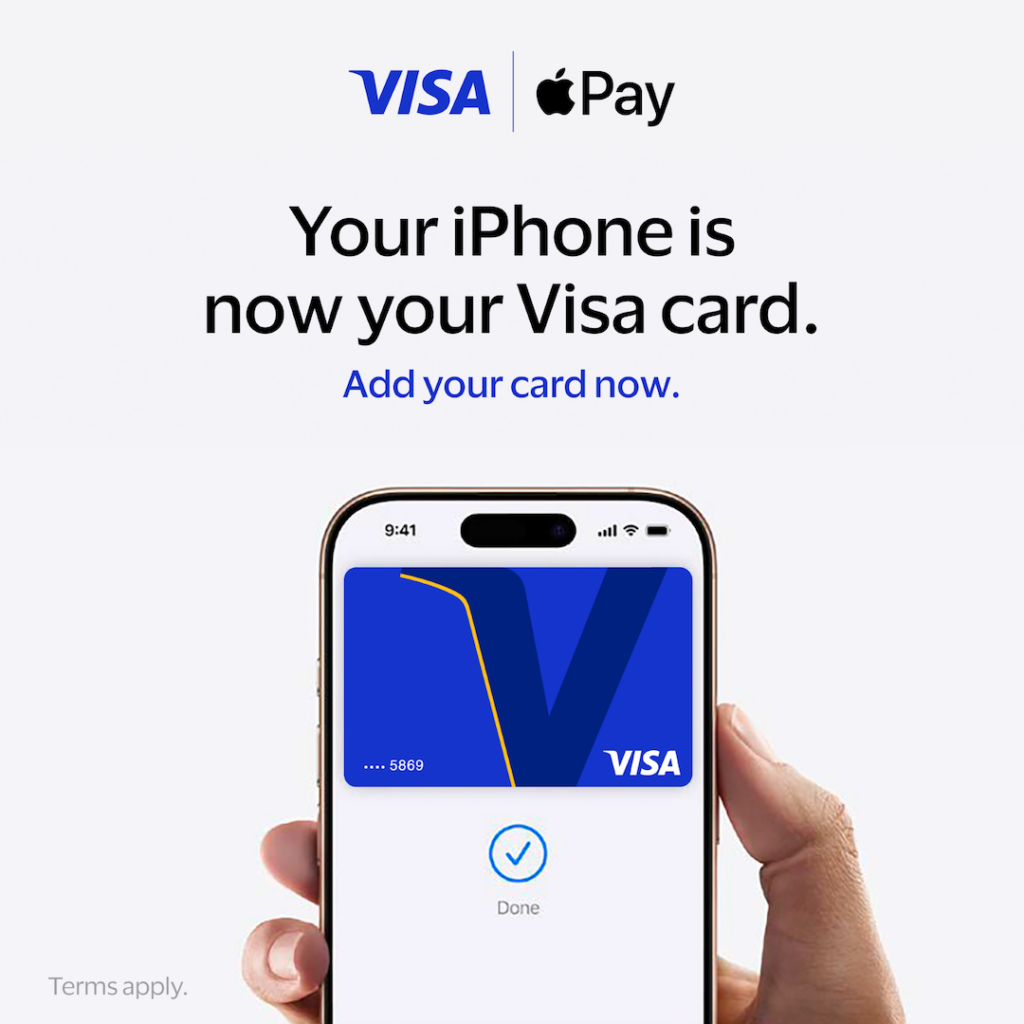
Unlike stored-value e-wallets that require users to load funds into a separate account, Apple Pay digitizes an eligible debit or credit card already issued by a participating bank. Purchases continue to be charged directly to the customer’s existing bank account or credit line.
In effect, Apple Pay functions as a secure digital version of a physical payment card rather than a standalone financial platform.
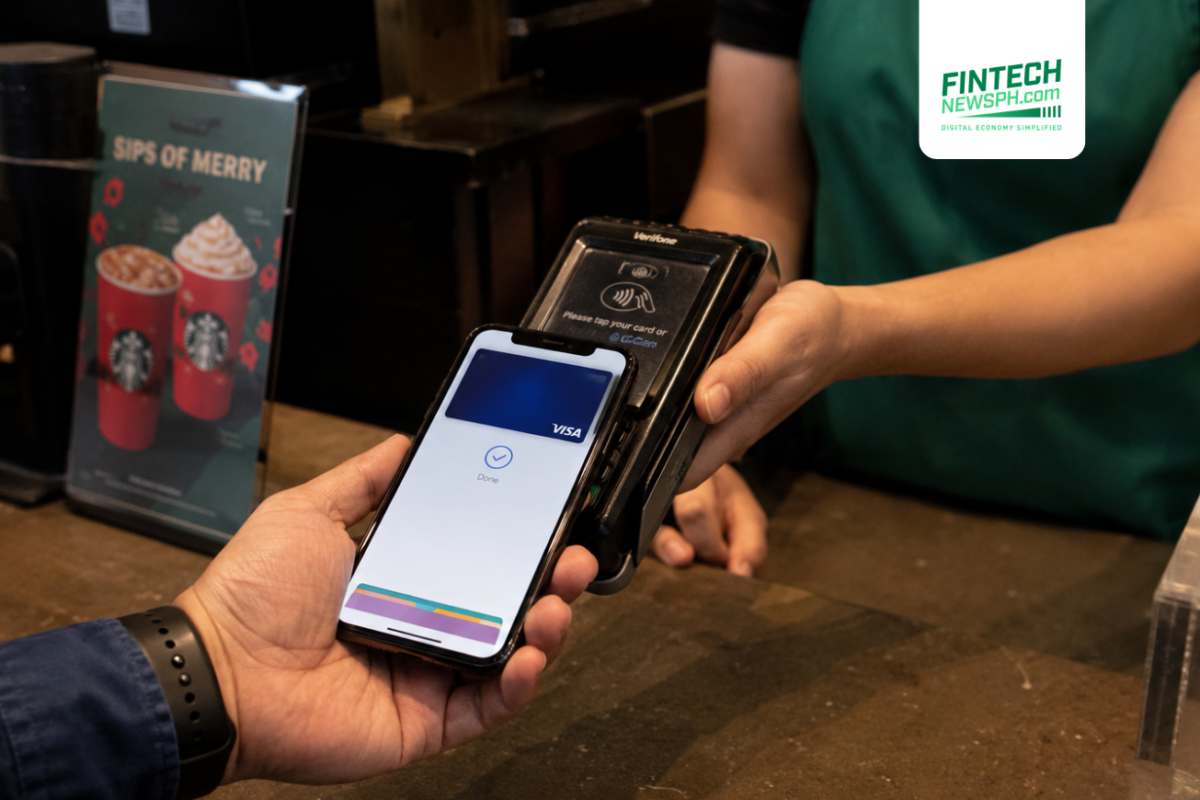
Making a payment is straightforward. Users authenticate with Face ID, Touch ID, or their device passcode before holding their iPhone or Apple Watch near a compatible contactless payment terminal. The same experience extends to online shopping and in-app purchases, where Apple Pay can automatically populate payment and shipping information without repeatedly entering card details.
Which Philippine banks currently support Apple Pay?
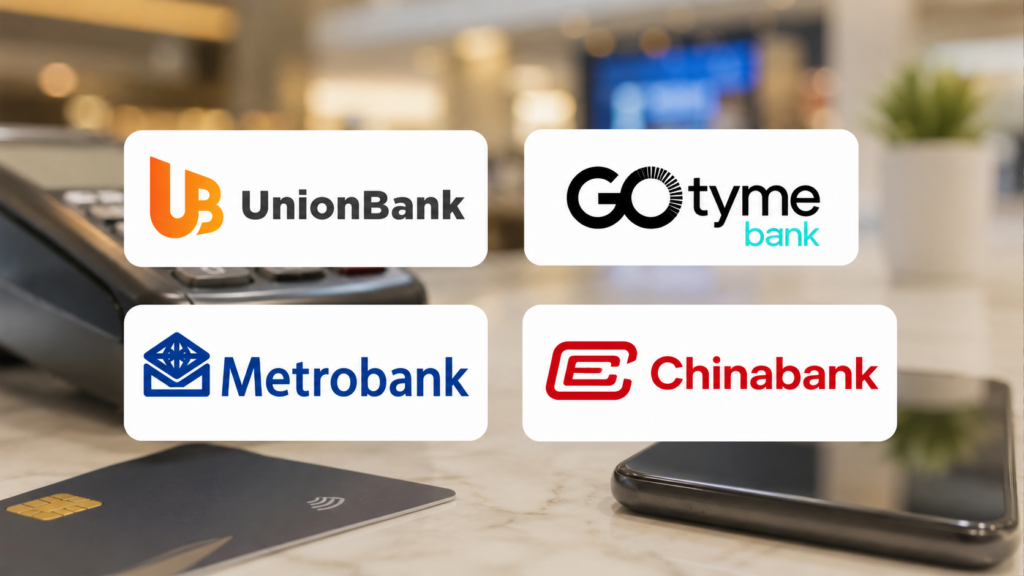
Early reports indicate that eligible cards from UnionBank, GoTyme Bank, Metrobank, and Chinabank can already be added to Apple Wallet, with users successfully completing local transactions.
However, Apple has yet to publish an official list of participating Philippine issuers. Support is expected to expand gradually as additional financial institutions complete their technical integration.
Even among participating banks, compatibility may differ depending on the card product. Apple notes that eligibility is determined by the issuing bank, meaning not every debit, credit, or prepaid card will necessarily support Apple Pay from the outset.
Customers can check whether their card is eligible by opening Apple Wallet, tapping the “+” icon, selecting “Debit or Credit Card,” and completing the verification process required by their bank. Depending on the issuer, verification may involve a one-time password, confirmation through the bank’s mobile application, or a call to customer service.
Customers whose cards cannot be added are advised to contact their issuing bank, as participating institutions may not immediately support every card in their portfolio.
Existing contactless terminals provide a head start
One reason Apple Pay could gain traction relatively quickly is that most merchants will not need to invest in new payment hardware.
The service works with NFC-enabled terminals that already accept contactless Visa payments, allowing retailers to support Apple Pay wherever tap-to-pay transactions are enabled.
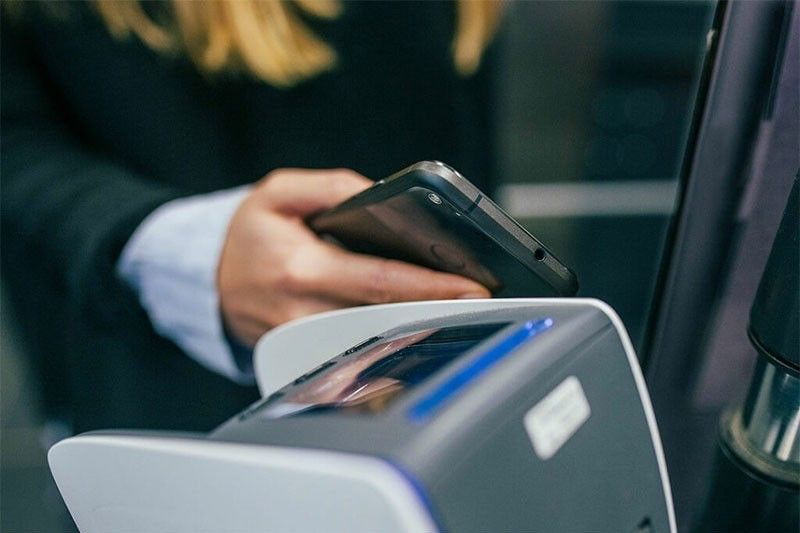
Even so, the customer experience will depend on merchant readiness. Some stores already have compatible terminals but continue directing customers to insert physical cards or pay via QR codes because of existing checkout procedures or cashier familiarity.
Industry observers say wider adoption will likely depend not only on more banks joining Apple Pay but also on continued support from acquiring banks, payment processors, retailers, and frontline staff to ensure customers can confidently use mobile contactless payments.
Security remains at the core
Visa also highlighted Apple’s security architecture, which has been central to Apple Pay since its international launch more than a decade ago.
Rather than storing a customer’s actual card number on the device or Apple’s servers, Apple Pay generates a unique Device Account Number that is encrypted and securely stored inside the Secure Element, a dedicated security chip built into Apple devices.
Each transaction is authenticated through Face ID, Touch ID, or the device passcode and protected by a one-time dynamic security code, reducing the exposure of sensitive payment information during checkout.
Consumers are still encouraged to follow standard security practices, including protecting their Apple Account credentials, safeguarding one-time passwords, and reporting lost devices or suspicious transactions immediately to their issuing bank.
For Filipino Apple users, the launch finally delivers a feature that has long been available in many other markets. As more banks and merchants join the platform, Apple Pay could become another familiar way for consumers to tap, pay, and go — without ever taking a physical card out of their wallet.
Tomorrow on FintechNewsPH: Why Apple Pay took longer to arrive in the Philippines—and why it’s unlikely to replace GCash and Maya.