
The gap between businesses that accept cards and those that rely solely on cash has always been a question of hardware.
A traditional point-of-sale (POS) terminal requires upfront capital, lengthy onboarding paperwork, and—for a neighborhood sari-sari stores earning P3,000 a day—simply does not make financial sense.
As a result, micro, small, and medium enterprises (MSMEs), which represent over 99% of Philippine business establishments and employ 67% of the national workforce, have historically remained cash-first.
This reluctance persists even as digital inventory tools drive documented sales growth across digitized micro-retailers.
That dynamic, however, is beginning to shift.
How U Accept actually works
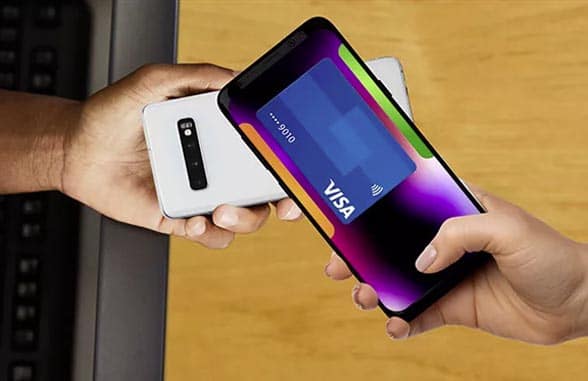
Earlier this month, Visa and USSC Money Services, Inc. (UMSI) launched U Accept —a digital payment solution that allows Filipino MSMEs to accept contactless card payments using a standard smartphone.
Powered by Visa Accept and integrated into UMSI’s uGrow mobile application, the platform targets merchants who already own NFC-enabled Android devices, eliminating the need to purchase, lease, or maintain dedicated hardware.
The operational process requires minimal setup:
- Activation: The merchant enables U Accept within the uGrow app.
- Transaction: The customer taps a contactless Visa card against the merchant’s phone.
- Settlement: Funds process instantly and settle on a near-real-time basis into a U Visa prepaid card.
- Recordkeeping: Digital receipts are dispatched via email, while sales and inventory metrics update directly within the application.
Smartphones as financial infrastructure
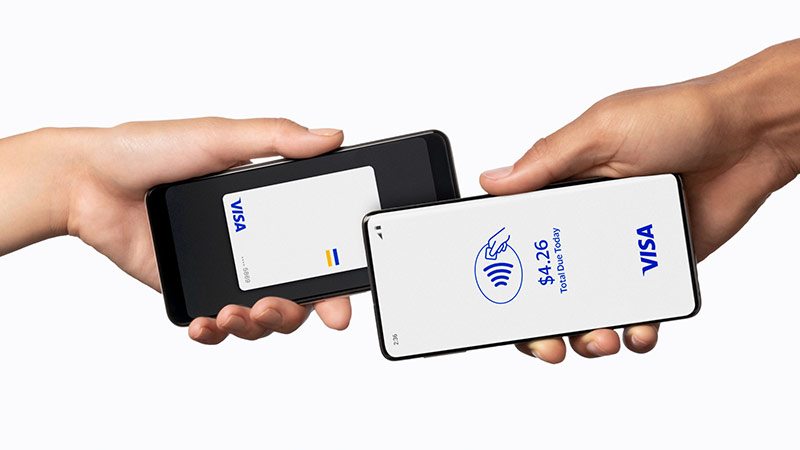
IMAGE CREDIT: Visa Singapore
The underlying concept reflects a broader industry shift: transforming commercial smartphones into primary financial infrastructure.
The same handset a store owner uses for messaging and social media now functions as a point-of-sale terminal, a payment gateway, and—via the linked prepaid card—a commercial account.
This merchant-side capability aligns with broader retail payment initiatives led by the Bangko Sentral ng Pilipinas (BSP), including consumer-facing updates to InstaPay and Direct Debit, alongside national financial literacy outreach programs across rural provinces.
Friction points and market barriers
Whether soft-POS technology can fully dismantle cash reliance among micro-merchants remains an open question. While UMSI has waived initial onboarding fees, standard merchant discount rates (MDR) still apply to card transactions.
For low-margin retailers, processing fees remain a key point of resistance.
Additionally, card-acceptance tools depend on consumer adoption of contactless payment methods.
In a market where many Filipinos predominantly rely on multiple e-wallets to manage daily cash flow, tap-to-pay habits are not yet universal.
Addressing these market dynamics, Visa Country Manager Jeffrey Navarro framed U Accept as an introductory bridge for first-time digital merchants rather than an immediate replacement for traditional POS systems.
For micro-entrepreneurs across the country, turning an existing mobile phone into a revenue-generating terminal represents a practical first step.