More than 1.2 million Filipino micro, small and medium enterprises (MSMEs) could eventually gain a stronger digital footprint for securing loans under a new initiative that aims to give lenders better access to verified business and credit information.
The Department of Trade and Industry (DTI) and ADVANCE.CBP (Advintel Inc.) have signed a memorandum of understanding (MOU) to develop SME Trust, a proposed credit profile registry that will create verified digital records for MSMEs and, in later stages, generate credit scores that financial institutions can use in evaluating borrowers.
The agreement was signed at the DTI Head Office in Makati City on Aug. 6.
At the heart of the initiative is a problem that many small businesses know well: having a viable business does not always mean having the records needed to convince a bank to lend.
Many MSMEs have limited formal credit histories, fragmented financial records or little data that lenders can use to assess their ability to repay a loan.
SME Trust is intended to address that gap by creating a verified business profile that can give lenders and other businesses a clearer picture of who they are dealing with.
Giving small businesses a verifiable identity
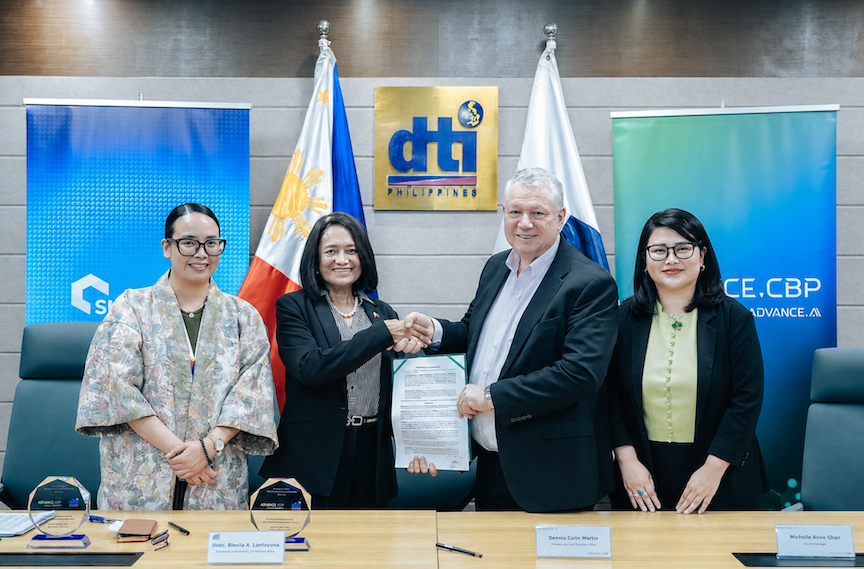
From left: DTI BSMED OIC Myrtle Faye Solina, DTI Undersecretary Blesila Lantayona, ADVANCE.AI CEO Dennis Martin, and ADVANCE.CBP Country Manager Michelle Anne Chan. (IMAGE CREDIT: ADVANCE.CBP)
The proposed registry will combine digital identity verification, credit information, cybersecurity and electronic Know Your Customer (e-KYC) capabilities and will be rolled out through the DTI’s network of more than 1,400 Negosyo Centers.
The initiative will be developed in three phases.
The first will focus on establishing verified business profiles for MSMEs through the Negosyo Centers. The second will expand the network to partner platforms and institutions. The third is expected to introduce MSME credit scores that can be used by lenders in making financing decisions.
For small businesses, that could mean having a digital record that goes beyond a business registration certificate.
The profile could also be used when dealing with other businesses. With the owner’s consent, prospective partners would be able to review a company’s verified information before entering into a commercial transaction.
That could help businesses assess potential partners and reduce exposure to fraud, delayed payments and other counterparty risks.
A new source of data for lenders
The financing side is where the initiative could have its biggest impact.
Banks and other financial institutions often have to work with incomplete information when evaluating small-business borrowers. A standardized profile built from verified data could give lenders another way to assess risk, rather than relying largely on documents and information supplied by the applicant.
The data could also support automated parts of the loan approval process, potentially reducing the time it takes to evaluate MSME applications.
DTI Undersecretary Blesila Lantayona said the initiative could help financial institutions make better-informed lending decisions while giving entrepreneurs greater opportunities to obtain fair and affordable financing.
“SME Trust will help financial institutions make more informed lending decisions while giving entrepreneurs greater opportunities to obtain fair and affordable financing,” Lantayona said.
She also pointed to the potential benefits outside major urban centers, saying the initiative could give businesses in rural communities greater digital visibility.
For the DTI, the data could also provide a clearer picture of where entrepreneurs need additional support, including mentoring, training and business development assistance.
Filling an MSME credit information gap

IMAGE CREDIT: Freepik
The scale of the potential market is significant.
The Philippine Statistics Authority estimates that more than 1.2 million MSMEs account for 99.63% of registered business establishments in the country. They employ about 63% of the national workforce and contribute roughly 40% to the economy.
Yet their size also creates a financing challenge.
A small business may have customers, suppliers and years of operating experience but still struggle to build the kind of formal credit history that a bank can use in approving a loan.
That is the gap ADVANCE.CBP hopes to address through SME Trust.
“Filipinos are among the most entrepreneurial people in the world – yet MSMEs have lacked the trusted data infrastructure to prove their credibility and unlock financing,” said Michelle Anne Chan, country manager of ADVANCE.CBP.
Chan said the initiative is intended to provide businesses with a verifiable identity and a pathway toward formal credit while supporting a more data-driven financial ecosystem.
From registration to creditworthiness

IMAGE CREDIT: Freepik
The proposed registry also comes at a time when financial institutions are looking for better ways to assess borrowers who may not have traditional credit histories.
Alternative data, digital identity verification and real-time information are increasingly becoming part of the lending technology stack, particularly as banks and fintech companies look to serve customers who have historically been underserved by the formal financial system.
For MSMEs, however, the value of SME Trust will depend on what happens after the MOU.
The registry will need broad MSME participation, reliable and regularly updated information, appropriate consent mechanisms and adoption by banks and other financial institutions before it can meaningfully change how small businesses access credit.
The initiative is therefore less about creating another database and more about giving small businesses a way to prove that they are creditworthy.
If it succeeds, a verified business profile could become an important piece of an MSME’s financial identity—helping lenders see beyond the limited credit history that has often kept otherwise viable businesses from getting the financing they need.
For the country’s smallest businesses, better access to credit may begin with something more basic: having the right data to show that they deserve it.