

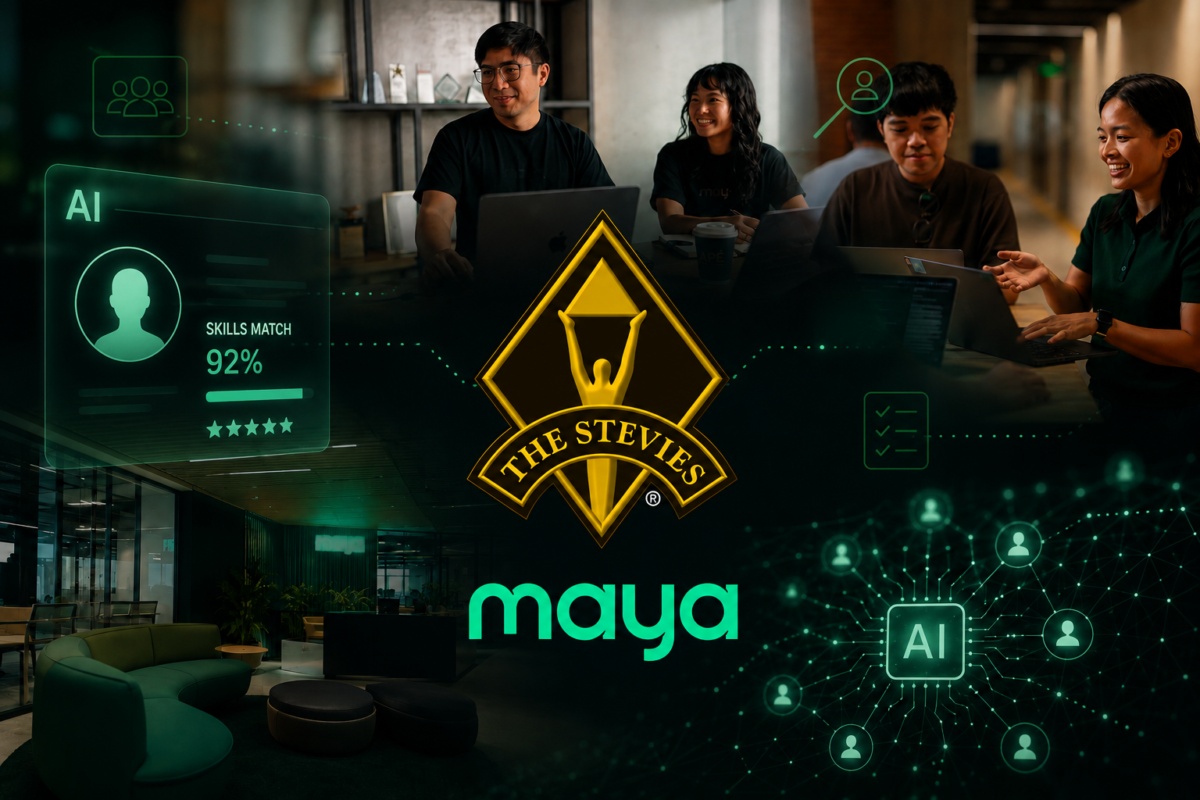
Maya is bringing artificial intelligence into another part of its business: how it finds, hires, and engages employees.
The digital financial services company is using AI-assisted tools in recruitment while also applying data and experience design to employer branding, onboarding, and employee engagement.
The approach has earned for the company seven recognitions at the 2026 Stevie Awards for Great Employers, including awards covering recruitment, employer branding, onboarding, employee engagement, and people leadership.
Maya said its use of AI is focused on taking some of the friction out of the hiring process rather than replacing the people making the decisions.
Its recruiters use AI-assisted search to identify candidates based on relevant skills and experience, while AI-assisted outreach helps make conversations with potential hires more tailored. Recruiters and business leaders remain responsible for evaluating candidates and making hiring decisions.
“For us, being AI-first is not about replacing human judgment. It is about using technology to remove friction, make better decisions and help people focus on work that creates value,” said Carla G. Lanza, Chief People Officer of Maya. “We are applying the same attention to simplicity, relevance and experience that shapes our products to how we build our teams and culture.”
Making the employee journey more deliberate

IMAGE CREDIT: Maya
Maya’s use of technology extends beyond recruitment.
The company has reworked its employer branding to give prospective employees a better sense of the roles, expectations, and opportunities available before they apply.
Its onboarding program starts before a new employee’s first day and continues through their integration into the company. Maya has also introduced employee engagement initiatives aimed at strengthening connections between employees, customers, recognition programs, wellbeing, and the company’s purpose.
The company received a Silver Stevie Award for Experience-Driven Employer Branding and three Bronze awards for Scaling High-Quality Hiring with Embedded AI, Engineering Engagement that Creates a BOLDER Culture, and Designing a Purpose-Driven, End-to-End Onboarding Experience at Scale.
Lanza was also recognized with a Silver Stevie Award for Chief Human Resources Officer of the Year.
Two other Maya executives received individual awards. Andrea Agatha Pascual, Employee Engagement Manager, won the Gold Stevie Award for Employee Engagement Professional of the Year, while Rose Ann Belangoy, Senior Lead for Payroll, received a Bronze Stevie Award for Benefits or Payroll Professional of the Year.
The Stevie Awards for Great Employers recognize companies, HR professionals, teams, and workplace initiatives. More than 160 professionals worldwide took part in this year’s judging, while more than 178,000 public votes were also included in determining winners in the Employer of the Year categories.
AI moves deeper into Maya’s operations

IMAGE CREDIT: Maya
Maya’s use of AI in its workforce comes as the company continues to expand the technology across its financial services operations.
The company has been using AI in areas such as customer acquisition, personalization, customer service, credit, fraud prevention, and operations. Talent management is now another area where the technology is being applied.
The digital financial services company said its AI initiatives are implemented with governance and human oversight, with security, accountability, and responsible use built into the process.
The move also reflects how AI is becoming part of more than just customer-facing products. For companies adopting the technology, recruitment, employee engagement, and other internal functions are increasingly becoming areas where AI can help teams handle information, streamline processes, and make decisions.
For Maya, the goal is to bring that approach into the workplace without taking people out of the equation.
As AI becomes more deeply embedded in how companies operate, the question is no longer limited to how the technology can serve customers. It is also becoming a question of how it can change the way companies build and manage the teams behind those services.