

Philippine GDP growth slowed to 2.3% in the second quarter of 2026 as investment contracted and household spending lost momentum, leaving the Bangko Sentral ng Pilipinas with a more difficult policy decision as it continues to deal with elevated inflation.
The second-quarter expansion was weaker than the 2.8% growth recorded in the first three months of the year and marked the economy’s slowest annual growth since 2021. First-half growth stood at 2.6%, putting the economy below the government’s full-year target of 3.5% to 4.5%.
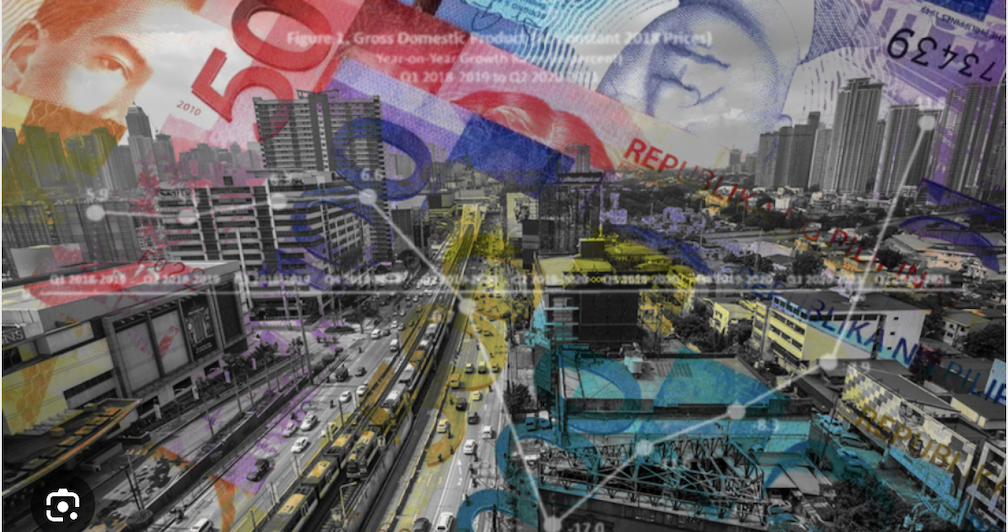
IMAGE CREDIT: Ibon Facts & Figures
According to the Philippine Statistics Authority, gross capital formation fell 9.2% year on year during the quarter. Household consumption, which remains a major driver of the Philippine economy, grew by 2.8%, while industry contracted by 2.4%. Services and agriculture expanded by 4.5% and 2.7%, respectively.
Construction was one of the largest drags, contracting by 14.8% from a year earlier. Reuters reported that the decline worsened from a 4.3% contraction in the first quarter, while investment has now fallen for four consecutive quarters.
Weak investment adds another concern
The contraction in investment is particularly important because it can affect future business expansion, infrastructure development and productive capacity.
Companies tend to become more cautious about financing expansion, purchasing equipment or taking on new projects when economic conditions weaken and borrowing becomes more expensive. For households, higher financing costs can similarly influence decisions involving homes, vehicles and other purchases typically funded through credit.
The government had already reduced its 2026 growth target to 3.5% to 4.5% before the latest GDP release. In its July outlook, the Development Budget Coordination Committee said elevated inflation could temper both household consumption and investment, alongside geopolitical uncertainty and weaker business and consumer confidence.
Those pressures are now visible in the second-quarter numbers.
Inflation limits the BSP’s room to respond
Slower growth would normally strengthen the argument for lower interest rates, which can make borrowing cheaper and support economic activity. The problem for the BSP is that inflation remains significantly elevated.
Headline inflation eased to 6.2% in July from 6.4% in June, according to PSA data. Average inflation from January to July reached 5.0%, while core inflation stood at 4.2% in July.
That remains well above the BSP’s 3% inflation target and its tolerance band of 2% to 4%. The central bank defines the 3% level as its point target rather than simply treating any rate within the tolerance range equally.
The Monetary Board has already responded to the changing inflation outlook. After raising the policy rate in April, it delivered another 25-basis-point increase in June, bringing the target reverse repurchase rate to 4.75%.
In its June Monetary Policy Report, the BSP said the inflation outlook had shifted significantly upward amid higher global oil and non-oil prices, peso depreciation, and higher agricultural costs linked partly to the conflict in the Middle East.
Higher rates flow through to borrowers
The policy rate does not determine every loan rate directly, but it influences the wider cost of funds across the financial system.
The BSP itself has noted that monetary policy works partly through the transmission of changes in its target RRP rate to bank lending and deposit rates. This channel is particularly important in the Philippines because banks account for the majority of financial-system assets.
For banks, tighter monetary conditions can influence funding costs and the pricing of corporate and consumer loans. For businesses, more expensive financing can add another hurdle to expansion at a time when investment is already declining.
Digital lenders and other credit providers also operate within the same broader economic environment. Their individual funding models may differ from those of traditional banks, but slowing growth, persistent inflation and pressure on household purchasing power can affect demand for loans as well as borrowers’ ability to repay.
That makes consumer credit quality another area to watch. Households dealing with higher prices may have less disposable income available for credit card balances, personal loans and other obligations, even as lenders reassess risk and pricing.
August 27 becomes a harder policy call
The BSP’s next monetary policy meeting is scheduled for August 27, when policymakers will have to weigh increasingly conflicting economic signals.
Inflation remains high enough to argue against easing policy too quickly. At the same time, second-quarter GDP shows weaker consumption, contracting investment and a sharp decline in construction, raising concerns about how much additional tightening the economy could absorb.
The latest figures do not automatically point to either another rate increase or a reversal. They do, however, make the trade-off more difficult.
For the BSP, the challenge is increasingly clear: keep financial conditions tight enough to bring inflation back under control without placing unnecessary additional pressure on borrowing, investment and an economy that is already growing at its weakest pace in five years.