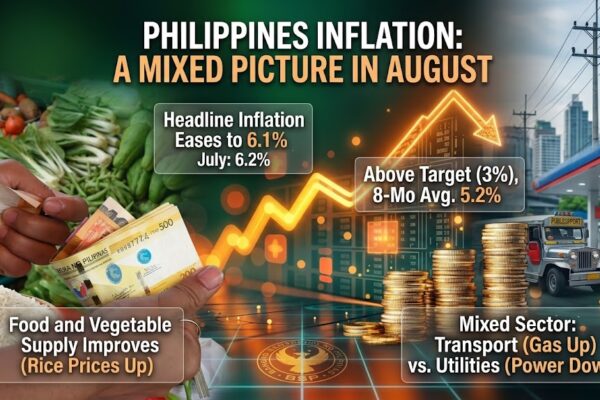


Inflation slowed for a second straight month in June as lower fuel and food prices helped ease the cost of living, but the Bangko Sentral ng Pilipinas (BSP) said underlying price pressures remain elevated, suggesting inflation could stay above target in the coming years.
Headline inflation settled at 6.4% in June, down from 6.8% in May and within the BSP’s forecast range of 6.0% to 7.0% for the month.
The latest reading brought average inflation for the first six months of 2026 to 4.8%, still above the central bank’s 3% target and its tolerance band of ±1 percentage point.
Inflation for households in the bottom 30% income group also eased, slowing to 8.0% from 8.4% a month earlier.
According to the BSP, June’s softer inflation was largely driven by lower transport and food costs.
Domestic pump prices declined during the month as global oil prices moderated amid easing geopolitical tensions linked to ongoing US-Iran negotiations. Food inflation also slowed as meat prices continued to decline, while rice inflation eased following sustained imports and the temporary price ceiling on imported rice that was in effect from mid-May to mid-June.
Lower fuel costs also boosted fishing activity, helping ease fish prices.
The decline, however, was partly offset by higher vegetable prices due to limited off-season supply and increased electricity rates resulting from higher generation charges.
On a seasonally adjusted month-on-month basis, headline inflation was unchanged in June after falling 0.6% in May.
Cost pressures continue to climb
Despite the easing in rising prices, the BSP said underlying inflationary pressures remain a concern.
Core inflation — which excludes selected food and energy items — rose to 4.4% in June from 4.1% in May, indicating that price increases are becoming more widespread beyond traditionally volatile commodities.
The central bank said second-round effects, including rising inflation expectations, continue to influence prices across the economy.
While oil prices softened during June, the BSP noted that global energy and fertilizer prices remain an important source of upside risk to the country’s economy alongside other external developments that could affect domestic prices in the months ahead.
Inflation seen staying above target
The BSP said its latest projections show inflation is likely to remain above the government’s target range throughout 2026 and 2027 before easing closer to the 3% target in 2028.
The central bank said it will continue to closely monitor incoming economic data, particularly developments in global oil markets, ahead of its next monetary policy meeting.
“The Monetary Board will continue to be guided by incoming data and is prepared to take further monetary action as needed to ensure that inflation returns to the 3.0-percent target,” the BSP said in a statement.
For banks, lenders, and fintech companies, the latest inflation data suggests that while price growth may be slowing, the interest rate environment could remain cautious if underlying inflation continues to accelerate. That could influence borrowing costs, consumer spending, and demand for digital financial services in the months ahead.