
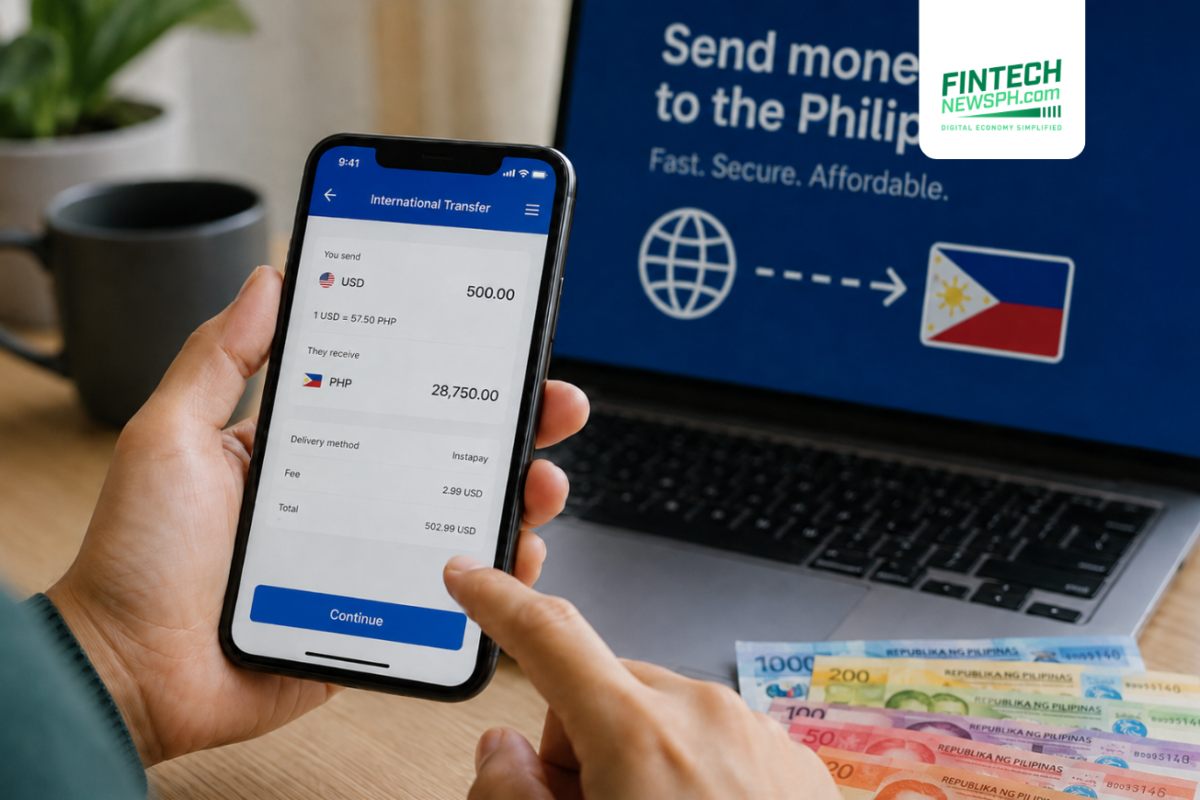
Cross-border payments have long been part of everyday financial life for Filipinos.
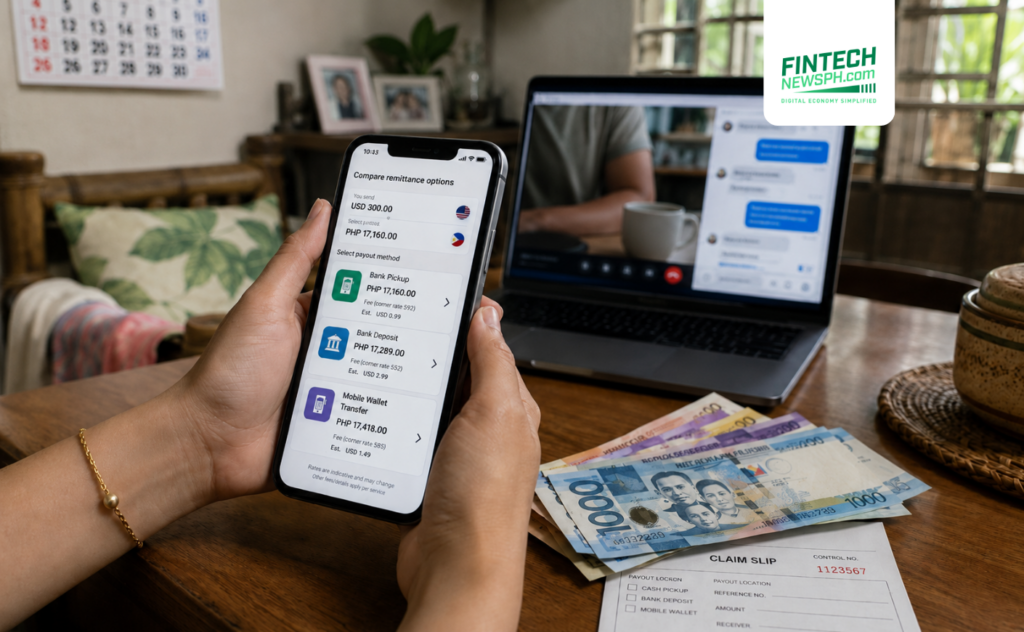
For families receiving money from overseas workers, the experience is familiar: waiting for remittances, comparing fees, checking exchange rates, and choosing between cash pickup, bank deposits, or mobile wallet transfers.
But what used to be a remittance industry conversation is now becoming a fintech infrastructure race.
A Philstar report framed the Philippines as a battleground for faster and cheaper digital remittances, citing J.P. Morgan’s view that the country is at the center of Asia’s cross-border remittance growth. The report pointed to large remittance inflows, digital wallet adoption, and demand for faster wallet-based settlement.
The size of the market explains the interest. Bangko Sentral ng Pilipinas data show that overseas Filipino cash remittances reached $35.63 billion in 2025, up from $34.49 billion in 2024. From January to April 2026, cash remittances reached $11.40 billion, higher than $11.11 billion in the same period last year.
For banks, fintechs, wallets, remittance firms, and crypto platforms, this creates a clear opportunity: whoever can make cross-border payments cheaper, faster, more transparent, and more convenient may win a bigger role in one of the country’s most important financial flows.
Remittances are moving closer to digital wallets
COMPOSITE IMAGE: FintechNewsPH
The remittance experience is changing because the endpoint is changing.
In the past, many remittances ended at a branch, pawnshop, bank counter, or cash pickup location. Today, more providers are trying to send funds directly into mobile wallets or digital accounts. This makes receiving funds more convenient for recipients who already use wallets for bills, load, online purchases, transfers, QR payments, and cash-outs.
GCash, for example, announced in 2025 that it had partnered with Viamericas to provide fast and secure remittance services for Filipinos based in North America and their families in the Philippines.
That kind of partnership shows how the competition is no longer only about who has the most branches or agents. It is also about who has the strongest digital payout network, the smoothest customer experience, and the best connection between international senders and local recipients.
For users, the value is practical. Faster remittances can help families cover bills, tuition, medicine, emergencies, and daily expenses without waiting for manual processing.
For fintechs, every remittance that lands in a wallet can become the start of a broader financial relationship, from payments and savings to credit and insurance.
Real-time infrastructure is changing the race
Cross-border payments are also becoming more competitive because domestic payment systems have improved.
Instant payment systems have made local transfers faster in many markets. The next step is connecting those systems across borders. This is the idea behind Project Nexus, a Bank for International Settlements initiative that aims to connect domestic instant payment systems to improve the speed, cost, transparency, and access of cross-border payments.
BIS said connecting instant payment systems can enable cross-border payments from sender to recipient within 60 seconds in most cases. Reuters reported that the central banks of India, Malaysia, Thailand, Singapore, and the Philippines were working together to launch an instant cross-border retail payments platform by 2026 under Project Nexus, with Indonesia participating as a special observer.
This matters because fintechs do not compete on apps alone. They also compete on rails.
A remittance app may look simple on the front end, but behind it are foreign exchange, compliance checks, liquidity management, local payout partners, wallet integrations, settlement systems, fraud controls, and customer support. If the infrastructure improves, providers can reduce friction and build better products around it.
For Philippine fintechs, real-time payment infrastructure could open the door to more regional use cases: OFW remittances, migrant worker transfers, freelancer payouts, cross-border merchant payments, and small business transactions across ASEAN.
Stablecoins are entering the payments conversation
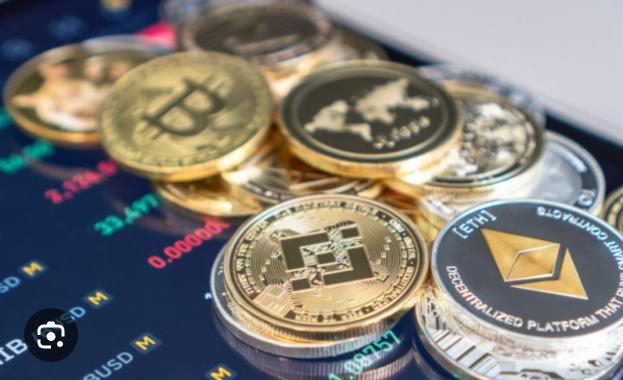
IMAGE CREDIT: Freepik
Stablecoins are another reason cross-border payments are becoming more competitive.
Unlike volatile crypto assets, stablecoins are designed to track the value of another asset, often the US dollar. This makes them more attractive for payment and settlement use cases, especially in corridors where speed, cost, and liquidity matter.
In the Philippines, some crypto and fintech firms are already positioning stablecoins as part of the remittance infrastructure layer. Coins.ph and Circle announced in 2023 that they would work together to promote financial inclusion through USDC-denominated remittances in the Philippines. Coins.ph said the partnership aimed to show how USDC could provide a faster, lower-cost, and more accessible remittance option for its users and their families abroad.
In January 2026, Coins.ph also said it had tied up with Remitly for a remittance solution that allows Remitly to process funds from all send countries directly through Coins.ph’s regulated local infrastructure. The company said the solution uses a stablecoin rail to convert sent fiat into stablecoins, enabling near-real-time settlement before recipients receive PHP funds.
Globally, the institutional stablecoin push is also growing. Reuters reported in June 2026 that a consortium including Visa, Mastercard, Coinbase, and other companies launched Open Standard, which will issue a US dollar-pegged stablecoin called Open USD.
Still, stablecoins are not a simple replacement for regulated remittance channels. They raise questions around licensing, reserves, redemption, consumer protection, sanctions screening, and transaction errors.
For mainstream users, the winning stablecoin product may not even look like crypto. It may simply appear as a faster remittance or payout option, with licensed providers handling the technical and regulatory layers behind the scenes.
The battleground is bigger than remittances
The next cross-border payments race in the Philippines will not be limited to OFW remittances.
Freelancers need to receive international earnings. Online sellers may need to accept payments from overseas buyers. SMEs may have to pay suppliers or receive funds from foreign clients. Digital platforms may need payout systems for creators, workers, merchants, and service providers across markets.
This is where local fintechs can expand beyond consumer wallets. A company that starts with domestic payments can move into international payouts. A crypto platform can become a settlement partner. A remittance firm can connect to wallets. A bank can provide liquidity, compliance, and account infrastructure. A payment gateway can help merchants accept funds from foreign customers.
The opportunity is large, but the bar is also higher. Cross-border payments require trust. Users need clear fees, reliable exchange rates, transparent timelines, safe dispute handling, and confidence that their money will arrive.
For regulators, the challenge is to support faster and cheaper transfers while keeping controls around money laundering, fraud, consumer protection, and operational resilience. For fintechs, the challenge is to make the experience simple without hiding the risks.
The Philippines has the demand, the digital wallet base, and the remittance flows to become a major market for cross-border payment innovation. But the companies that win may not be those that only advertise speed. They will be the ones that can combine speed with trust, compliance, strong partnerships, and reliable infrastructure.
Cross-border payments are becoming the next battleground because they sit at the center of what Philippine fintech is trying to solve: moving money faster, across more channels, for more people, at lower cost. The race is now about who can make moving money across borders feel as seamless as sending it across town.
—
Disclaimer: This article is for news and informational purposes only and should not be construed as financial or investment advice or an endorsement of any cryptocurrency or platform. Crypto-assets are highly speculative and involve significant risks. Readers should verify the regulatory status of crypto service providers with the BSP and the SEC before making any investment or transaction.