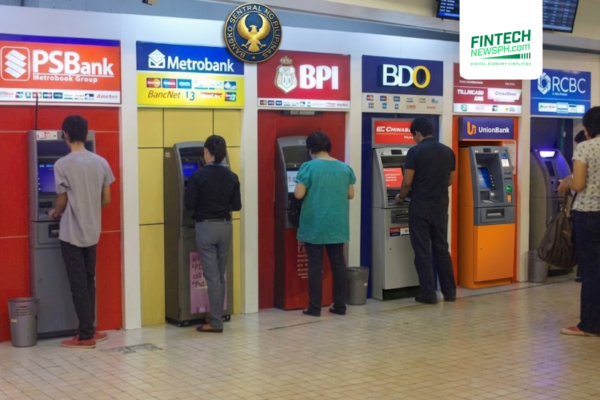
Free InstaPay transfers are starting to become more than a bank promo.
For Philippine banks, they are turning into a strategy to keep customers active, support digital adoption, and respond to a market where small transfer fees are becoming harder to justify.

The shift became more visible after BPI announced that fund transfers to other banks and e-wallets via InstaPay and PESONet on the BPI app, online banking, VYBE, BanKo, and BizKo will be permanently free starting July 1, 2026. BPI said the move covers zero fees for transfers to other banks and e-wallets, including InstaPay real-time transfers and PESONet batch processing.
RCBC has also joined the move. In an official post, the bank said customers can enjoy ₱0 InstaPay fees starting July 4, 2026, when sending money to other local banks through RCBC Pulz.
A growing industry trend
In a breaking news update posted by the Manila Bulletin, BSP Governor Eli M. Remolona Jr. said more banks are expected to waive or lower their fund transfer fees within the next two days, following the recent moves by BPI and RCBC.

The statement gives the fee cuts a wider industry context. Instead of appearing as isolated bank announcements, the recent moves suggest that lower-cost digital transfers could become a broader direction for the banking sector.
This does not mean all bank transfers in the Philippines are now free. Some waived fees may still depend on the bank, app, account type, transaction channel, monthly limit, or customer segment. RCBC’s Hexagon Club page, for example, says free InstaPay transfers via RCBC Pulz apply to Hexagon Club members, while PESONet transfers are not covered under that specific benefit and still carry a regular ₱10 fee.
Still, the direction is becoming clear. Transfer fees are no longer just small service charges. They are becoming part of how banks compete for digital customers.
Transfer fees became a customer pain point
For many users, a ₱10 or ₱25 transfer fee may look small on paper. But it feels different when someone moves money several times a week between banks, e-wallets, payroll accounts, savings accounts, and family members.
Digital banking has made transfers part of everyday financial life.
People use InstaPay to send allowances, split expenses, pay small sellers, top up e-wallets, or move extra funds into another account.
Because of that, transfer fees are now more visible. Every fee reminds users that moving their own money still has a cost. For banks trying to keep customers inside their own apps, that friction matters.
Free transfers can keep users inside bank apps
Banks do not remove fees simply because they want to give up revenue. The bigger bet is that free transfers can help make their apps more useful and harder to replace.
A customer who uses a bank app often is more likely to keep money there, check balances there, pay from there, and eventually use more of the bank’s products. That could include savings, credit cards, loans, investments, or business banking services.
BPI itself said the removal of interbank transfer fees is part of its broader strategy to drive digital adoption and improve access to financial services. The bank also said the initiative is expected to benefit more than 9.5 million enrolled BPI app users.
In this sense, free transfers are not just a consumer perk. They are a retention tool.
BPI itself the removal of interbank transfer fees is part of its broader strategy to drive digital adoption and improve access to financial services. The bank also said the initiative is expected to benefit more than 9.5 million enrolled BPI app users.
In this sense, free transfers are not just a consumer perk. They are a retention tool.
BSP rules changed the fee conversation
The timing also comes as the Bangko Sentral ng Pilipinas pushes the industry toward more reasonable electronic fund transfer fees.
BPI said its move is aligned with BSP Circular No. 1238, Series of 2026, which calls on BSP-supervised financial institutions to adopt reasonable, fair, and market-based pricing for person-to-person electronic fund transfers.
The BSP has also recognized that high fees remain a barrier to wider digital payment adoption, according to its 2024 e-payments report. The same report said digital retail payments accounted for 57.4% of total retail payment transaction volume in 2024, up from 52.8% in 2023.
This makes the pricing issue more important. As digital payments become more common, the cost of moving money affects more users and more transactions.
Digital banks helped reset expectations
Digital banks and other financial institutions also helped change what consumers expect from transfers.
The BSP’s summary of transfer fees as of May 31, 2026 showed several supervised financial institutions with waived, zero, or conditional zero fees for PESONet and InstaPay transactions.
These include some digital banks, thrift banks, rural banks, and electronic money issuers.
That puts pressure on traditional banks. Once users experience free or low-cost transfers elsewhere, they may start questioning why their main bank still charges for the same basic action.
This is especially true for younger and more digital-first customers who compare banks based on app experience, speed, fees, and convenience.
What consumers should still check
Free transfers are good news, but users should still read the details before assuming that all transactions are covered.
Some banks may limit free transfers to certain apps, account types, monthly caps, transaction amounts, or customer segments. Others may cover InstaPay but not PESONet, or apply free transfers only through selected digital channels.
The bigger story is not that every transfer fee has disappeared. It is that Philippine banks are starting to treat lower-cost transfers as part of digital banking itself.
As competition grows and BSP rules push pricing closer to actual costs, free or cheaper transfers may become less of a promo and more of a baseline expectation for Filipino banking customers.