Visa, UMSI turn smartphones into card terminals for Filipino MSMEs
By Leira Mananzan
calendar_today
August 12, 2026
schedule
7 min read
visibility
257 views
100%
hourglass_top7 min left
A smartphone could become the next payment terminal for thousands of Filipino small businesses as Visa and USSC Money Services Inc. (UMSI) bring a new card acceptance solution to the Philippines.
Called U Accept, the service allows eligible NFC-enabled smartphones to accept contactless card payments, giving micro, small and medium enterprises (MSMEs) an alternative to dedicated point-of-sale (POS) terminals.
U Accept is powered by Visa Accept and integrated into UMSI’s uGrow platform for entrepreneurs and small businesses.
The companies launched the service in August as they seek to address one of the more practical barriers to digital payments: getting small merchants equipped to accept them.
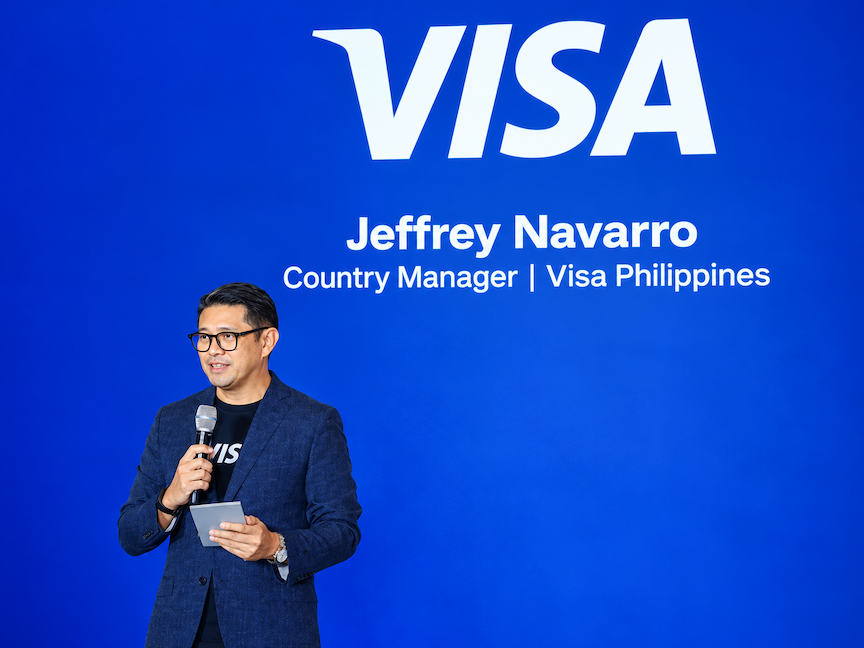
Jeffrey Navarro, Country Manager of Visa Philippines
According to data cited by the Bangko Sentral ng Pilipinas (BSP), MSMEs account for more than 99% of businesses in the Philippines and generate about 67% of employment.
Yet many small businesses still operate largely on cash because of the cost of payment hardware, onboarding requirements and limited awareness of available digital payment solutions.
Jeffrey Navarro, Visa Philippines country manager, said those barriers remain despite the important role MSMEs play in the economy.
“Today marks a game-changing innovation for MSMEs in the country,” Navarro said, noting that hardware costs, onboarding and lack of awareness have kept some businesses from accepting card payments.
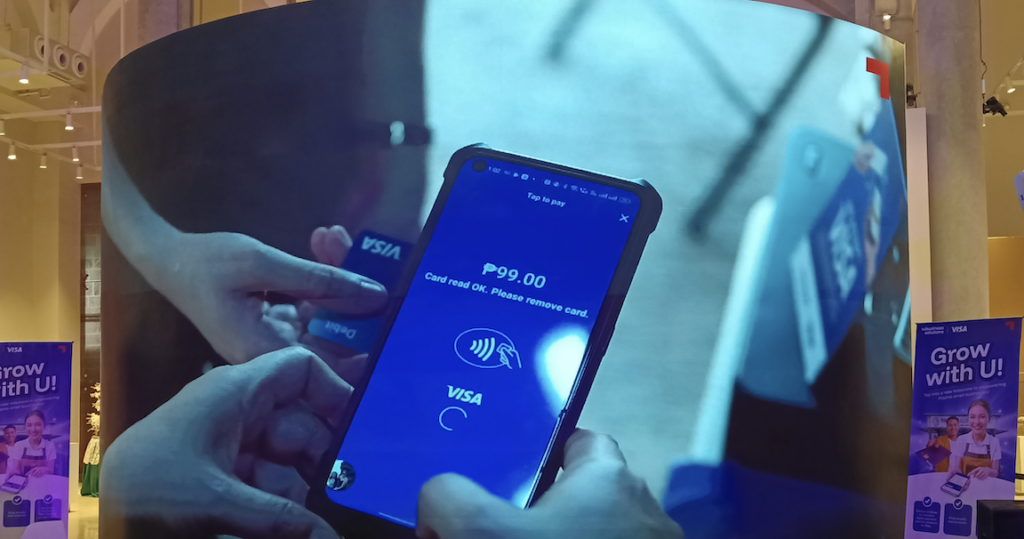
A payment terminal in a smartphone
At the launch, a giant screen is used to show how the smartphone can be used as a payment terminal (IMAGE CREDIT: Neo Magtira)
U Accept is designed to make card acceptance possible using hardware that many entrepreneurs already have: their smartphones.
A customer can tap a contactless card on an eligible merchant smartphone to pay. The service also supports pay-by-link transactions, while merchants can send digital receipts, review transaction histories and use uGrow’s other tools for monitoring sales and managing inventory.
Payments can be settled on a near-real-time basis to the merchant’s U Visa Prepaid Card.
Visa first introduced Visa Accept in Asia Pacific as a way for micro-sellers to receive card payments using NFC-enabled smartphones rather than dedicated POS hardware. The Philippine rollout brings that model to Filipino entrepreneurs through UMSI.
For UMSI President and CEO Jose Xavier Gonzales, making the process easier for small businesses is central to the company’s approach.
“One is convenience. Easier to onboard. Less documentation, but still eKYC,” Gonzales said during the launch.
The use of a smartphone also means a merchant does not necessarily have to acquire another piece of equipment simply to accept a card payment.
Visa said U Accept is intended as an entry-level payment acceptance option and is not meant to replace conventional POS systems in every business.
Why card acceptance matters to small businesses
Leaders from Visa, USSC, DICT, and DOT launch U Accept, a smartphone payment solution for Filipino MSMEs. (L-R) Maria Peralta and Jeffrey Navarro (Visa); J. Richard Soriano and Jose Xavier Gonzales (USSC); Leandro Aguirre (DICT); and Armand Sapitan (DOT).
The case for getting more MSMEs to accept cards is not simply about giving customers another way to pay.
Visa research cited during the launch found that 83% of surveyed Filipino SME owners reported increased turnover after accepting card payments, while 41% said customers tended to spend more when cards were accepted.
Among businesses that did not accept cards, 67% said they would consider adopting card acceptance if they had access to a suitable solution.
Tourism is another potential driver.
Visa said 97% of Asia-Pacific tourists visiting the Philippines bring a debit or credit card, compared with 70% who bring cash.
That creates an opportunity for small merchants in destinations outside the country’s major commercial centers, where tourists increasingly travel but where cash remains a common payment method.
Navarro said the shift is already happening. “The future of commerce is digital,” he said. “It’s not a future five years from now, but it’s a future that is already present.”
From payment acceptance to access to credit
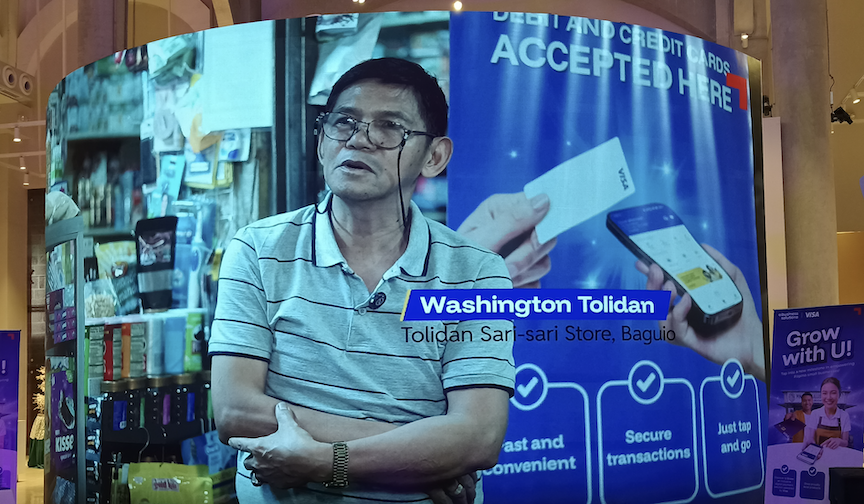
Sari-sari store owner Washington Tolidan shares his experience in a video presentation
For UMSI, the potential impact goes beyond payments.
Getting more small businesses onto digital platforms could also create transaction records that eventually help them gain access to other financial services.
Gonzales pointed to the country’s estimated ₱25-billion credit gap for businesses and said moving merchants into digital channels could help create opportunities for credit.
“When we move people to digital, now we can enable credit,” Gonzales said.
He said UMSI’s broader vision is to give micro and small enterprises easier ways to accept payments, receive settlements and eventually access credit.
“We can get our merchants to also enable them to accept payments and to settle in a more convenient way and access credit.”
That could be particularly relevant to smaller businesses with limited formal financial histories.
Faster settlement could help cash flow
Another feature highlighted during the launch is near-real-time settlement.
For a small business, getting paid is only part of the equation. How quickly that money becomes available can affect the ability to replenish inventory, pay suppliers or keep daily operations moving.
Navarro said settlement remains a pain point for a significant number of small businesses.
“For many Filipino entrepreneurs, growth starts with getting paid in real-time,” Navarro said.
Visa research cited during the event found that 26% of SMEs consider settlement an ongoing pain point.
A bigger opportunity in tourism
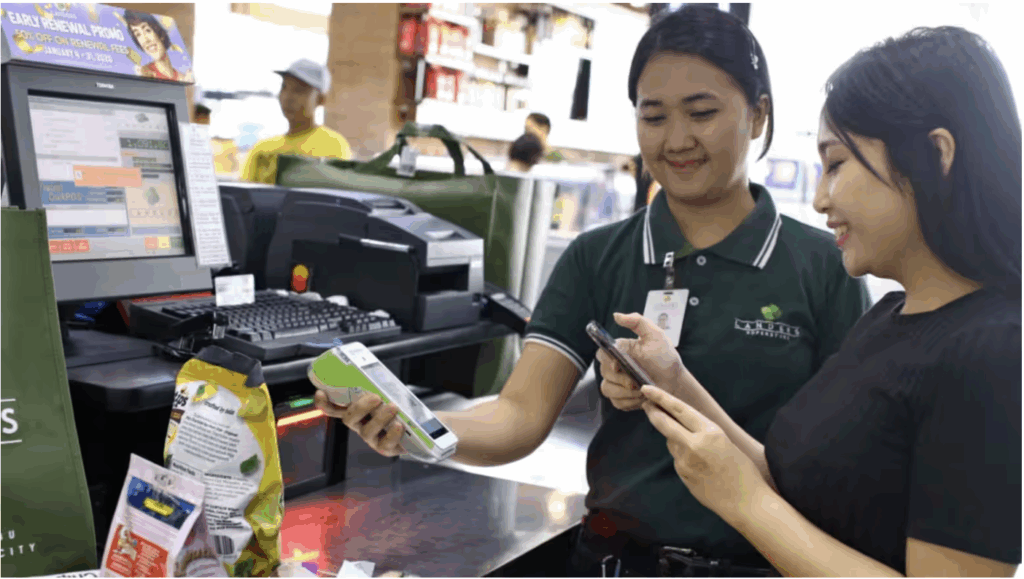
IMAGE CREDIT: Freepik
Both companies see tourism as an important use case for the new payment solution.
Navarro shared a personal example during the launch involving his daughter, who had difficulty using a card when buying from small businesses that accepted only cash. He said such situations illustrate what can happen when merchants are not equipped to accept digital payments.
He also said Visa plans to work with the Department of Tourism to identify areas where more MSMEs could be equipped to accept digital payments, particularly as travelers increasingly explore destinations outside major cities.
“Tourists nowadays, they no longer want that national development, Manila or just the city. They want to go really out there to the provinces, to really experience what’s natural and what’s urban.”
For small businesses in those destinations, being able to accept the payment method carried by a visitor could mean the difference between completing a sale and losing one.
Building on an existing Visa-UMSI partnership
U Accept is the latest development in the companies’ broader payments partnership.
In 2025, Visa and UMSI announced a strategic partnership involving Visa Direct, aimed at expanding outbound money movement and cross-border payment capabilities for businesses and consumers.
The latest initiative brings that relationship closer to the merchant level, with the focus shifting from moving money across borders to helping small businesses accept it at the point of sale.
For MSMEs, the proposition is relatively straightforward: a smartphone that is already being used to run a business could now also become the device that accepts a customer’s card.
The bigger question will be how quickly that convenience translates into wider adoption — particularly among the micro businesses that remain heavily dependent on cash.
If U Accept can make card acceptance easier without adding another costly piece of hardware to a small merchant’s operations, it could give more Filipino businesses a practical way into the country’s increasingly cashless economy.
Interested in this article? You can share this through: