
President Ferdinand Marcos Jr. praised his administration’s push for digitalization recently, saying that government organizations must make sure that “their vital services are digitalized immediately.”

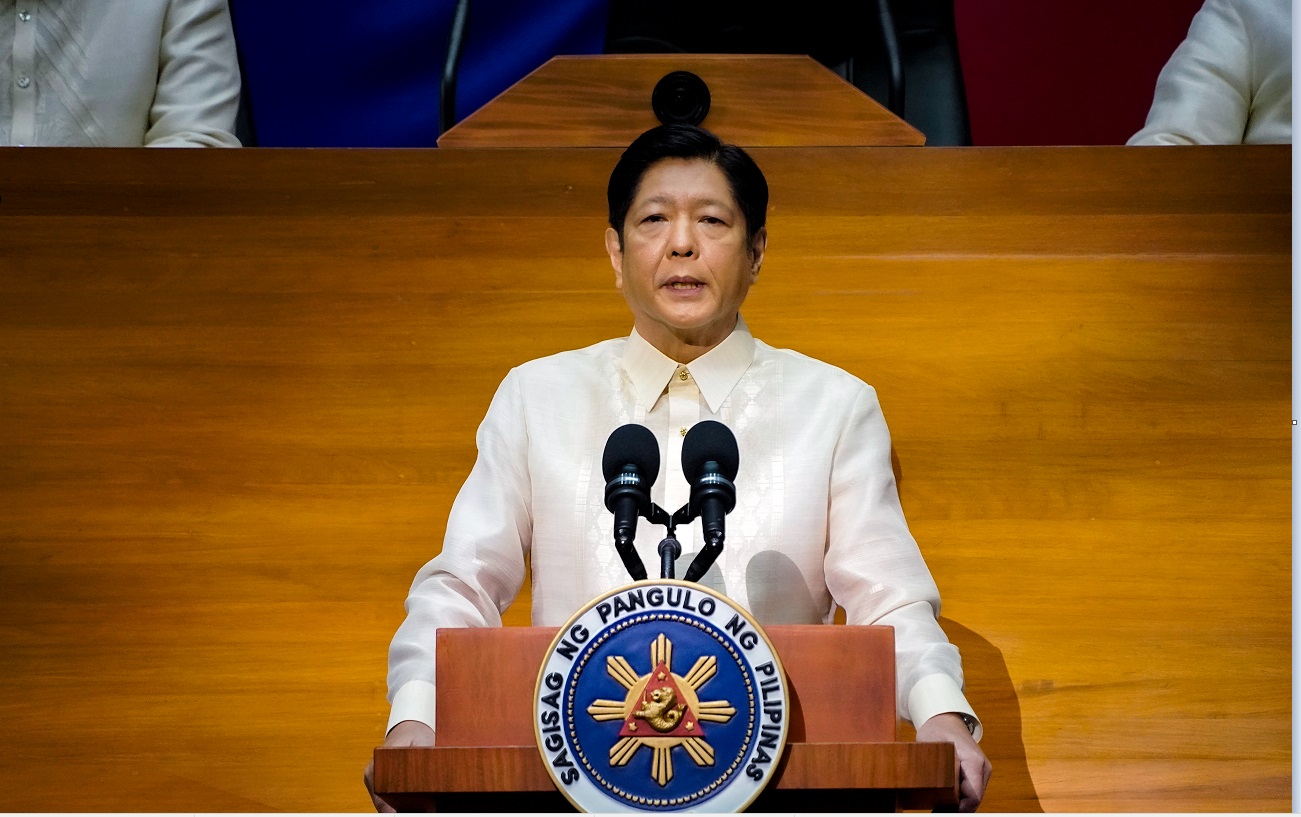
Pres. Ferdinand Marcos, Jr. delivering a speech during his 2nd SONA (IMAGE CREDIT: RTVM)
In his second State of the Nation Address (SONA), Marcos stated that “government must fully embrace digitalization to provide better service to the people through its vital frontline services and its backend functions.”
He said that the government’s data-driven and scientifically based planning and decision-making will be supported by digitization.
“It is the greatest, most powerful tool not just to improve the ease of doing business, but also against many forms of graft and corruption,” he said.
Marcos also emphasized the importance of the eGovPH super app’s recent debut. According to him, all important government functions will be consolidated into a single, unified mobile app for the benefit of the general public.
The SIM card registration law, which Marcos claimed would shield Filipino mobile users from “risks and vulnerabilities that can lead to negative consequences,” was also part of his administration’s digitalization drive.
“Digital users and consumers shall be protected from identity theft, phishing, and other online scams through essential systems and safeguards, such as cybersecurity, data privacy, consumer complaint mechanisms, and financial literacy campaigns,” the president added.
More system upgrades in the pipeline
Quoting reports from a Speedtest Global Index conducted by Ookla in June, the president reported that the Philippines’ fixed broadband speed increased by 11 spots from last year’s rankings to place 47th out of 180 nations. The index showed that the average fixed broadband download speed in the Philippines was 92.84 megabits per second (Mbps).
According to Marcos, the nation’s mobile speeds also improved by 8 spots, placing it 83rd out of 142 nations. According to Ookla, the average mobile download speed in the Philippines was 26.98 Mbps.
These gains, the president said, were the result of “system upgrades.” He also promised that there would be even more advancements in the future when the Philippines’ internet infrastructure shall undergo further upgrades.
In terms of cybersecurity, the president also commended efforts to push for the SIM card registration act which, he said, is a crucial step in combating criminal groups that engage in digital fraud. According to the National Telecommunications Commission (NTC), the program has already reached more than 100 million registrants as of June this year.
By the end of his speech, Marcos also emphasized the launch of Elon Musk’s Starlink in the Philippines, as well as the national fiber backbone program, and the Broadband ng Masa initiatives of the government.