
For years, calling a bank’s customer service line has been one of the simplest ways to resolve a financial problem. A customer calls, explains the issue, answers a few verification questions, and speaks with someone who is supposed to confirm their identity and help with the account.
Artificial intelligence is beginning to complicate that model.
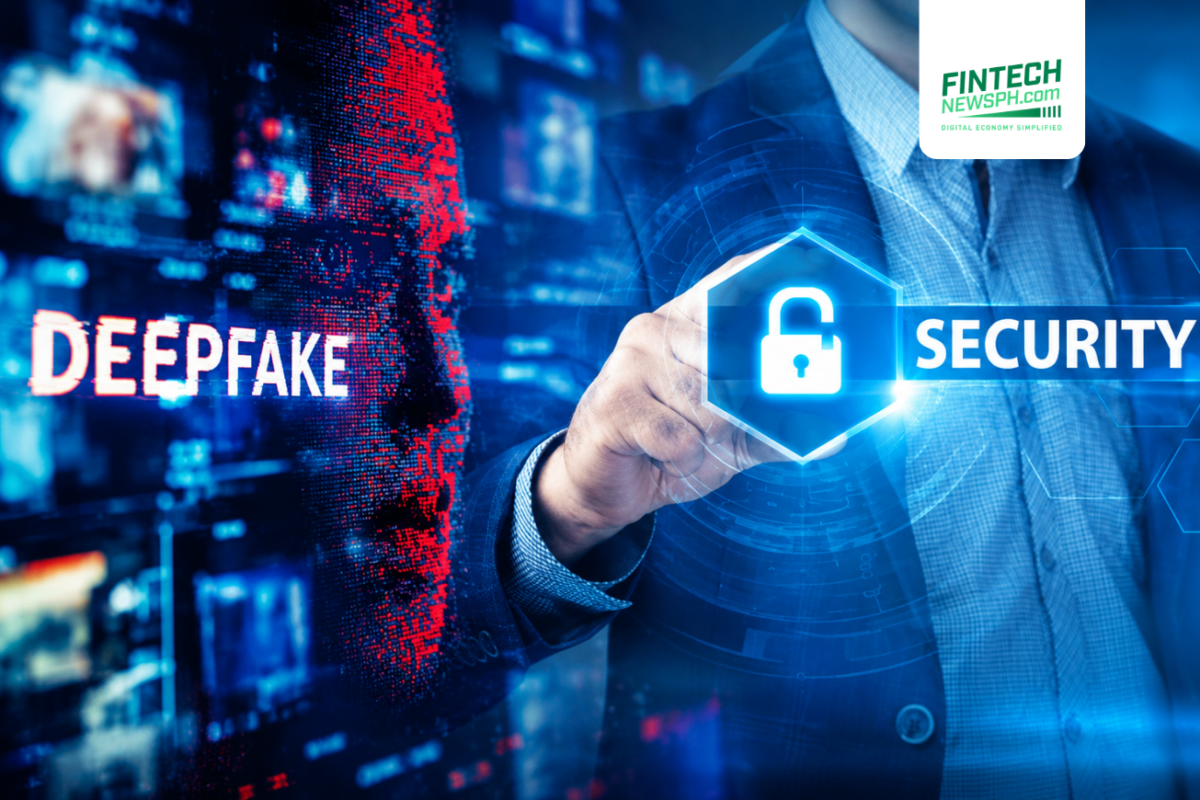
Voice cloning and deepfakes (AI-generated video) can make it easier for scammers to imitate real people, including customers, bank employees, company executives, government officials, or even family members.
The result is a new kind of financial security problem: What happens when a voice no longer proves who is on the other end of the call?
The threat is not purely theoretical.
In April 2026, the National Privacy Commission warned Filipinos about AI-powered “call bot” scams that can use generated or cloned voices to impersonate banks, delivery companies, government agencies, and other trusted organizations. These calls can be used to pressure victims into revealing personal or financial information, sharing OTPs, making payments, or transferring money.
This erosion of confidence is already reshaping consumer behavior on a global scale. A study by biometric identity provider iProov described what it calls a “Great Trust Recession,” where nearly half of surveyed consumers question the authenticity of almost everything they encounter online.
Crucially for the financial sector, 74% of respondents said they would switch banks if another institution offered stronger protection against deepfake-enabled fraud — signaling that anti-deepfake security is rapidly becoming a primary driver of customer retention and trust.
When a familiar voice can be fake
Voice has traditionally been a powerful social signal.
What Are Deepfake Videos and What Are The Ways They Could Be Used for Credit Card Scams
People recognize the voices of their relatives, colleagues, bosses and customer service representatives. Even when callers do not explicitly identify themselves, their voices can create a sense of familiarity and trust.
Generative AI weakens that assumption.
A scammer who obtains enough audio of a person’s voice can potentially create synthetic speech that sounds remarkably similar to the original speaker. That audio can then be used in phone calls, voice messages or other communications.
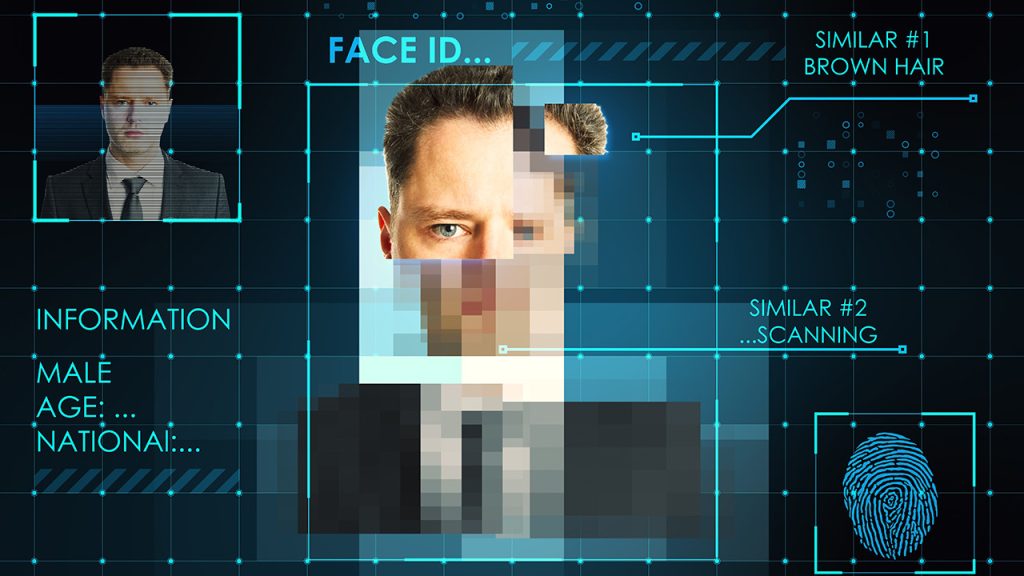
The same technology can be applied to video. A fraudster can create or manipulate video to make a person appear to say something they never actually said.
This creates an uncomfortable possibility for financial services: the customer could hear a familiar voice and still be speaking to a scammer.
Customer service can become an attack surface
Financial institutions have invested heavily in protecting login screens, passwords, OTPs and transaction systems.
But customer service channels can become another entry point.
A fraudster may not need to break into a bank’s system if they can convince a customer service agent that they are the legitimate account holder. Conversely, they can impersonate a bank employee and convince the customer to reveal information or perform an action.
The attack therefore moves away from the technical perimeter and into the conversation itself.
This is an extension of social engineering, where the criminal manipulates a person into doing something that bypasses a security control.
The Bangko Sentral ng Pilipinas already lists vishing, or voice phishing, among common financial scams. In these schemes, criminals use calls or voice messages while posing as trusted entities to trick victims into revealing sensitive information.
Deepfakes can make that familiar scam more convincing.
The scammer does not have to look, or sound perfect
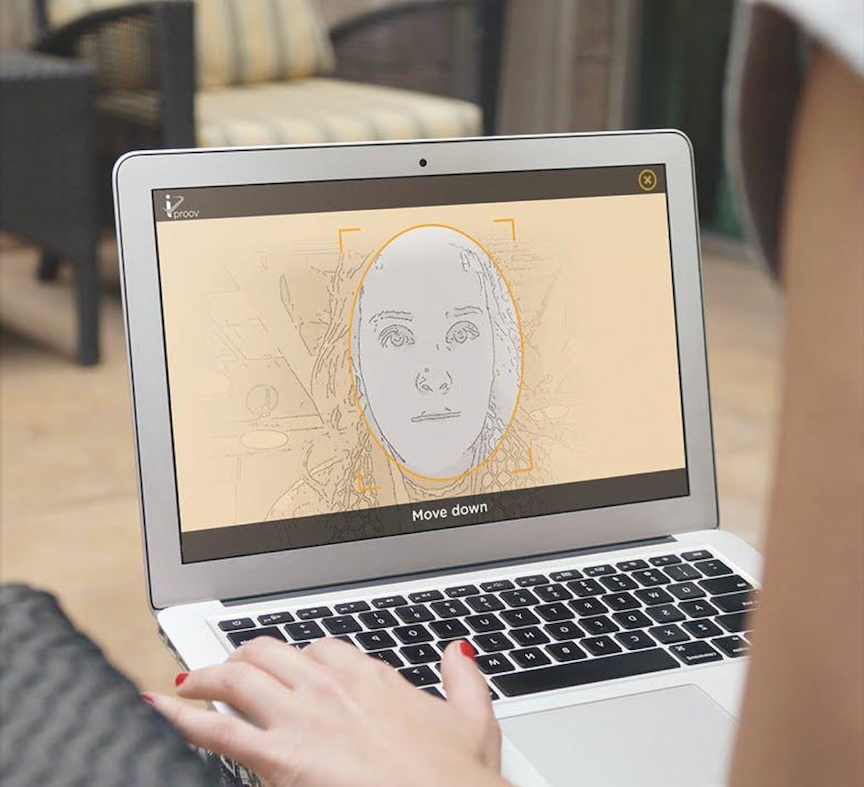
IMAGE CREDIT: iProov
One misconception about deepfake scams is that the technology needs to produce a flawless imitation — it does not.
A convincing voice may only need to sound credible for a short interaction. A scammer can combine AI-generated audio with information gathered from social media, leaked databases, previous scam interactions or publicly available company information.
The victim then fills in the gaps.
If the caller already knows the person’s name, employer, recent transaction, bank, or family member, the interaction can feel legitimate even if the generated voice is not perfect.
That is what makes deepfake-enabled social engineering particularly dangerous. The technology does not have to fool a forensic expert. It only has to persuade an ordinary person long enough to get the desired information or action.
Financial institutions face a different verification problem
Banks have traditionally relied on multiple authentication factors to establish whether someone is really the account holder.
But customer service interactions can be more complicated.
A legitimate customer may forget a password, lose a phone, change a number, travel overseas, or need help after an account compromise. Customer service therefore needs enough flexibility to resolve genuine problems while maintaining sufficient controls to prevent impersonation.
Deepfakes make that balance harder.
If an agent relies too heavily on voice recognition, a cloned voice could potentially become part of the deception. If the bank relies only on knowledge-based questions, information that can be found, purchased, leaked or socially engineered may undermine those questions.
The answer is therefore unlikely to be a single new authentication method. It will require layered verification.
The voice should not be the credential
The most important change may be conceptual.
Banks and customers need to stop treating a familiar voice as proof of identity.
A voice can be useful for communication, but it should not be the only evidence that someone is authorized to access an account or perform a sensitive action.
A suspicious request to change a registered phone number, reset credentials, add a beneficiary, increase a transaction limit, or transfer money should trigger stronger verification regardless of how convincing the caller sounds.
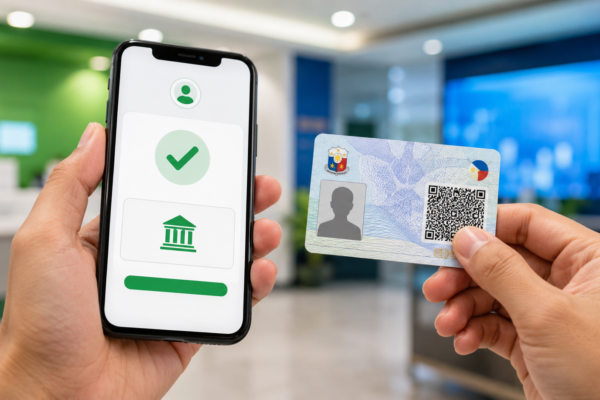
That can include authentication through the bank’s official application, confirmation through a trusted registered device, biometric verification, transaction-specific controls, or other independent verification methods.
The key is that the second check should come through a different channel from the one being used by the potential attacker.
Banks are already moving toward layered security
This direction is consistent with the broader approach regulators are taking toward digital financial security.
The BSP’s current consumer guidance tells users to “Check, Protect and Report,” emphasizing source verification, protection of personal and financial information, and immediate reporting of suspicious transactions.
The central bank has also been strengthening its approach to emerging AI-related risks. In July 2026, the BSP issued guidance encouraging supervised financial institutions to strengthen cybersecurity controls in response to advances in AI. The guidance includes maintaining inventories of digital assets, strengthening controls such as multi-factor authentication, addressing system vulnerabilities, and using AI-powered cybersecurity tools to improve threat detection and response.
This matters because AI is now being used on both sides of the security equation.
Banks can use AI to identify unusual behavior and detect threats. Criminals can use AI to make phishing, impersonation and social engineering more convincing.
The security race is therefore becoming increasingly automated.
Deepfakes could target bank employees, too!
The threat does not stop with customers.
A fraudster could potentially impersonate a bank employee, supervisor or executive and use that identity to manipulate another employee.
Imagine an employee receiving a video call that appears to come from a senior executive asking for an urgent payment, or a voice message from someone who appears to be a manager requesting customer information.
The traditional reaction might be to recognize the person’s voice or face and comply.
That assumption is becoming less reliable.
Financial institutions may therefore need to extend deepfake awareness beyond customer-facing security teams. Employees handling account recovery, payments, customer data and internal approvals could all become targets.
This is especially relevant in organizations where employees have authority to approve transactions or access sensitive information.
Customer service teams may need new security protocols
As deepfake technology improves, financial institutions may need to rethink how customer service agents verify identity.
Knowledge-based authentication may become less useful when the answers can be obtained from personal information already available to scammers.
Voice recognition alone may also become insufficient for high-risk requests.
Instead, customer service could increasingly become a trigger for additional authentication. A call might begin normally, but certain requests could require the customer to confirm the action inside the official banking app or through another trusted device.
For example, a customer asking about a transaction may not need additional verification. But a request to change account credentials, add a new recipient, or transfer a large amount could require a separate confirmation.
That creates friction, but it also creates another opportunity to catch an impersonation attempt.
The Philippines already has a growing social engineering problem
Deepfakes are arriving in an environment where scammers already rely heavily on impersonation.
Banks have warned customers about callers pretending to be bank representatives. LANDBANK, for example, warned in June about phishing and vishing schemes involving scammers impersonating government agencies and asking victims to provide sensitive information under the guise of account updates, benefits or verification requirements.
The National Privacy Commission’s April warning adds another layer by specifically identifying AI-generated and cloned voices as tools that can make these calls sound more convincing.
This means deepfakes do not necessarily create an entirely new category of fraud.
They can make existing scams more scalable, more convincing and harder to recognize.
Regulators are also treating AI as a financial-sector risk
The BSP has acknowledged that AI can introduce new risks into financial services.
Its thematic review on AI and machine learning noted that technologies such as deepfakes and more sophisticated phishing could increase fraud and scam cases. The central bank also emphasized the need for proportionate risk-management frameworks as financial institutions adopt AI.
At the BSP AI Summit 2026, Governor Eli Remolona Jr. similarly emphasized responsible AI adoption and strong governance as the technology becomes more integrated into financial services.
The issue is therefore bigger than whether a bank can detect one fake voice.
Financial institutions have to consider how AI affects identity verification, fraud monitoring, customer service, cybersecurity, data protection and operational risk at the same time.
Customers need to change one old habit
For consumers, one of the simplest defenses is also one of the hardest habits to break:
Do not trust the communication just because it sounds familiar.
If someone claiming to be from a bank asks for an OTP, password, PIN, card information or other sensitive credentials, end the interaction and contact the institution through its official channel.
The same principle applies when a caller sounds exactly like someone you know.
If the request involves money or sensitive information, verify it through another channel.
The NPC specifically advises the public not to share OTPs or personal information during suspicious calls and to verify the caller by contacting the institution directly through official channels.
The BSP similarly advises consumers to verify sources before engaging with financial communications and to report suspicious transactions immediately.
Trust will need more than a voice or a face
The deeper challenge created by deepfakes is not simply that scammers can make fake videos.
It is that the digital economy has historically relied on signals that humans naturally trust: a familiar face, a recognizable voice, a company logo, an official-looking message.
AI can now reproduce many of those signals.
That means financial institutions will need to move toward forms of verification that are harder to imitate and less dependent on what something looks or sounds like.
For customers, the lesson is equally important.
A convincing voice is not authentication. A video call is not proof of identity. A caller who knows your name, account details or recent activity may still be a fraudster.
As financial services become more digital, the question will no longer be simply “Does this person sound real?”
It will be: “What independent evidence proves that this person is authorized to do this?”
That distinction could become one of the most important lines of defense in the next generation of financial fraud.