

The SB Finance Patient Access Program is expanding across the Philippines, giving patients and their families another way to finance hospital bills, medical procedures, and other treatment-related expenses without paying the full amount upfront.
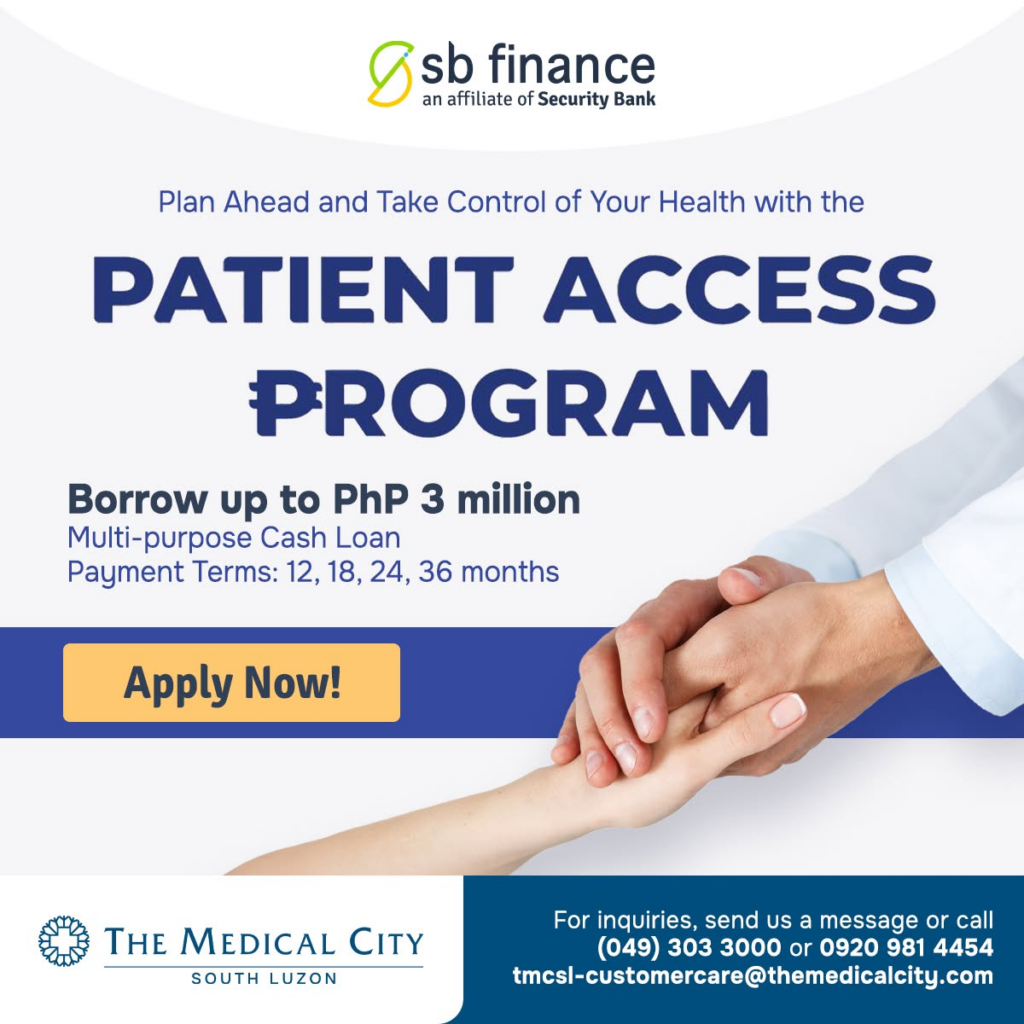
According to SB Finance, an affiliate of Security Bank, the program is now available through 66 fully onboarded partner hospitals nationwide. Eligible borrowers may apply for loans ranging from ₱30,000 to ₱3 million, with repayment terms of 12 to 36 months and advertised interest rates starting at 1.6%.
The expansion comes as healthcare expenses continue to consume a significant portion of Filipino household budgets. Data from the Philippine Statistics Authority (PSA) shows that household out-of-pocket payments accounted for 41.2% of the country’s current health spending in 2025.
Total health expenditure reached ₱1.87 trillion during the year, while per-capita health spending rose by 14% to ₱15,223.
Financing hospital bills through installments
The Patient Access Program is a loan facility designed specifically to help cover medical expenses incurred at accredited hospitals.
It may be used for regular hospital bills, treatment-related expenses, and selected planned or elective procedures. SB Finance identified maternity packages, cancer treatment, chemotherapy, open-heart surgery, and kidney transplants among the medical needs that may be covered under the program.
This allows patients to arrange financing before a scheduled hospitalization or procedure rather than waiting until the final hospital bill is issued.
Unlike a general-purpose cash loan, approved loan proceeds are credited directly to the partner hospital’s Security Bank account. This structure helps ensure the funds are used for the patient’s medical treatment.
Security Bank also said professional fees charged by doctors may be included, depending on the arrangement with the participating hospital. The program may likewise be customized for certain procedures and used to address eligible promissory note arrangements.
Patients are not the only ones who can apply
The borrower does not necessarily have to be the patient.
Qualified family members, friends, or sponsors may apply to finance another person’s treatment. Applicants must be Filipino citizens between 21 and 65 years old, while minimum income requirements vary depending on the applicant’s employment status.
More than one qualified borrower may also seek financing for the same patient. This could help families manage larger medical expenses when the cost of a procedure or ongoing treatment exceeds what a single borrower can finance.
Applicants may also obtain multiple Patient Access Program loans for one patient, although each application remains subject to credit evaluation and approval.
The application process includes document submission and verification, followed by loan signing before the funds are released.
Repayment options include auto-debit arrangements, Security Bank branches, accredited payment centers, and supported online platforms. SB Finance said borrowers are not required to issue post-dated checks.
Healthcare financing moves closer to the patient
The program reflects a broader trend in embedded finance, where payment and credit services are integrated directly into the point where customers need them most.
In this case, financing becomes part of the patient’s healthcare journey instead of requiring families to search for a personal loan only after receiving a medical bill.
“Healthcare financing is no longer just a financial product. It is becoming part of how access to care is delivered,” said Ron Romo, SB Finance Head of Personal Loan Sales and Distribution.
The company’s publicly listed partner hospitals include Asian Hospital and Medical Center, Capitol Medical Center, Chinese General Hospital, St. Luke’s Medical Center, VRP Medical Center, along with several hospitals and healthcare facilities outside Metro Manila.
Applicants should confirm directly with SB Finance or the hospital whether a specific facility, procedure, and expense is covered before applying.
A financing option, not health insurance

IMAGE CREDIT: Freepik
While installment financing can reduce the amount a patient must pay upfront, the Patient Access Program remains a loan rather than a health insurance policy or government medical assistance benefit.
Borrowers are still responsible for repaying the principal, interest, and any other charges specified in the final loan agreement. The approved loan amount, interest rate, repayment period, and monthly amortization may also vary depending on the applicant’s credit evaluation.
Patients and their families should compare the total cost of borrowing with other available sources of financial support, including PhilHealth benefits, private health insurance, employer healthcare benefits, hospital discounts, government medical assistance programs, and payment arrangements offered directly by healthcare providers.
For households facing planned procedures or unexpected hospital bills, however, the Patient Access Program offers another way to spread medical expenses over a longer period rather than paying the full amount at once.
Its expansion to more hospitals also reflects a broader shift in healthcare financing, where lenders and healthcare providers are working more closely together to make credit available at the point of care.
As medical costs continue to rise, embedded financing solutions such as the Patient Access Program could give more Filipino families additional flexibility in managing healthcare expenses—while reinforcing the importance of borrowing only within their capacity to repay.