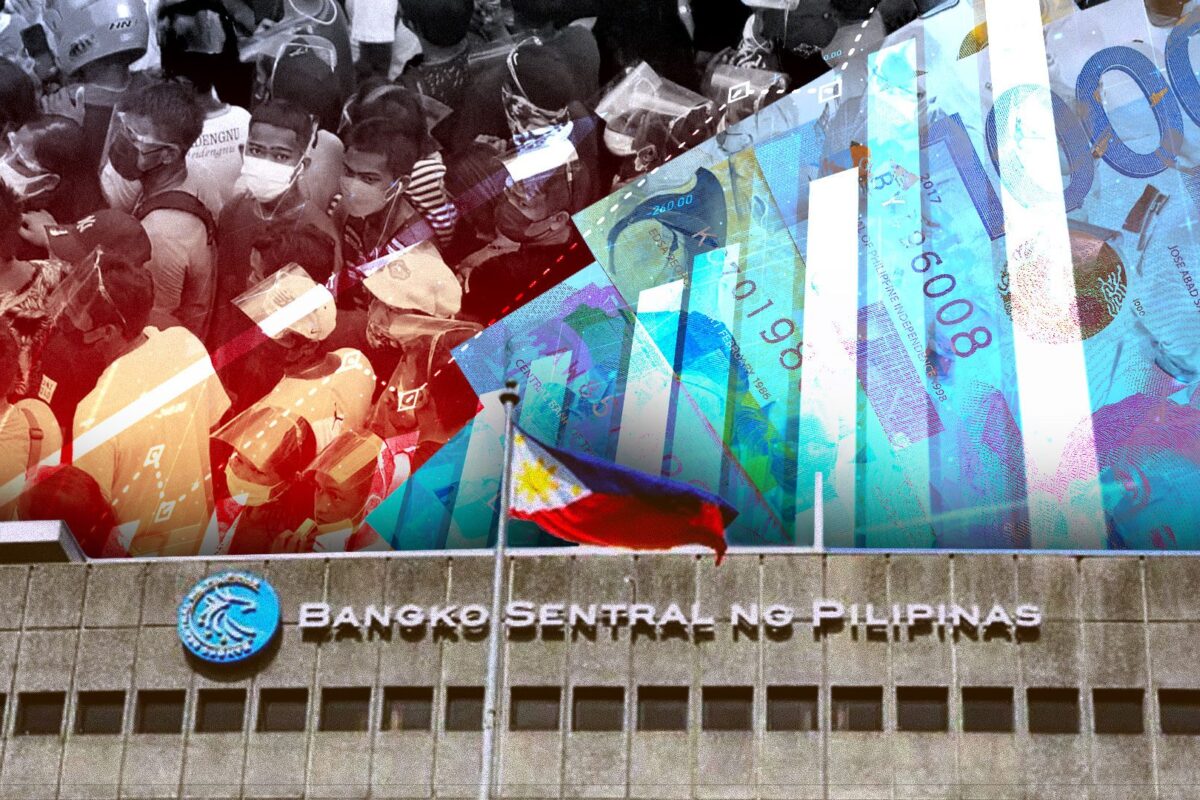
The Bangko Sentral ng Pilipinas (BSP) has raised its benchmark policy rate to 5%, putting borrowing costs, savings returns and bank lending strategies back in focus for Filipino consumers and businesses.
The Monetary Board increased the Target Reverse Repurchase (RRP) Rate by 25 basis points on September 9, bringing it from 4.75% to 5%. The BSP said the move is meant to keep inflation expectations anchored and prevent price pressures from becoming broader.
For households and businesses, however, the policy decision is less about the 25-basis-point headline and more about what happens next to the cost of money.
A higher policy rate does not automatically mean every loan or credit card will become 0.25 percentage points more expensive overnight. Banks and other lenders set their own rates based on funding costs, risk, competition and the structure of each product. But the BSP’s move can put upward pressure on market borrowing costs and influence how lenders price new credit.
Borrowers are likely to feel the pressure first
For Filipinos already carrying debt, the biggest concern is whether higher market rates eventually translate into more expensive financing.
Credit cards, personal loans and other consumer credit can become more costly when lenders adjust their pricing. The effect will depend on the product and its terms, so borrowers should not assume that a BSP rate hike automatically changes the interest rate on an existing loan.

New borrowers, meanwhile, may face a different environment from those who locked in fixed rates earlier.
Housing and auto loans deserve particular attention because they involve larger amounts and longer repayment periods. Even a relatively small change in the interest rate can affect the total cost of financing over several years.
For someone planning to take out a major loan, the rate environment may therefore become an important consideration when deciding whether to borrow now, compare lenders, or postpone a purchase.
MSMEs could face a tougher financing decision
Small businesses could also feel the effects as banks reassess the price of working capital and expansion loans.
For an MSME borrowing a relatively small amount, a higher interest rate may appear manageable. But businesses that regularly rely on credit to finance inventory, payroll, equipment or expansion can see the additional cost accumulate.
This makes cash-flow management even more important. Businesses may become more selective about which expenses they finance through debt and may prioritize investments with a clearer path to generating additional revenue.
The impact could be particularly relevant for smaller enterprises that have fewer financing options or rely heavily on short-term credit.
At the same time, banks may become more selective in evaluating borrowers if funding costs rise and credit risks become more important to their lending strategies.
Savers finally have a reason to watch rates, too!
Higher rates are not necessarily bad news for everyone.
Savers can benefit if banks raise deposit rates in response to changing market conditions. However, the increase is not guaranteed to be immediate or equal across savings products.
BSP data shows that peso deposit rates had already been moving higher in some longer-term categories. For deposits with maturities of more than one year to five years, the average rate was 1.8795% in the latest available July 2026 data, up from 1.7597% previously.
The policy rate can therefore create more room for banks to compete for deposits, particularly when they need to attract stable funding.
For consumers, that makes it worth comparing savings accounts, time deposits and other interest-bearing products rather than assuming that all banks will respond to the BSP move in the same way.
Banks get a more complicated balancing act
For banks, higher rates can create both opportunities and challenges.
On one hand, higher lending rates can support interest income if banks are able to pass increased funding costs on to borrowers. On the other, more expensive credit could weaken loan demand or increase repayment pressure for some borrowers.
The latest BSP data shows bank lending was still expanding, with outstanding loans of universal and commercial banks continuing to grow in 2026.
That means banks are entering the higher-rate environment from a position where credit demand remains relevant. The challenge is maintaining loan growth without compromising asset quality or making financing prohibitively expensive.
Banks may also have to compete harder for deposits, especially if customers become more sensitive to the returns they receive on their money.
Who benefits and who feels the pain?
The immediate winners are likely to be savers who can access better deposit yields, although the size of that benefit will depend on how individual banks respond.
Borrowers are more likely to feel the pressure, particularly those seeking new variable-rate financing or relying heavily on short-term credit. MSMEs with thin margins could also become more cautious about borrowing.
Banks sit somewhere in the middle. They can benefit from wider lending margins in some circumstances, but they also have to manage higher funding costs, credit demand and potential repayment risks.
For consumers, the key takeaway is that the BSP’s 5% policy rate is not a direct price tag attached to every loan or savings account. It is a signal that the cost of money in the financial system is being pushed higher.
That makes comparison shopping more important. Borrowers should check the effective cost and terms of financing rather than focusing only on advertised rates, while savers should compare actual deposit yields and account conditions.
The bigger question now is how long the 5% environment will last and how banks, lenders, businesses and households adjust if rates remain elevated.
For Filipino consumers, the rate hike may ultimately be felt not in the BSP announcement itself, but in the monthly loan payment, the cost of financing a business, or the interest earned on money sitting in a bank account.