
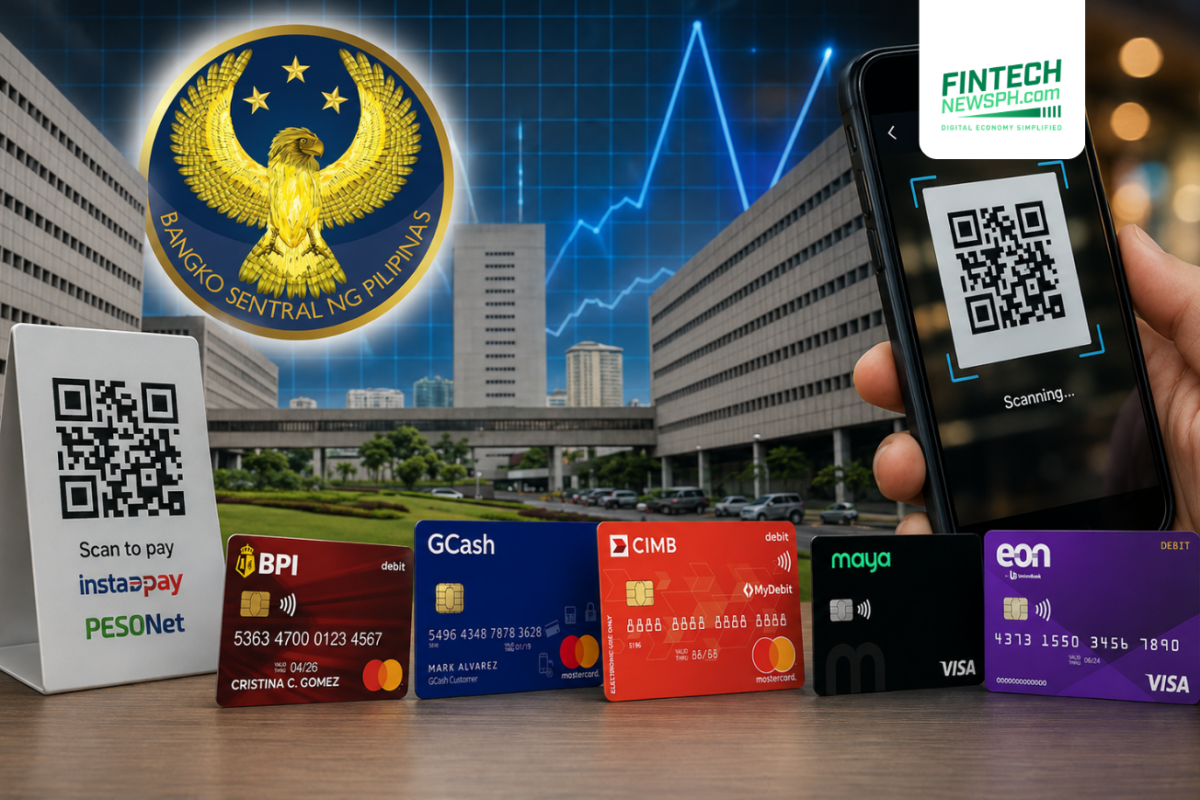
Philippine digital payments reached a new milestone in 2025, accounting for 64.7% of total retail payment volume and putting the country within the 60% to 70% digital payment target under the Philippine Development Plan for 2023–2028 three years ahead of schedule.
The milestone also marks a major shift in how Filipinos pay. For the first time, transactions made through QR Ph overtook debit and credit card payments, highlighting the growing role of interoperable QR payments across banks and e-wallets.
QR Ph moves ahead of cards
A 2025 report on e-payments measurement by the Bangko Sentral ng Pilipinas (BSP) noted that QR Ph processed 2.47 billion transactions worth ₱1.16 trillion in 2025, making it the first year that the national QR payment system surpassed cards in terms of transaction volume.

The development reflects the growing acceptance of QR payments among merchants and consumers. Instead of requiring customers to use a particular bank or e-wallet, QR Ph allows participating financial institutions to process payments through a common, interoperable QR standard.
The BSP designed QR Ph to support both person-to-person transfers and person-to-merchant payments through InstaPay, giving consumers and businesses a standardized way to move money digitally.
For small businesses, the appeal is straightforward. A QR code can provide a relatively simple way to accept digital payments without requiring a traditional card terminal.
The BSP said the rise of QR Ph transactions reflects a growing preference for interoperable, account-based payments — an important development as more Filipinos use multiple bank accounts and e-wallets for everyday transactions.
Digital payments are moving beyond the 60% mark
According to the BSP’s 2025 Report on the Status of Digital Payments in the Philippines, the continued growth of digital payments was supported by a 69.4% increase in digital payment accounts and a 36.3% increase in merchant locations, or business outlets that accept digital payments.
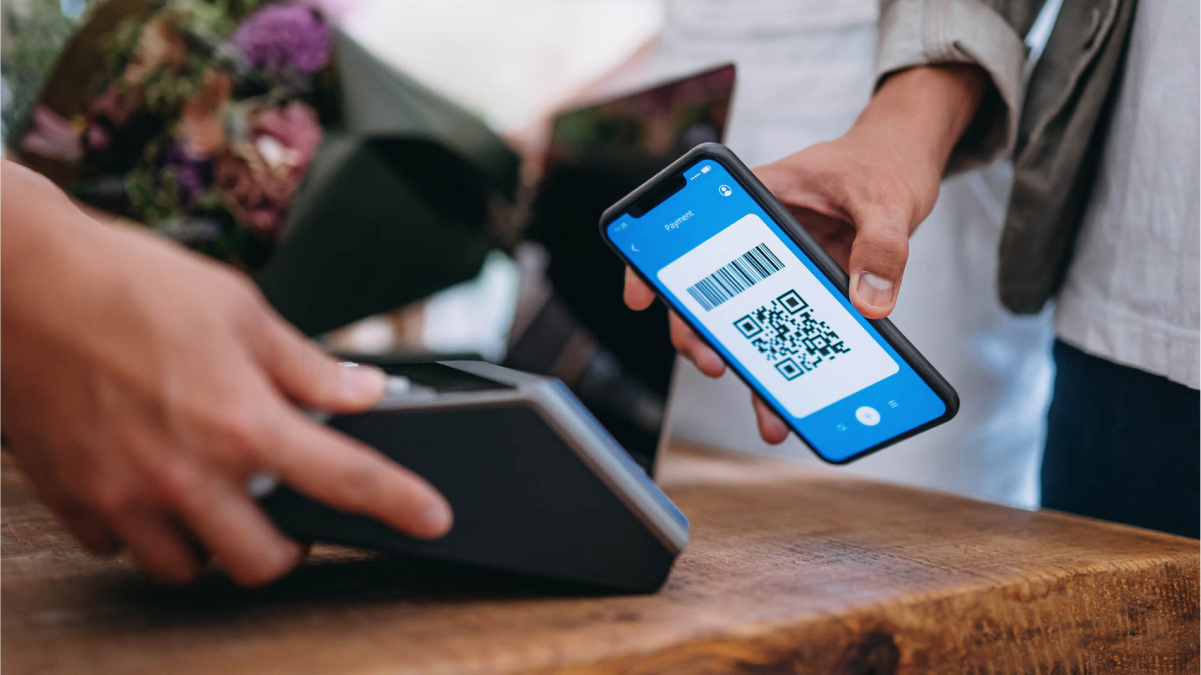
IMAGE CREDIT: Defining QRPh: Its Benefits and How It’s Shaping the Future of Cashless Payments
The latest figure represents a significant jump from 57.4% of retail payment volume in 2024, with the shift toward digital payments happening on both sides of the transaction.
It also suggests that more consumers are gaining access to digital payment accounts while more merchants are acquiring the ability to accept those payments. That creates a network effect: as more businesses accept digital payments, consumers have more reasons to use them, which in turn encourages more merchants to participate.
This is particularly important outside major commercial centers, where affordable and interoperable payment acceptance can help smaller businesses participate in the digital economy.
Interoperability is doing the heavy lifting
The growth of Philippines digital payments is not simply about consumers downloading more financial apps.
A major factor is interoperability, which allows different banks and e-wallets to work together instead of operating as separate payment islands.

BSP Governor Eli M. Remolona Jr. said interoperability has been an important driver of the expansion.
“The BSP continues to work closely with industry and government partners to expand digital payments to benefit more Filipinos and the economy as a whole.”
Remolona also pointed to the network effect created when more businesses and service providers operate on an interoperable system.
“A lot of the growth is due to our insistence on interoperability, ensuring that a growing number of businesses and service providers are on one system. That brings in more users, which makes the network more valuable for everyone in it, including consumers, businesses, banks, e-wallets, and other platforms.”
That approach could become increasingly important as the country’s digital payment ecosystem becomes more crowded. Consumers may have multiple bank accounts and e-wallets, while merchants need payment options that can accommodate customers regardless of which participating platform they use.
Interoperability essentially allows those different platforms to function as part of a larger payment network rather than forcing consumers and merchants to remain within individual ecosystems.
PESONet also beats checks
The shift is not limited to QR payments.
PESONet transfers also overtook cheque payments in 2025, another sign that electronic fund transfers are increasingly becoming part of everyday business and personal transactions.

While QR Ph is more visible at checkout counters, PESONet serves a different role in the payments ecosystem, particularly for larger-value and account-to-account transfers.
Together, these developments show that the country’s move toward digital payments is occurring across multiple transaction types rather than being driven by a single technology.While QR Ph is more visible at checkout counters, PESONet serves a different role in the payments ecosystem, particularly for account-to-account transfers.
Together, these developments show that the country’s move toward digital payments is occurring across multiple transaction types rather than being driven by a single technology.
The growing use of QR Ph for everyday payments and PESONet for electronic fund transfers points to a broader shift away from traditional payment instruments such as cards for certain transactions and checks for account-to-account payments.
What comes after the target?
The Philippines has already reached the 60% to 70% digital payment target under the Philippine Development Plan for 2023–2028, but reaching the target early does not mean the transition is complete.
The next challenge is making digital payments more useful, reliable, secure, and accessible to Filipinos who remain dependent on cash.

The BSP expects the momentum to continue, aided by policies designed to make electronic payments more accessible and affordable.
The BSP is also pushing further interoperability through Circular No. 1238, which requires fees for transfers between different banks or e-wallets not to differ materially from fees charged for transfers within the same institution.
The policy also reinforces the broader push toward interoperability by making it less costly for consumers to move money between different financial institutions.
The QR Code is becoming the new payment infrastructure
The rise of QR Ph shows that the future of Philippine payments may not be about choosing between a bank, an e-wallet, or a card.
Instead, the bigger shift is toward infrastructure that allows these platforms to connect.
For consumers, that could mean more places to pay digitally without worrying about which app a merchant uses. For businesses, particularly MSMEs, it could mean easier access to cashless payments without investing heavily in payment hardware.
The fact that Philippines digital payments have already crossed the BSP’s target range for 2023–2028 suggests the country is moving faster than expected.
But the bigger story is not simply that Filipinos are making more digital transactions.
It is that the infrastructure supporting those transactions is becoming increasingly interconnected.
QR Ph overtaking cards, PESONet surpassing checks, and the continued expansion of digital payment accounts and merchant acceptance all point in the same direction: digital payments are becoming less of an alternative to traditional payment methods and more of a core part of the country’s financial system.
The next test will be whether that momentum can turn a higher number of digital transactions into a genuinely more inclusive and interoperable financial system.
The BSP’s 2025 Report on the Status of Digital Payments in the Philippines provides the full data and methodology behind the latest figures.