
Filipinos have become increasingly comfortable moving money digitally. The next challenge is whether they will become just as comfortable allowing their financial data to move with them.
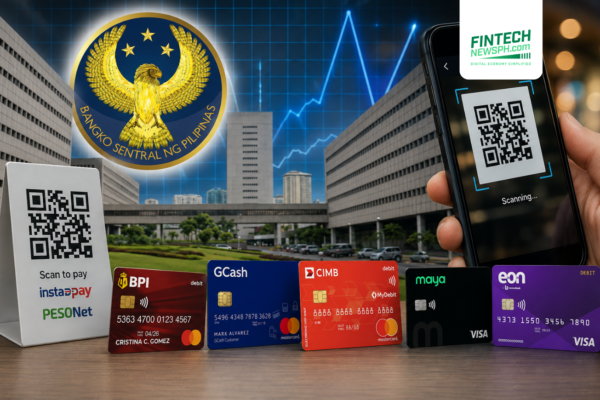
Digital payments accounted for 64.7% of total retail payment transactions in the Philippines in 2025, putting the country within the government’s 60% to 70% digital payments target.
That momentum could help set the stage for Open Finance PH, the country’s push toward a more connected financial ecosystem where customers can give banks, financial institutions and approved third parties permission to access and use their financial data to deliver other services.
The framework has been in place for years. The bigger question now is how to turn it from a promising regulatory concept into something ordinary Filipinos actually use.
The framework is ready. Mass adoption is not yet here
The BSP issued its Open Finance Framework under Circular No. 1122 in 2021, establishing the foundation for customer-permissioned data sharing among banks, other financial institutions and third-party providers through application programming interfaces or APIs.
From a consumer’s perspective, the idea is relatively simple. Instead of repeatedly submitting the same information to different financial providers, customers could authorize one institution to securely retrieve relevant information held by another.
That could eventually make it easier to compare financial products, consolidate accounts, qualify for loans using a wider financial history, manage investments or initiate transactions across different providers.
But the country’s Open Finance rollout remains relatively early. The BSP’s Open Finance PH portal continues to describe the broader Open Finance PH Pilot as a voluntary undertaking among participating financial institutions exploring the use of APIs to deliver financial products and services.

The clearest move from framework to actual use came in July 2025, when the central bank launched the Open Finance for Personal Equity and Retirement Account, or OF x PERA, Pilot.
According to the BSP’s First Semester 2025 Report on the Philippine Financial System, the initiative represents the first practical implementation of Open Finance in the Philippines, positioning PERA as a foundational use case for wider adoption.
Through the pilot, fully verified customers can consent to share their existing Know-Your-Customer information with PERA administrators. This reduces the need for manual forms, repeated identity verification and lengthy documentation. The initiative brought together seven participating financial institutions and three PERA administrators.
It is an important proof of concept. It also shows how much ground remains between demonstrating that Open Finance works and making it a routine part of Philippine banking.
Consumers need a reason to share their data
Open Finance will not take off simply because APIs exist. Consumers have to see enough value in the service to justify giving another institution access to their financial information.
A borrower, for example, may be more willing to share transaction history if doing so results in faster credit assessment or allows a lender to build a more complete picture of the person’s ability to repay. A small business owner could benefit if records across different bank and e-wallet accounts can be combined into a clearer financial profile.

The possible applications extend beyond retirement savings. The BSP said it envisions eventually expanding Open Finance into lending, capital markets and scheduled payments, while future phases of the PERA pilot could include seamless fund transfers, real-time portfolio monitoring and automated contribution reminders.
Those are the kinds of applications that could turn Open Finance from invisible financial infrastructure into something consumers actually find useful.
Trust may be the bigger hurdle than technology
The trade-off is that making financial data more portable also raises a more important question: who gets to access it?
Under the Philippines’ Data Privacy Act of 2012, consent must be freely given, specific and informed. The National Privacy Commission’s rules also require organizations relying on consent for data sharing to provide consumers with sufficient information about how their personal data will be processed.
The BSP’s Open Finance framework similarly places customer control at the center of the system. Its rules cover areas including consent management, authentication, encryption, data privacy, information security and consumer protection.
That means successful adoption will depend on making consent understandable rather than burying it inside another lengthy terms-and-conditions screen.
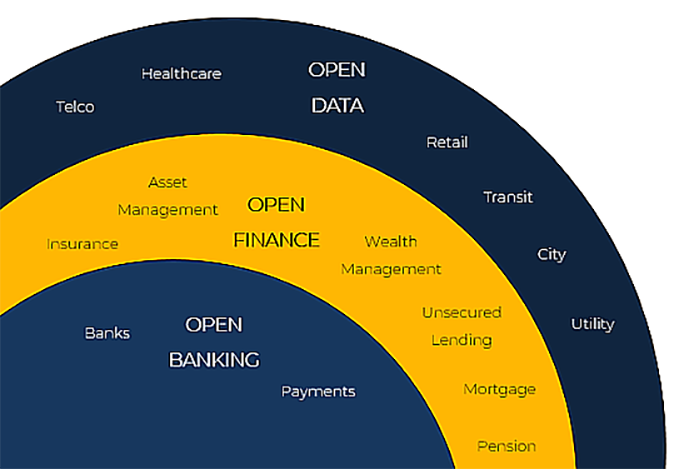
Consumers need to know what information they are sharing, who will receive it, what it will be used for and how they can withdraw permission.
That becomes particularly important in a financial environment where scams, account takeovers and identity theft have made consumers more cautious about giving anyone access to banking information.
Open Finance therefore faces an unusual challenge. It asks consumers to become more willing to share financial data at the same time that banks and regulators are repeatedly telling them to be more careful about who they share financial information with.
Interoperability has to extend beyond payments
The Philippines has already seen what shared financial infrastructure can do in payments.
Systems such as InstaPay and PESONet allow customers to move money between participating institutions without needing both sides of the transaction to use the same bank.
Open Finance needs to create a similar experience for data.

If banks and fintech companies build connections using incompatible specifications, or if every partnership requires a separate integration, the ecosystem risks becoming a collection of closed bilateral arrangements instead of genuinely portable finance.
The BSP’s Open Finance Framework promotes consent-driven data portability and interoperability among institutions operating under common standards for data security and privacy.
The challenge is translating those principles into systems that work reliably across large banks, smaller financial institutions, e-wallets and third-party providers.
For consumers, the experience ultimately has to feel seamless regardless of what is happening behind the screen.
The next phase is about scale
Regulation has already created the foundation. The next test is whether participation can expand beyond pilots while maintaining clear responsibilities when something goes wrong.
The BSP said the results of the OF x PERA pilot will help inform the development of technical and operational standards for broader Open Finance adoption.
That makes the current stage particularly important. The Philippines does not simply need more institutions capable of connecting through APIs. It needs rules, standards and business models that make participation worthwhile while keeping customer control at the center.
Open Finance can still become a major layer of the Philippine financial system. But consumers are unlikely to adopt it because they want “Open Finance.”
They will adopt it if it means opening an account without submitting the same documents again, getting a fairer loan assessment based on a fuller financial picture, viewing money across multiple providers in one place or moving between financial products with less friction.
If the industry can make those benefits visible while making data sharing secure, interoperable and easy to control, Open Finance may finally move from a promising framework to something Filipinos use without even needing to know what it is called.