Gig workers in the Philippines could gain easier access to SSS and Pag-IBIG contributions as the government pushes for wider social protection among informal and self-employed workers.
President Ferdinand Marcos Jr. has called on more informal and self-employed Filipinos to make regular contributions to the Social Security System (SSS) and Pag-IBIG Fund, renewing attention on how digital financial tools could make social protection more accessible.
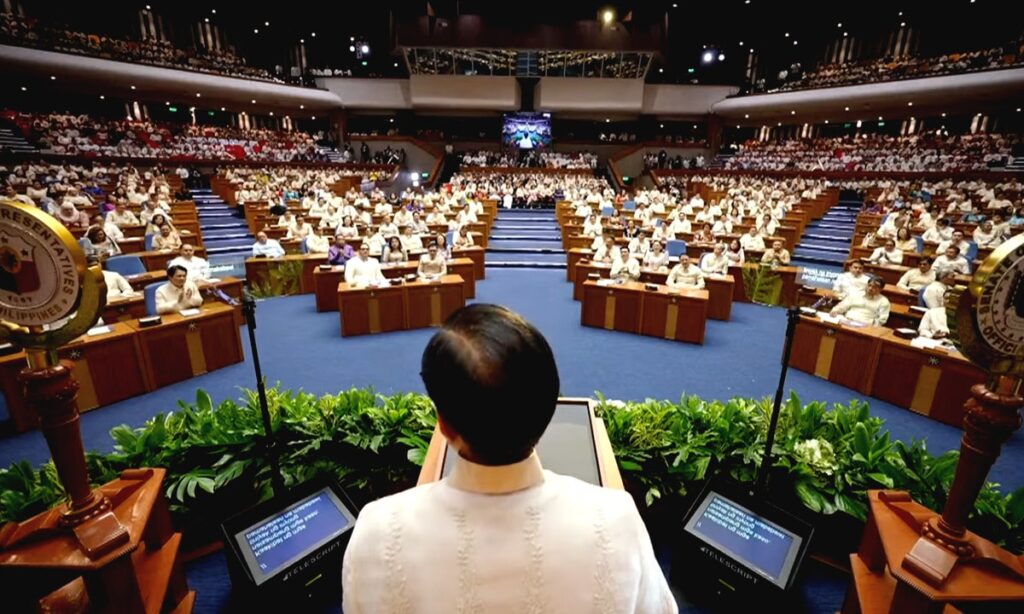
During his 2026 State of the Nation Address (SONA), Marcos said around 44 million Filipinos had been covered by the SSS since the beginning of his administration. More than 80,000 of them were drivers, vendors, gig workers, government job-order and contract-of-service personnel, and other informal-sector workers.
The President urged Filipinos outside traditional employer-based arrangements to register and make correct monthly contributions to SSS and Pag-IBIG for their future financial security.
The challenge is not simply getting workers to open accounts. For people whose earnings change from week to week, consistently setting aside money for contributions can be more difficult than making the payment itself.
Digital payment channels are already available
Both the SSS and Pag-IBIG have already moved many member transactions online.
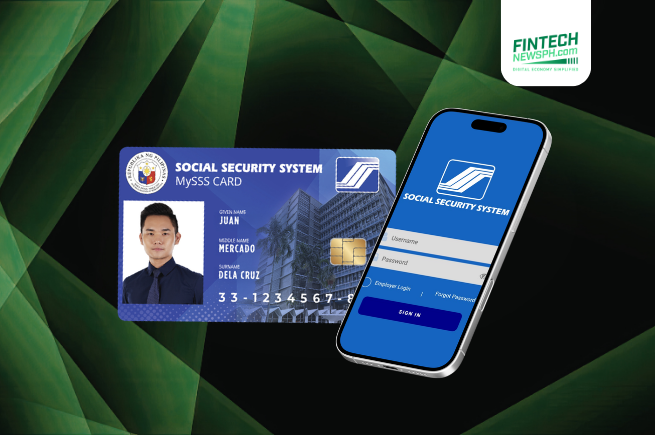
IMAGE CREDIT: SSS
Self-employed SSS members can pay their contributions monthly or quarterly using a Payment Reference Number generated through My.SSS. The agency’s mobile application also allows members to pay through GCash, Maya, debit cards, and credit cards.
SSS also lists auto-debit arrangements with selected partner banks, offering a way for workers with sufficient and predictable account balances to automate their payments.
Pag-IBIG members can use Virtual Pag-IBIG to register, make online payments, view their savings records, and manage selected loan services. Its mobile application supports payments for regular savings, MP2 savings, housing loans, and multipurpose loans.
These digital channels reduce the need to visit government branches or payment centers. They also allow workers to pay using devices and financial accounts they may already use for receiving earnings, buying goods, or transferring money.
However, digital access does not automatically produce regular contributions. A rider, freelance designer, online seller, or market vendor may have enough money to contribute during a strong month but skip payments when income falls or essential expenses increase.
Platforms could help turn irregular earnings into regular contributions
The next stage of financial inclusion could involve connecting social security payments more closely to the platforms through which gig workers earn.
Delivery, transport, freelance, and online-commerce platforms already calculate earnings and release payouts to workers. Subject to appropriate regulation and explicit worker consent, they could offer an option to deduct a fixed amount or percentage from each payout and remit it to SSS or Pag-IBIG.

Instead of asking a worker to produce an entire monthly contribution at once, an opt-in system could set aside smaller amounts after every completed delivery, ride, sale, or freelance payment.
Such an arrangement would require careful rules. Workers would need to control whether deductions are activated, how much is withheld, and when the money is remitted. Platforms would also need to provide clear records and procedures for correcting failed, duplicated, or incorrectly posted payments.
The International Labour Organization (ILO) has identified simplified digital collection systems, mobile payment channels, and platform participation as possible ways to extend social protection to workers whose employment does not follow a conventional employer-employee structure.
The approach could also involve contribution subsidies. SSS already allows organizations to become contribution subsidy providers, enabling partners to help pay contributions for qualified self-employed and voluntary members. Platforms, local governments, cooperatives, and private companies could potentially use similar arrangements to supplement — not merely deduct from — workers’ earnings.
Convenience cannot solve the affordability gap alone
The government’s treatment of its own contract-based workers illustrates the difference between making payments easier and helping workers afford them.
Under the 2025 joint circular governing government COS and JO workers, agencies must provide a premium of up to 20% of a worker’s salary or wage, subject to available funding. The premium is intended to cover voluntary or self-employed contributions to SSS, PhilHealth, and Pag-IBIG.
Comparable support may be harder to introduce across the wider gig economy, where workers may use several platforms, work directly with customers, or earn partly in cash.
Digital reminders, recurring payments, flexible contribution schedules, and National ID-supported identity verification could reduce administrative friction. But participation will remain difficult when workers must shoulder the full contribution while also managing unstable earnings.
Marcos’ SONA appeal gives SSS, Pag-IBIG, fintech companies, and digital labour platforms an opportunity to move beyond simply adding more payment buttons.
The bigger opportunity may be to design contribution systems around how gig workers actually earn: frequently, digitally, across multiple platforms, and with incomes that can fluctuate from one day to the next.