
by Raghav Iyer S, Senior IT Security Analyst, ManageEngine
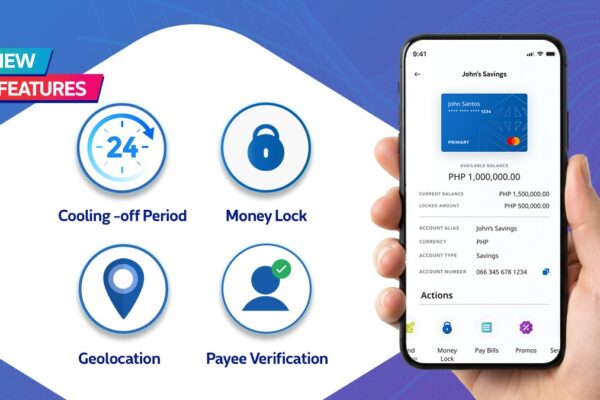
Digital transformation has been a game-changer for banks and the banking industry in the Philippines, widening access so that scores of previously unbanked and underbanked Filipinos can participate in the financial system.
Today, nearly half of Filipino adults own an e-money account, with digital payments accounting for 57.4% of retail payment transactions. Digital transformation has also allowed employees to be more agile by enabling flexible working arrangements through simply having a device that connects to the internet.
However, all that connectivity comes with a price.
Every new digital capability and every device is a potential entry point for attackers because the threat landscape no longer comprises random hackers testing their luck. Today’s attackers are deliberate and organized.
Many are using artificial intelligence (AI) to scan for overlooked vulnerabilities. Malware, ransomware, phishing, and credential theft remain the go-to tools, and endpoints are almost always the first point of contact.
The endpoint problem
The thing about modern cyberattacks is that they rarely start with a direct assault on a bank’s core systems as that would be too obvious, not to mention too heavily guarded. Instead, attackers look for the path of least resistance, which usually runs through the devices people use every day.
A phishing email that tricks someone into clicking a link or a laptop that hasn’t been updated in months are common security lapses that can give an attacker a foothold. From there, they can move laterally, steal credentials, access sensitive data, or deploy ransomware that brings operations to a halt.
The numbers tell the story. PwC reported that more than 52 million personal credentials were exposed through data breaches in just the third quarter of 2025. That’s 52 million potential keys to the kingdom floating around on the dark web just waiting to be used.
Clearly, endpoint security is no longer just a back-office IT concern but has become central to maintaining customer confidence and avoiding the kind of reputational hit that can take years to recover from.
Regulators are taking notice too. The Bangko Sentral ng Pilipinas has made it clear that SMS-based one-time passwords are no longer secure enough for high-risk transactions. Banks need to move toward biometrics, device-bound passkeys, and stronger authentication overall. The message is simple: Verifying who someone is isn’t enough anymore. You also need to verify that the device they’re using is secure.
Yet, many banks still treat endpoint management and security as separate functions. They might have an inventory of devices, but they don’t necessarily know which ones are risky or how to respond when something goes wrong. That’s a dangerous gap.
Unified endpoint security closes that gap by bringing together device visibility, security controls, risk assessment, and automated response into a single view. Security teams, then, don’t have to juggle multiple tools and dashboards, gaining deep end-to-end observability and, as a result, the ability act quickly when something looks off.
Moving from reaction to resilience

IMAGE CREDIT: ManageEngine
The old way of doing security, by reacting to incidents after they happen, just doesn’t cut it anymore. Devices are too numerous, threats are too fast, and the cost of getting it wrong is too high.
Banks need to start thinking in terms of resilience. They need the tools to withstand attacks, respond quickly when they happen, and keep operating even under pressure.
Unified endpoint security helps with this by giving banks the visibility they need to make smarter decisions. Should this device be allowed to access sensitive systems? Is it fully patched? Is encryption enabled? Is it compliant with internal policies? These aren’t optional questions anymore. They’re essential.
Automation is a big part of this too. The volume of alerts, patches, and updates is overwhelming for human teams. Automation can handle routine tasks such as deploying patches, enforcing policies, and updating configurations so that security professionals can focus on the things that actually require human judgment.
For banks with hybrid workforces, this becomes even more critical. Security can’t depend on whether someone is in the office. It has to follow the device, wherever it goes. That’s a shift in mindset, but it’s one that’s long overdue.
At the same time, security can’t become a productivity killer. If employees are constantly blocked from doing their jobs, they’ll find work-arounds that create even more risk. The trick is finding solutions that protect without frustrating.
Don’t fall behind on compliance and trust

IMAGE CREDIT: Magnific
The real challenge for banks isn’t just deploying the right tools. It’s maintaining continuous oversight and being able to prove, at any given moment, that security controls are working.
Periodic audits and spot checks aren’t enough anymore. Threats change daily. Environments change constantly. Banks need ongoing visibility into device health, security posture, and potential risks.
This is where endpoint data becomes invaluable. It’s not just about monitoring anymore, it’s about using that data to anticipate problems and address them before they cause damage.
For Philippine banks, unified endpoint security is becoming a strategic differentiator. It supports fraud prevention, regulatory compliance, operational stability, and customer confidence all at once.
As digital banking continues to evolve, the banks that maintain clear visibility across every endpoint will be the ones that manage risk effectively, protect their customers, and earn the trust that’s essential for long-term success.
About ManageEngine

ManageEngine is the enterprise IT management division of Zoho Corp., helping organizations manage and secure their increasingly complex digital environments.
Since 2002, ManageEngine has provided IT teams and business leaders with a broad portfolio of solutions covering IT operations, cybersecurity, identity and access management, enterprise service management, endpoint management, network and server monitoring, analytics, and application management.
With more than 60 enterprise IT management products and over 60 free tools, ManageEngine offers flexible deployment options across on-premises, cloud, and managed service environments. Its integrated approach connects different aspects of IT management, giving organizations greater visibility, control, and efficiency while supporting digital transformation and more secure, resilient, and productive workplaces.