AI scams are making an old problem harder to recognize.
Fraudsters still rely on familiar tactics such as phishing messages, fake investment offers, impersonation and romance scams. What is changing is how easily artificial intelligence can make those schemes more convincing, personalized and scalable.
That poses a particular challenge in the Philippines, where social engineering already accounts for a large share of financial fraud. According to Bangko Sentral ng Pilipinas data cited by Metrobank, social engineering attacks including phishing, account takeovers and identity theft accounted for 76% of reported cyber-fraud losses in 2025.
AI could now make the scammer’s most important target, human trust, easier to exploit.
Scams no longer have to look suspicious
For years, consumers were taught to watch for obvious warning signs: misspelled words, strange grammar, generic messages and suspicious-looking profiles.
Generative AI can eliminate many of those clues.
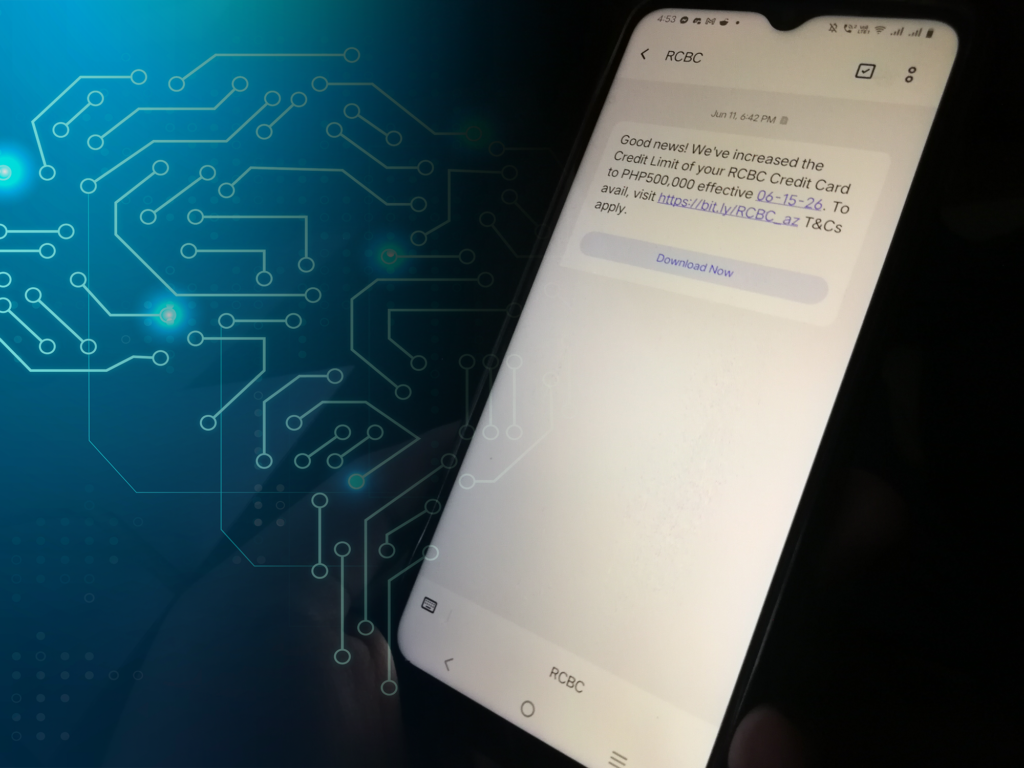
IMAGE CREDIT: RCBC
A scammer can use AI to produce polished emails, translate messages, create realistic images or imitate the way a person communicates. Voice cloning and deepfake technology can take impersonation even further by making someone appear or sound like a real executive, relative or public figure.
The underlying scam may be familiar, but the presentation is getting better.
This also lowers the amount of work needed to operate at scale. Instead of manually writing the same message to hundreds of people, fraudsters can potentially generate variations for different targets and maintain multiple conversations simultaneously.
For organized scam networks, that efficiency matters.
AI is changing the economics of fraud
Online scams are increasingly connected to organized criminal operations rather than only individual fraudsters sending random messages.
INTERPOL has documented the globalization of scam centres linked to organized crime, with operations that originated heavily in Southeast Asia spreading into other regions.
Artificial intelligence gives these groups another way to industrialize deception.
In its 2026 Global Financial Fraud Threat Assessment, INTERPOL said AI-enhanced fraud is estimated to be 4.5 times more profitable than traditional methods.
The organization also warned about the emergence of agentic AI systems capable of handling more stages of a fraud operation autonomously, potentially moving from identifying targets to planning and executing parts of an attack.
The United Nations Office on Drugs and Crime has similarly warned that Southeast Asia’s criminal landscape is becoming increasingly interconnected and technology-driven, with generative AI and other digital tools creating new opportunities for criminal groups.
The advantage for scammers is straightforward. If technology allows them to create more believable approaches at lower cost, the number of attempts they can make increases.
They do not need every victim to believe them. They only need enough people to respond.
AI scams are already appearing in familiar forms
The threat is not hypothetical for Filipino consumers.
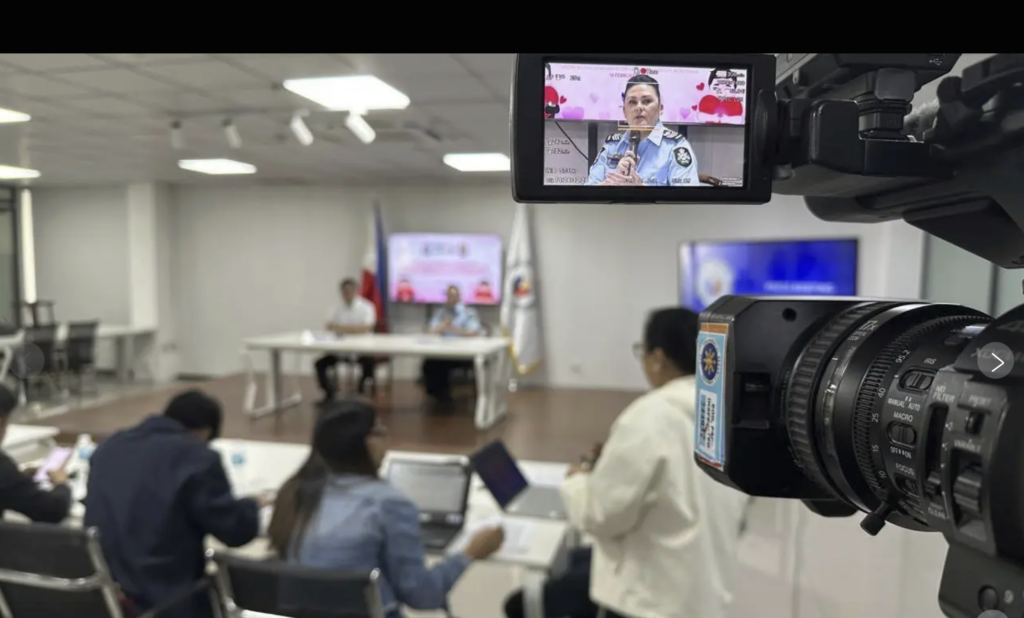
The Cybercrime Investigation and Coordinating Center has already warned about the use of artificial intelligence in romance scams, where fraudsters build convincing online identities before gaining a victim’s trust.
In February, the CICC said scammers were using AI-generated photos, automated conversations and deepfake-assisted video calls to strengthen fake identities. Philippine Information Agency reporting showed that victims recovered more than ₱20 million in 2025 after reporting AI-powered love scams to authorities.
The CICC recorded 123 formal love-scam complaints during the year.
The same technology can be adapted to other forms of social engineering.
A fake bank representative can send a professionally written message. An investment scammer can create convincing promotional material. A fraudster pretending to be a family member may eventually be able to imitate the person’s voice well enough to create panic.
A fake company executive could potentially appear in a video meeting and request an urgent transfer.
None of these scams requires AI to be perfect.
They only need the victim to believe the deception for long enough to send money, reveal an OTP, click a malicious link or surrender account credentials.
Trust now needs a second layer of verification
This makes traditional advice such as “look for spelling mistakes” increasingly inadequate.
When a fraudulent message can be professionally written and a fake voice can sound familiar, consumers and businesses cannot rely solely on whether something looks convincing.
Verification increasingly needs to happen outside the conversation itself.
A message claiming to come from a bank should be checked using the bank’s official app or customer service channel. An unexpected request for money from a relative can be verified through a separate call. Businesses can introduce secondary approvals for unusual transfers even when instructions appear to come from a senior executive.
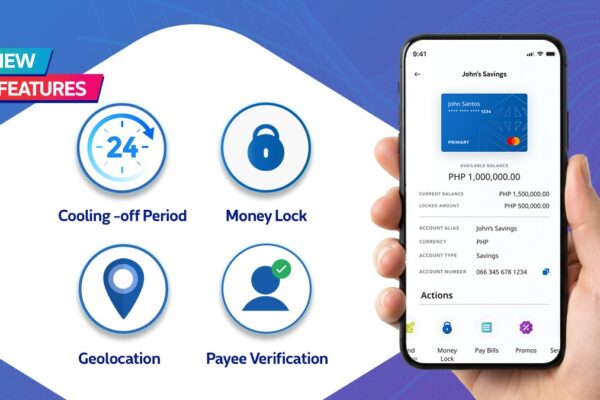
Financial institutions are responding with similar layers of friction. Metrobank, for example, recently introduced safeguards including a 24-hour cooling-off period after critical account changes, Money Lock, geolocation checks and payee verification.
AI can also work in the other direction. Banks and cybersecurity companies can use machine learning and AI to identify suspicious transactions, detect unusual behavior and respond to threats faster.
That means artificial intelligence does not automatically give criminals an unbeatable advantage.
But it changes the contest.
The next scam may not arrive with broken English, an obviously fake photograph or a suspicious email that immediately looks wrong.
It could know your name, communicate naturally and sound like someone you trust.
As AI scams become more convincing, spotting what looks fake will no longer be enough.
Filipinos may increasingly have to learn to verify what looks real.