

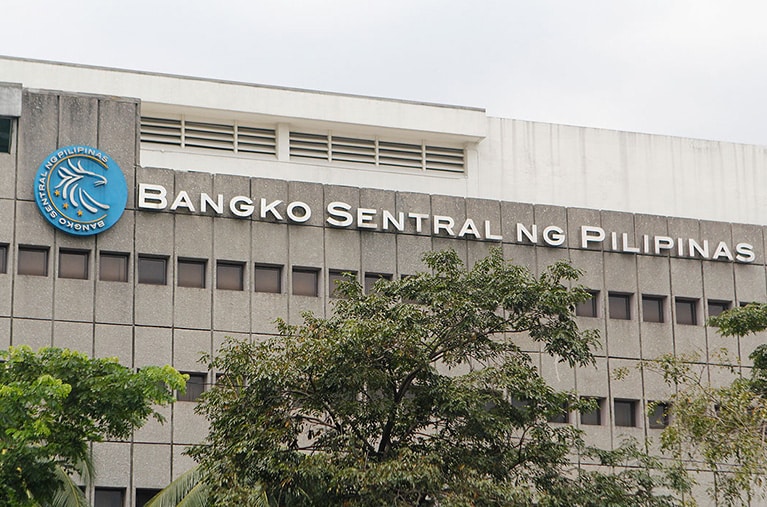
BSP core banking system support will give qualified rural banks up to three years of free access to cloud-based banking software, as the central bank tries to remove one of the costliest barriers to digitalization for smaller lenders.
The Bangko Sentral ng Pilipinas announced the program on September 1 under the Digitalization Technical Assistance component of its Rural Bank Strengthening Program.
Qualified rural banks will receive access to a Software-as-a-Service or SaaS core banking system, with the BSP covering the implementation and a 36-month subscription period.

The assistance is more substantial than simply giving banks a software license.
Under the BSP’s technical specifications for the project, the package can include system configuration, data migration, integration, testing, employee training, cloud infrastructure, security services, technical support, software updates and maintenance.
The project can accommodate up to 15 qualified rural banks, subject to available funding and BSP approval.
Why is the BSP paying for a private bank’s software?
Core banking systems sit at the center of a bank’s daily operations.
They record customer deposits and withdrawals, maintain account balances, process loans and payments, calculate interest and fees, produce transaction records and feed information into regulatory reports.
For a small rural bank, replacing that system is therefore very different from subscribing to ordinary business software.
A migration can require years of customer and transaction data to be transferred accurately, existing systems to be connected to the new platform, employees to be retrained and critical banking services to remain available throughout the transition.
Any failure can affect the bank’s actual operations.
That creates a difficult trade-off for smaller institutions. Older technology may become harder to maintain and integrate with newer financial services, but replacing it can require significant upfront spending and technical expertise.
The BSP’s intervention effectively absorbs part of that transition cost.
The problem is bigger than buying software
The central bank has long linked rural-bank modernization with the sector’s ability to remain competitive and financially sound.
When the Rural Bank Strengthening Program was introduced, the BSP noted that limited capitalization can restrict rural banks’ ability to cover operational costs and invest in digitalization.
Technology limitations can create several problems at once.
A bank running an outdated or heavily customized system may find it more difficult to introduce new products, connect with newer payment infrastructure or automate processes that larger banks already handle digitally.
Older systems can also require more manual work, which increases the possibility of operational errors and complicates regulatory reporting.
Cybersecurity is another concern.
The BSP said the cloud-based system under the program is intended to strengthen cybersecurity and operational resilience while helping participating banks comply more effectively with regulatory requirements.
Moving to SaaS does not eliminate technology risk, but it can shift responsibilities such as updates, infrastructure maintenance and parts of security management to a specialized provider rather than leaving each small bank to maintain everything internally.
Not every rural bank can apply

The program is targeted rather than universal.
According to the BSP, participating rural banks must meet applicable minimum capital requirements, demonstrate commitment to improving their operations under the Rural Bank Strengthening Program and not already have an existing SaaS-based core banking subscription when they apply.
The BSP’s procurement terms also show that implementation can take up to six months per bank before the full three-year subscription period begins.
Once the BSP-funded 36 months end, the bank will have to decide whether to continue paying for the system.
The BSP’s revised terms require the provider to support data portability and transition, while any renewal after the assistance period becomes the responsibility of the rural bank.
That is an important part of the program.
The BSP is not permanently taking over a bank’s IT spending. It is subsidizing the difficult initial migration and giving the bank three years to operate on the new platform before deciding whether it is sustainable to continue independently.
Core banking upgrades can unlock other digital services
Modernizing a core banking system does not automatically turn a rural bank into a digital bank.
But it can make other upgrades easier.
Digital onboarding, mobile banking, automated loan processing, real-time payments and integrations with outside fintech platforms all eventually have to connect with the systems that maintain customer accounts and transactions.
If the underlying core is difficult to modify or integrate, launching those services becomes harder and potentially more expensive.
That helps explain why the BSP is treating core banking modernization as infrastructure rather than simply an individual bank’s technology purchase.
For rural banks, the three-year assistance lowers the cost of replacing systems that may otherwise be too expensive or risky to overhaul.
For the BSP, the potential payoff is a group of smaller banks that are easier to supervise, more resilient operationally and better equipped to participate in an increasingly digital financial system.