
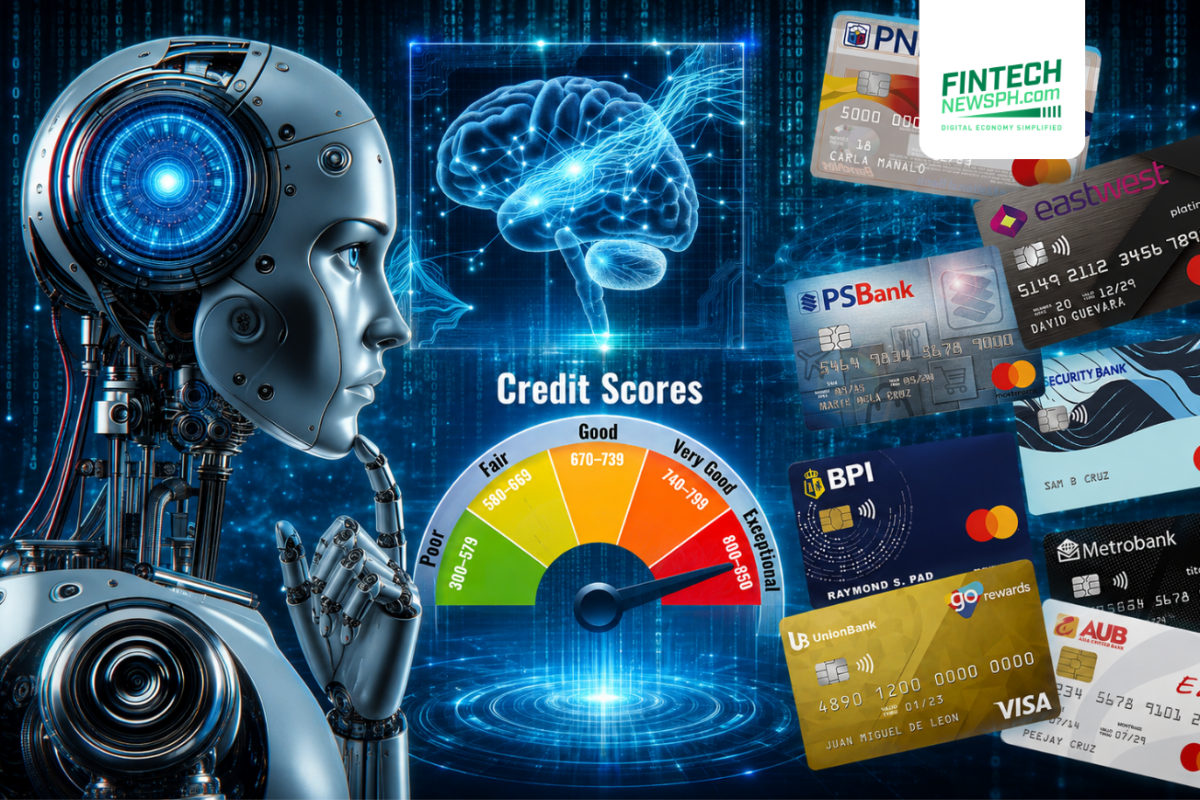
AI credit scoring is reshaping how financial institutions evaluate borrowers in the Philippines. For millions of Filipinos who have never owned a credit card or taken out a formal loan, traditional credit scoring methods often leave them without a financial identity. As artificial intelligence and alternative data become more widely adopted, lenders are finding new ways to assess creditworthiness beyond conventional credit histories.
Instead of relying solely on bank loans or credit card records, modern credit assessment now considers digital footprints, utility payments, payroll information, e-wallet transactions, and other financial behaviors. This shift is helping lenders make faster and more informed lending decisions while giving underserved Filipinos greater access to formal credit.
AI credit scoring goes beyond traditional credit history
Traditional credit scoring has long depended on a person’s borrowing history. While this approach works for individuals with existing financial records, it often excludes first-time borrowers, freelancers, gig workers, and many members of the informal economy.

AI credit scoring changes this by analyzing alternative sources of financial information. Regular payment of electricity, water, internet, and mobile bills, consistent payroll deposits, digital wallet activity, and other verified financial behaviors can provide valuable insights into a person’s ability to repay loans.
Artificial intelligence enables lenders to process these large and diverse datasets more efficiently than manual assessments. By identifying patterns and predicting repayment behavior, AI helps financial institutions evaluate applicants who may have previously been considered “credit invisible.”
Alternative data is expanding financial inclusion
One of the biggest advantages of AI credit scoring is its ability to expand financial inclusion. Millions of Filipinos remain underserved by traditional financial services despite actively participating in the digital economy.

Companies such as FinScore have demonstrated how mobile and alternative data can supplement conventional credit evaluation. With the applicant’s consent, data analytics can provide lenders with additional insights that support more accurate risk assessments, especially for individuals with limited formal credit histories.
Meanwhile, credit bureaus are also evolving their role. CIBI Information Inc. continues to strengthen data-driven credit assessment by integrating broader sources of financial information and advanced analytics. Rather than replacing traditional credit reports, alternative data complements existing records, allowing lenders to develop a more complete picture of a borrower’s financial behavior.
For banks, fintech companies, and digital lenders, this means better-informed lending decisions. For consumers, it can translate into greater access to loans, lower barriers to entry, and opportunities to build a formal credit profile.
Responsible AI will shape the future of lending
While AI credit scoring offers significant opportunities, responsible implementation remains essential. Financial institutions must ensure that AI models remain transparent, fair, and compliant with data privacy regulations.
Consumers should also understand what information is collected, how it is used, and how consent is obtained before alternative data becomes part of the credit evaluation process.
As AI becomes more sophisticated, credit scoring models will likely continue incorporating a wider range of financial behaviors while improving prediction accuracy. However, human oversight, strong governance, and ethical AI practices will remain critical to preventing bias and ensuring fair lending outcomes.
The continued collaboration among credit bureaus, fintech companies, banks, and regulators will be key to building a trusted ecosystem where technology improves access to finance without compromising consumer protection.
A new era for credit assessment
The rise of AI credit scoring marks an important shift in Philippine lending. Instead of defining borrowers solely by their past loans or credit cards, financial institutions are beginning to recognize broader indicators of financial responsibility through alternative data and advanced analytics.
As organizations like FinScore and CIBI continue advancing data-driven credit assessment, more Filipinos — especially those previously excluded from traditional lending — may gain access to formal financial services.
By combining innovation with responsible data governance, AI credit scoring has the potential to make credit more inclusive, accurate, and accessible for the country’s growing digital economy.