
The Land Bank of the Philippines (LandBank) took the stage at the ASEAN Tech Summit 2026 on July 28, with President and CEO Lynnette Ortiz discussing the bank’s practical approach to drive digital inclusion for marginalized communities across the country.
Ortiz emphasized in her talk that Filipinos, especially those in the far-flung areas, are experiencing exclusion in the industry, not merely because of technological issues, but rather of structural barriers.
She said that LandBank, as the largest government financial institution, has a clear developmental mandate—providing banking access and capital, countryside and countrywide.
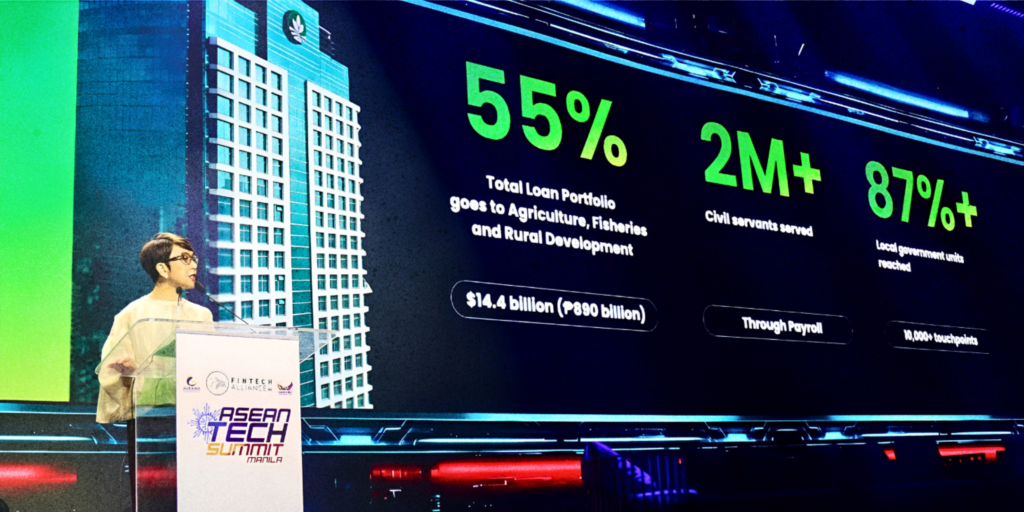
“55% of our loan portfolio consists of about $14.4 billion directed to agriculture, fisheries, and rural development. We dispersed cash in times of need, processed payroll for more than 2 million civil servants, and maintained 10,000 touch points, reaching more than 87% of the country’s local government units nationwide.” she shared
Reaching the periphery through on-the-ground initiatives and financial programs

Ortiz pointed out that while digitalization improves efficiency by reducing costs, speeding up transactions, and making financial services available at any time, it can also unintentionally worsen or widen gaps in financial inclusion.
She argued that a system may be fast and technologically advanced, but can still fall short if it fails to reach those who need it most.
Citing that only around 50% to 58% of Filipinos are banked, with the rest remaining on the periphery, Ortiz said that digital tools alone are insufficient to address the challenge.
Instead, LandBank has implemented what it calls a ‘phygital strategy,’ combining digital technology with human touch.
Through on-the-ground guidance, financial education, and step-by-step assistance, LandBank personnel help individuals understand and adopt digital banking services, enabling more Filipinos to enter the formal financial system.
The bank has also introduced programs targeting specific groups, including social welfare beneficiaries, students, farmers, and fishers.
Through its partnership with the Department of Social Welfare and Development (DSWD), the bank brought 4.4 million beneficiaries into mainstream financial channels by distributing subsidies via cash and basic deposit accounts.
It also opened more than 700,000 accounts for CHED scholars, giving them a secure channel for their allowances while opening their first formal bank accounts.
For farmers and fishers, LandBank’s Agri-Senso Plus combines affordable credit with financial education, bringing banking services directly to agricultural communities.
According to Ortiz, the program has reached more than 17,000 farmers, allowing them to open accounts on-site and access credit at an interest rate of 3% per annum. She said this provides an alternative to informal lenders that may charge rates of 20% to 30%.
Building an Inclusive Ecosystem Across Three Levels
To expand financial inclusion beyond simply giving people ownership of bank accounts, the LandBank is instead focusing on how communities, individuals, and investors can fully participate in the digital financial ecosystem.
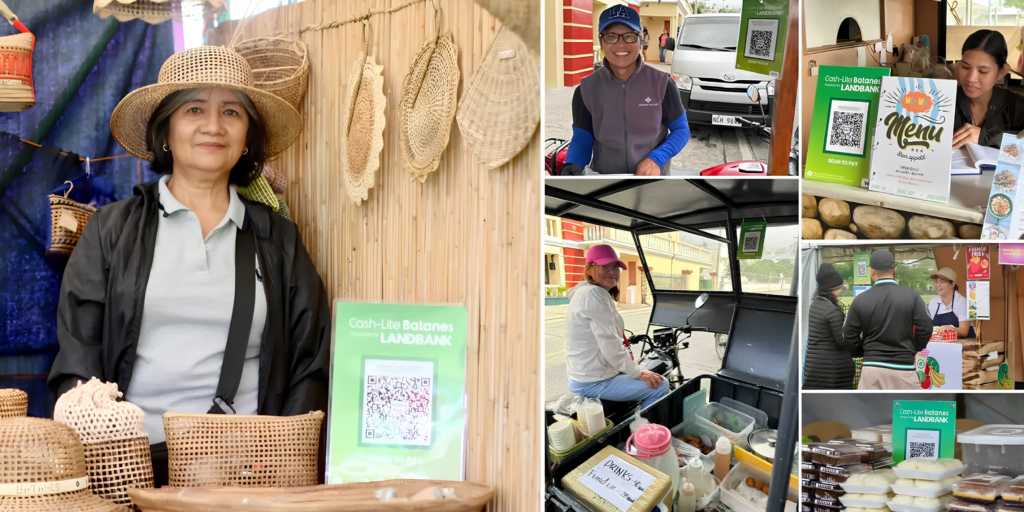
At the community level, its cash-light initiative in Batanes helped reduce cash-delivery flights from five in 2023 to just one in 2025 by working with merchants and local government offices to shift payments to digital channels.
At the individual level, its cash-light campus initiative brought 10,000 students and 321,000 merchants into digital channels within a year. The bank has also integrated its onboarding process with the Philippine Statistics Authority, allowing applicants with a National ID to be digitally verified.
For investors, LandBank’s ₱50 billion sustainability bonds, known as ASENSO bonds, were made available through its mobile banking app, allowing customers to invest with an initial amount of ₱10,000. Almost 17,000 investors subscribed, showing how digital banking can extend financial inclusion from simply owning an account to participating in investments and the wider economy.
Eliminating the cost barriers

Ortiz also stressed the value of removing the cost of access, noting that even small transaction fees can discourage people from going digital.
As you may recall, LandBank, along with other major banks, has recently moved to waive transaction fees in line with the BSP policy. The bank first removed fees for eligible person-to-government payments made via QR Ph on June 1 and, since July 7, has also made InstaPay and PESONet transfers through its app and website free.
For LandBank, the move is more than a fee cut—it is an investment in the digital payments ecosystem. By keeping more money in households and small businesses, the bank helps lower transaction costs and drive wider digital adoption.
Bringing Government Services Closer to Citizens

Delivering inclusion at a national scale requires institutional collaboration. Ortiz highlighted this by explaining how their organization works closely with government agencies to deliver subsidies, grants, and emergency assistance nationwide.
By leveraging its extensive network, the bank brings the whole of government to meet the urgent needs of millions of Filipinos.
In the first half of the year, the bank said it disbursed cash transfers to 4.4 million families under national social protection programs. It also partnered with DSWD to implement the government’s UPLIFT program.
During recent fuel price surges, the bank integrated the National Fuel Subsidy System into its network, enabling fuel stations to validate transport drivers and apply subsidies in real time.
Expanding beyond financial aid, LandBank recently partnered with the Department of Information and Communications Technology (DICT) to deploy the ASEAN MSME AI Tech Stack. The initiative pairs practical AI management tools with LandBank financing, combining capital and technology capability to help small businesses compete, scale, and generate jobs
A Shared Regional Vision for ASEAN

Looking ahead, LandBank frames these initiatives as part of a broader vision for the ASEAN region, where financial exclusion remains a shared challenge.
By integrating accessible digital banking, zero-fee payments, simplified account opening, faster government disbursements, and AI-enabled solutions, the bank aims to turn inclusive finance from an aspiration into a measurable outcome.
“ASEAN’s next chapter will not be measured only by how advanced our technologies become. It will be measured by how many people they include.” Ortiz concluded