

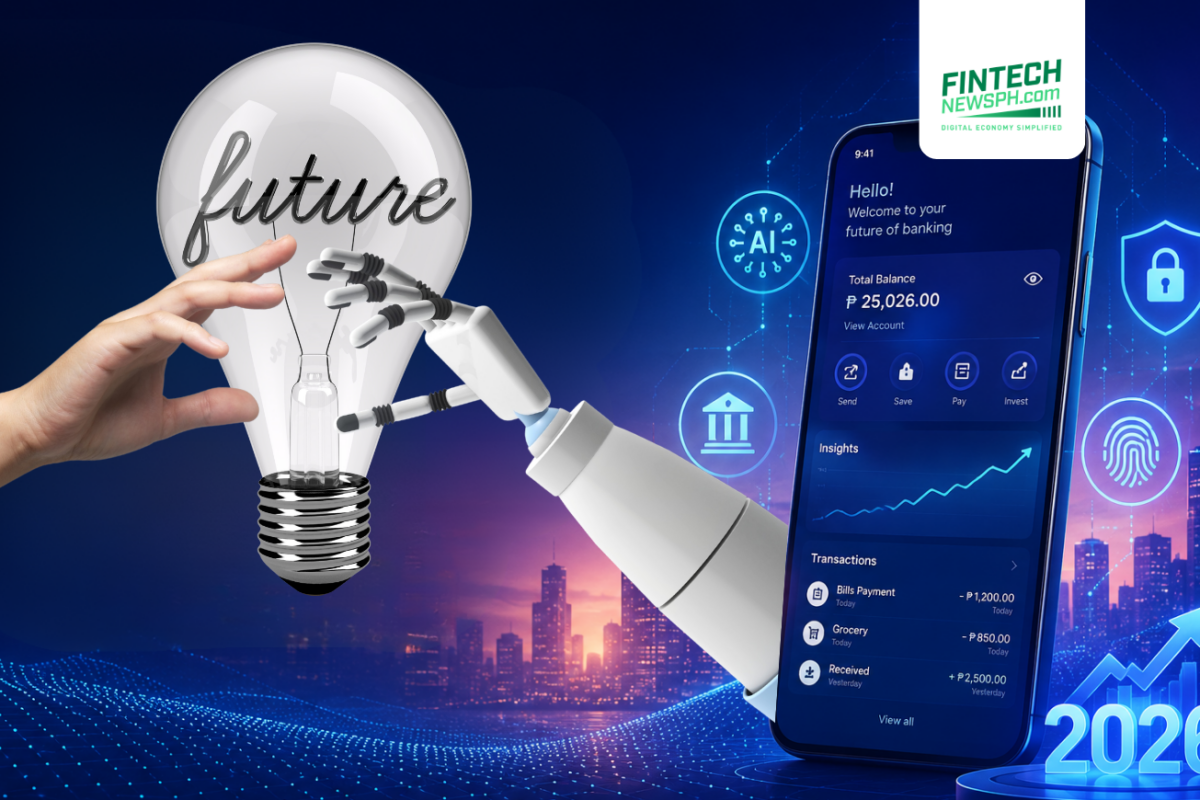
Digital banking trends are expected to redefine how Filipinos manage money in 2026 as financial institutions continue embracing artificial intelligence (AI), blockchain, and emerging digital experiences.
Following years of rapid digital banking adoption, the next phase of innovation is shifting from simply offering online services to creating smarter, safer, and more personalized financial ecosystems.
For banks operating in the Philippines, future-proofing is no longer just about launching new mobile apps. It involves preparing for technologies such as voice-enabled banking, blockchain-powered payments, and immersive digital experiences that could transform customer interactions. As competition intensifies among traditional and digital banks, institutions that adapt quickly may be better positioned to meet evolving customer expectations.
Digital Banking Trends Signal Smarter Customer Experiences
Artificial intelligence is expected to become even more embedded in everyday banking. Rather than serving only as chatbots or virtual assistants, AI could proactively help customers manage spending, recommend savings strategies, detect fraud in real time, and automate financial planning.

Voice-enabled banking is another innovation gaining attention. Customers may soon be able to transfer funds, pay bills, check balances, or receive financial advice using natural voice commands through smartphones, smart speakers, or even connected vehicles. As voice recognition technology improves, banks are likely to invest in stronger authentication methods to ensure convenience does not compromise security.
The growing use of predictive analytics may also allow banks to anticipate customer needs before they arise. Whether offering personalized loan options or investment recommendations, data-driven digital banking is expected to play a larger role in enhancing customer experiences.
Blockchain Could Modernize Digital Payments
Blockchain technology continues to evolve beyond cryptocurrency applications. In 2026, financial institutions may increasingly leverage blockchain to improve payment efficiency, cross-border remittances, and settlement processes while reducing operational costs.

For the Philippines, where overseas remittances remain a significant contributor to the economy, blockchain-powered payment systems could help reduce transaction times from days to minutes. Faster settlements may also benefit businesses by improving cash flow and supporting real-time commerce.
Financial institutions are likewise exploring tokenized assets and programmable payments. These innovations could streamline business transactions, automate contract execution, and increase transparency across financial ecosystems. While widespread implementation will depend on regulation and industry collaboration, blockchain remains one of the technologies with the potential to reshape digital finance.
The Next Generation of Online Banking May Be More Immersive
As virtual and augmented reality technologies mature, digital banking experiences could extend beyond traditional mobile applications. Customers may eventually access virtual bank branches through immersive digital environments where they can consult financial advisors, explore investment products, or complete complex transactions remotely.
Although metaverse banking is still in its early stages, banks worldwide continue to experiment with digital spaces that enhance customer engagement. In the Philippine market, these innovations may initially focus on financial education, customer support, and interactive product demonstrations before becoming mainstream digital banking channels.
At the same time, cybersecurity will remain a top priority. As digital experiences become more advanced, banks will need to invest in AI-powered fraud detection, biometric authentication, passkeys, and continuous identity verification to maintain customer trust while supporting new technologies.
Building Banks for the Future
The future of digital banking trends in the Philippines will likely be defined by intelligent automation, seamless digital payments, and increasingly personalized customer experiences. While technologies such as blockchain, AI, voice banking, and immersive finance are still evolving, they represent the next stage of innovation for both traditional and digital banks.
Success in 2026 will depend not only on adopting emerging technologies but also on balancing innovation with security, regulatory compliance, and customer trust. As the Philippine financial sector continues its digital transformation, institutions that embrace these trends strategically may be better equipped to deliver banking experiences designed for the next generation.