
Artificial intelligence is changing the way companies operate, but it’s also giving cybercriminals new tools to work with. For many organizations, the challenge is no longer simply adopting AI — it’s making sure their operations can withstand whatever comes with it.
That was the message PLDT Enterprise brought to a series of industry conferences this year, where discussions increasingly centered on cyber resilience, data protection, and the growing role of AI in enterprise operations.
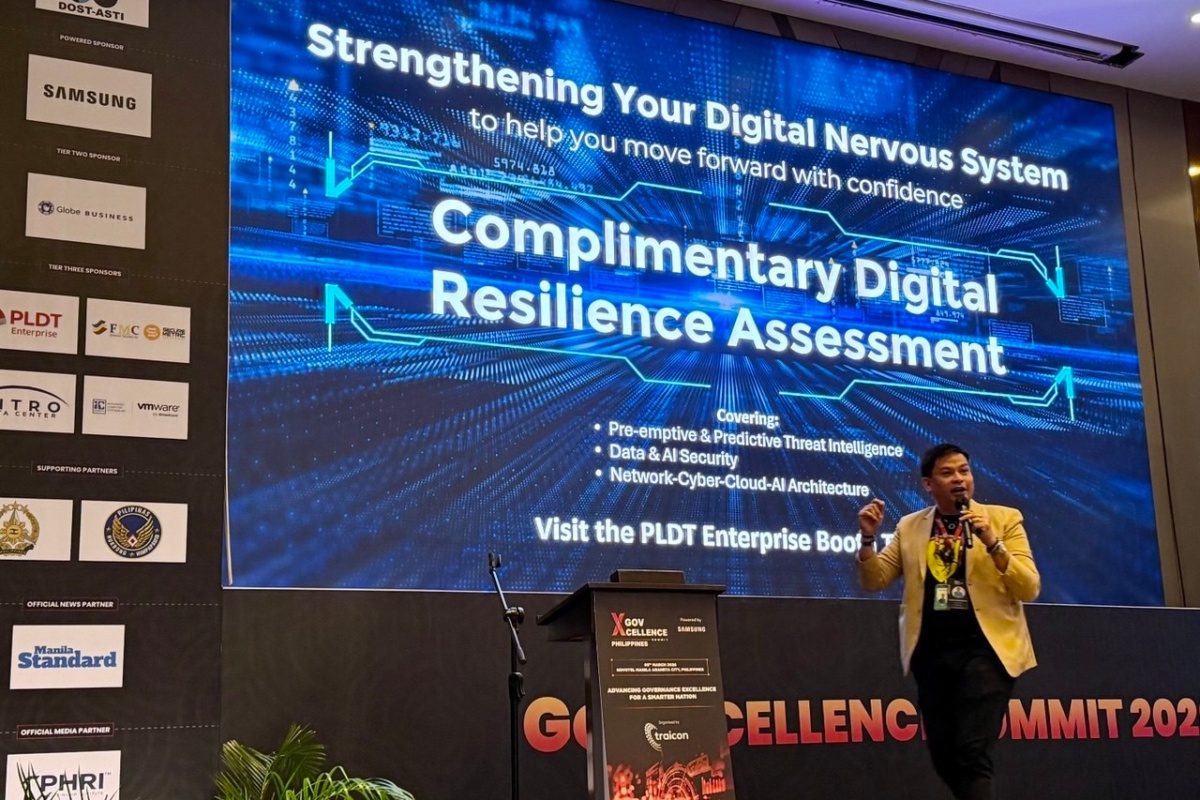
Alexis Bernardino, Principal CXO Advisor and Head of the CXO Advisory at PLDT Enterprise, said digital transformation should no longer be measured solely by how quickly organizations adopt new technologies.
“In a landscape being reshaped by AI, transformation alone is no longer enough,” Bernardino said.
“Organizations must also ask whether their business operations can remain secure, trusted, and available when disruption happens.”
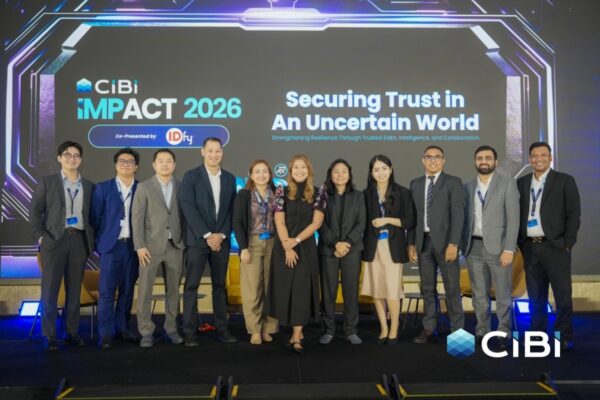
Bernardino has been among the speakers at the Gov Excellence Summit 2026, Cyber Resilience Summit 2026, and Digital Next Philippines 2026, where conversations have increasingly shifted from digitalization to preparedness.
Only a few years ago, most enterprise discussions revolved around cloud migration, automation, and modernizing legacy systems. Those priorities remain, but they’re now being viewed through a different lens.
Every new digital service, cloud workload, or AI application also creates another potential entry point for attackers.
That’s why the company is encouraging organizations to treat cybersecurity as a business issue rather than a technology problem.
Instead of focusing only on responding after an attack, Bernardino said companies should understand where their biggest vulnerabilities lie before systems are compromised.

Alexis Bernardino, Principal CXO Advisor and Head of the CXO Advisory at PLDT Enterprise
That approach underpins the company’s executive workshops on cyber resilience and data exposure, where discussions often begin with practical questions rather than technology.
Which systems are essential to keep running? Which data would cause the greatest damage if exposed? How quickly could the organization recover if critical services went offline?
As artificial intelligence becomes more deeply embedded in business operations, those conversations are becoming more urgent.
One topic drawing growing attention is Agentic AI, which refers to AI systems capable of carrying out tasks with greater autonomy instead of simply responding to prompts.
Unlike conventional AI assistants, these systems can plan sequences of actions, execute workflows, and make limited operational decisions with minimal human intervention.
Cybersecurity emerges as a boardroom priority amid AI

IMAGE CREDIT: Magnific
PLDT Enterprise expects that technology to feature prominently during the upcoming Philippines Agentic AI Forum, where business leaders are expected to discuss how AI can move beyond experimentation into day-to-day enterprise operations.
Bernardino said AI is reshaping both sides of cybersecurity.
“AI is turbocharging the speed and scale of change on both sides of cybersecurity,” he said.
“The same technology that introduces new risks can also help organizations detect unusual activity earlier, respond faster, and operate more intelligently.”
For organizations adopting AI, however, speed isn’t the only consideration.
Bernardino said governance, security controls, and system architecture need to evolve alongside the technology, particularly as AI becomes embedded in core business processes.
The discussions reflect a broader shift taking place across Philippine enterprises.
Cybersecurity is no longer being viewed as a function that belongs exclusively to IT departments. Increasingly, it has become a boardroom issue — one that affects business continuity, customer trust, regulatory compliance, and ultimately, an organization’s ability to keep operating when disruptions occur.