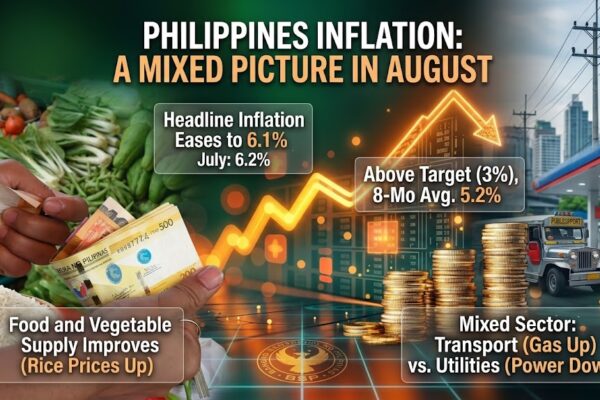

Inflation in the Philippines is expected to remain elevated in the near term, even as banks largely maintain stable lending conditions, suggesting a cautious but continuing flow of credit that could help support economic activity.
The Bangko Sentral ng Pilipinas (BSP) projects April 2026 inflation to range between 5.6 percent and 6.4 percent, with price pressures still driven by a mix of domestic and external factors.
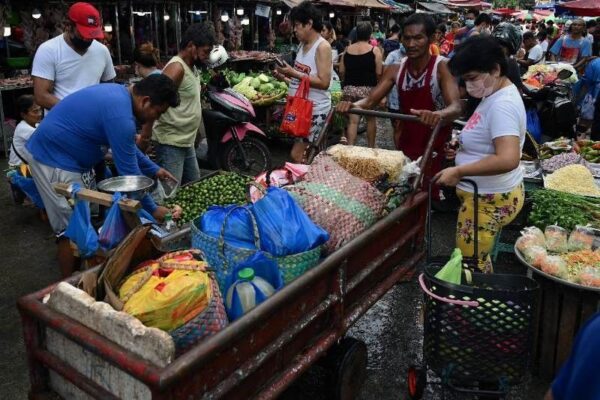
Upward risks continue to come from higher petroleum prices, increases in key food items such as rice, fish, and meat, and rising electricity costs. The recent depreciation of the peso is also adding pressure on import-sensitive goods.
While lower prices of some vegetables and fruits may help ease inflation slightly, the BSP said upside risks remain significant and require close monitoring.
The central bank also pointed to external uncertainties, including developments in the Middle East, which could affect both inflation and broader economic activity through energy prices and supply chain disruptions.
Amid this backdrop, the BSP said it will remain data-dependent, closely tracking inflation trends and growth signals in the months ahead.
Banks keep lending standards largely steady
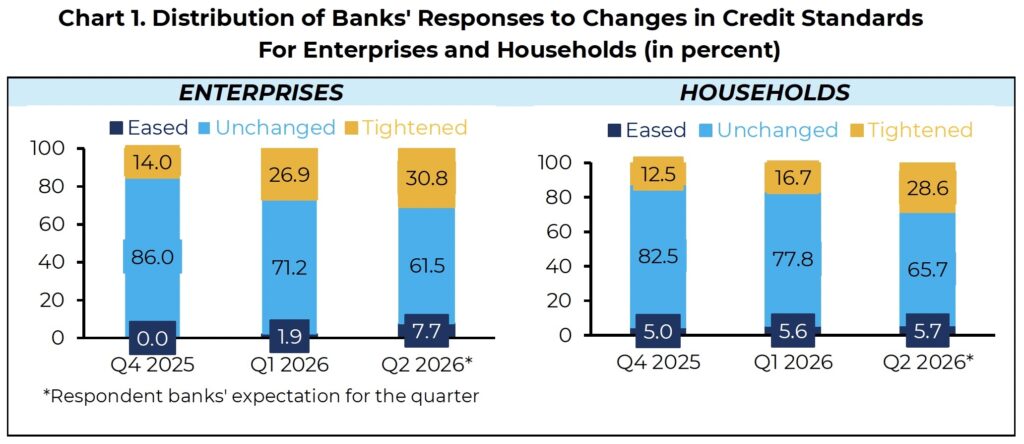
Despite inflation risks and global uncertainties, Philippine banks are not expected to significantly tighten credit conditions in the second quarter of 2026, according to the BSP’s latest Senior Bank Loan Officers’ Survey (SLOS).
For business loans, 61.5 percent of respondent banks said they expect lending standards to remain unchanged, while 30.8 percent expect tighter conditions and 7.7 percent expect easing. This suggests a broadly steady credit environment, even if slightly more cautious than in the previous quarter.
For household loans, 65.7 percent of banks expect standards to stay the same, while 28.6 percent expect tightening and 5.7 percent expect easing.
Using the BSP’s diffusion index, this translates to a net tightening of 23.1 percent for business loans and 22.9 percent for household loans, indicating some caution but no sharp shift toward restrictive lending.
Lending standards refer to banks’ internal rules on loan approvals, including interest rates, collateral requirements, loan size, and repayment terms.
Loan demand expected to stay stable
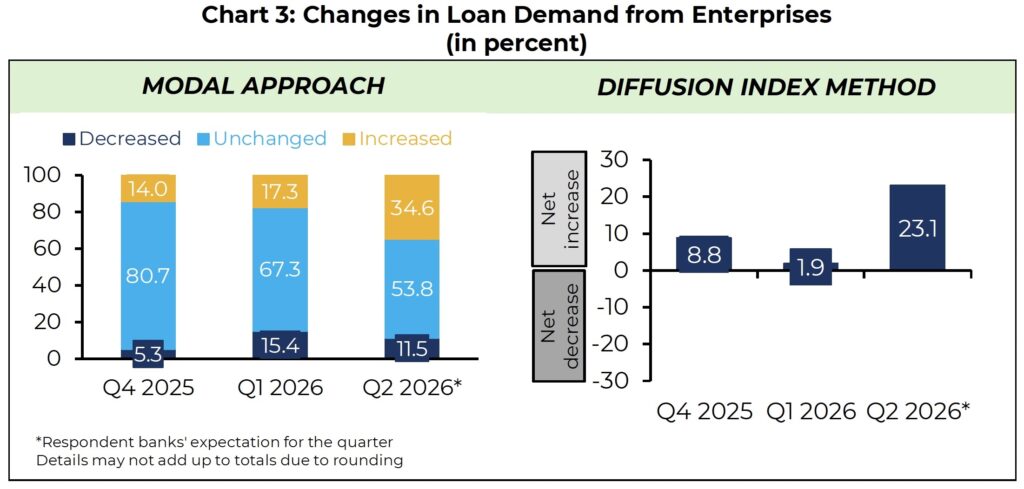
Changes in loan demand (Source: BSP’s latest SLOS)
On the demand side, banks expect borrowing activity to remain broadly steady.
More than half of respondents said they expect loan demand from both businesses (53.8 percent) and households (52.9 percent) to remain unchanged in the second quarter of 2026.
A smaller share expects growth in borrowing demand, particularly for business loans, where 34.6 percent of banks anticipate an increase. Household borrowing demand is expected to be more balanced, with similar shares of banks expecting either an increase or a decline.
Balancing inflation risks and credit support
IMAGE CREDIT: Freepik
Taken together, the latest BSP data points to an economy navigating a delicate balance.
Inflation is expected to remain elevated due to persistent supply-side pressures, while global risks continue to cloud the outlook. However, stable lending standards and steady credit demand suggest that banks are still supporting economic activity rather than pulling back significantly.
For policymakers, the combination of sticky inflation and continued credit flow underscores the importance of careful calibration in the months ahead — especially as external risks, including geopolitical tensions, remain in play.