
Google is accelerating its push to make artificial intelligence more deeply integrated into everyday life, unveiling a new generation of AI-powered tools and experiences during its annual developer conference, Google I/O 2026.
The tech giant introduced a series of updates spanning AI search, intelligent eyewear, agentic assistants, and multimodal creation tools, signalling a broader shift toward AI systems capable of proactively assisting users across both digital and physical environments.
At the center of the announcements was Gemini, Google’s flagship AI platform, which continues to evolve from a chatbot-style assistant into a broader ecosystem of AI agents designed to handle increasingly complex tasks.
Google expands multimodal AI with Gemini Omni
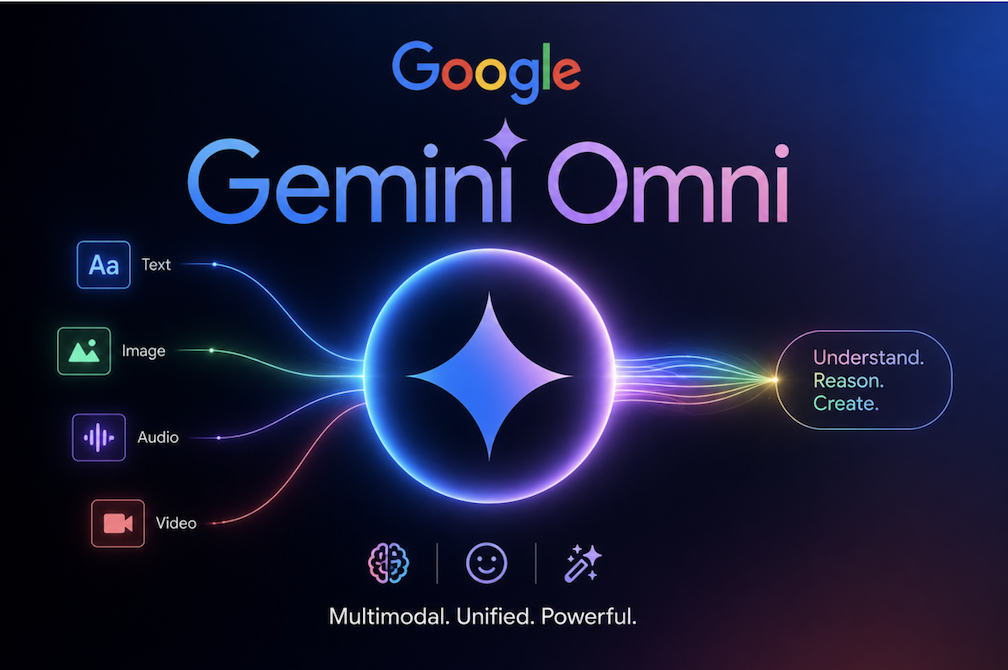
Among the most notable announcements was Gemini Omni, a new multimodal AI model capable of generating media outputs using combinations of text, photos, and video clips.
Google said the model is designed to simplify creative workflows by allowing users to generate high-quality video content conversationally, without requiring advanced editing tools or technical expertise.
Gemini Omni Flash, the lighter and faster version of the model, will initially roll out with video output support across the Gemini app, Flow, and YouTube.
The launch reflects growing competition among major technology firms to develop AI systems that can create and manipulate multimedia content in real time.
Gemini 3.5 Flash targets coding and agentic AI workloads
Google also introduced Gemini 3.5 Flash, which it described as its strongest “agentic” and coding-focused AI model to date.
According to the company, the model is designed to complete complex coding and automation tasks significantly faster and at lower operational costs compared to other frontier AI systems.
The update highlights Google’s increasing focus on AI agents — systems capable of independently executing multi-step tasks rather than simply responding to prompts.
Agentic AI has emerged as one of the most closely watched areas in the global AI race, with companies increasingly developing assistants capable of automating workflows across productivity, software development, and enterprise operations.
Google Search receives biggest AI overhaul in decades
Google also announced what it called the biggest upgrade to Search in more than 25 years, introducing a redesigned AI-powered search box that supports multimodal inputs.
The new interface allows users to search using combinations of text, images, files, videos, and even Chrome tabs, expanding beyond traditional keyword-based search.
The update reflects how AI is reshaping online discovery and information retrieval, as technology firms move toward more conversational and context-aware search experiences.
Intelligent eyewear signals Google’s renewed XR ambitions
Beyond software, Google unveiled new intelligent eyewear powered by Android XR, starting with audio-enabled smart glasses expected to launch later this year.
The glasses integrate Gemini directly into the user experience, enabling hands-free interactions such as listening to music, taking photos, making calls, and accessing smartphone applications through voice-based assistance.
Google said the device is designed to provide “all-day help” while allowing users to remain heads-up and hands-free.
The announcement signals Google’s renewed ambitions in extended reality (XR) and wearable computing as competition intensifies in the emerging smart eyewear market.
AI assistants become more proactive
Google also introduced several new AI assistant features aimed at making Gemini more proactive and personalized.
One of these is Daily Brief, an AI-powered feature designed to consolidate schedules, priorities, and digital information into a single actionable morning summary.
Meanwhile, Gemini Spark functions as a persistent AI agent capable of proactively managing tasks on behalf of users, including identifying subscription charges from credit card statements and surfacing important updates automatically.
The company additionally unveiled Neural Expressive, an updated Gemini app interface featuring new animations, typography, haptic feedback, and visual enhancements designed to create a more intuitive user experience.
Google Antigravity 2.0 pushes multi-agent AI orchestration
Another major announcement was Google Antigravity 2.0, a standalone desktop application designed to orchestrate multiple AI agents simultaneously.
The platform allows users to assign parallel tasks to different agents, such as having one AI system build a website while another develops brand assets or creative materials.
The move reflects growing industry interest in multi-agent AI systems, which many technology firms view as a key step toward more autonomous digital work environments.
As AI competition intensifies globally, Google’s latest announcements suggest the company is positioning Gemini not only as a consumer assistant, but also as an operating layer capable of connecting productivity, creativity, search, and computing experiences across devices and platforms.
Visit this link for all things announced at I/O 2026.