
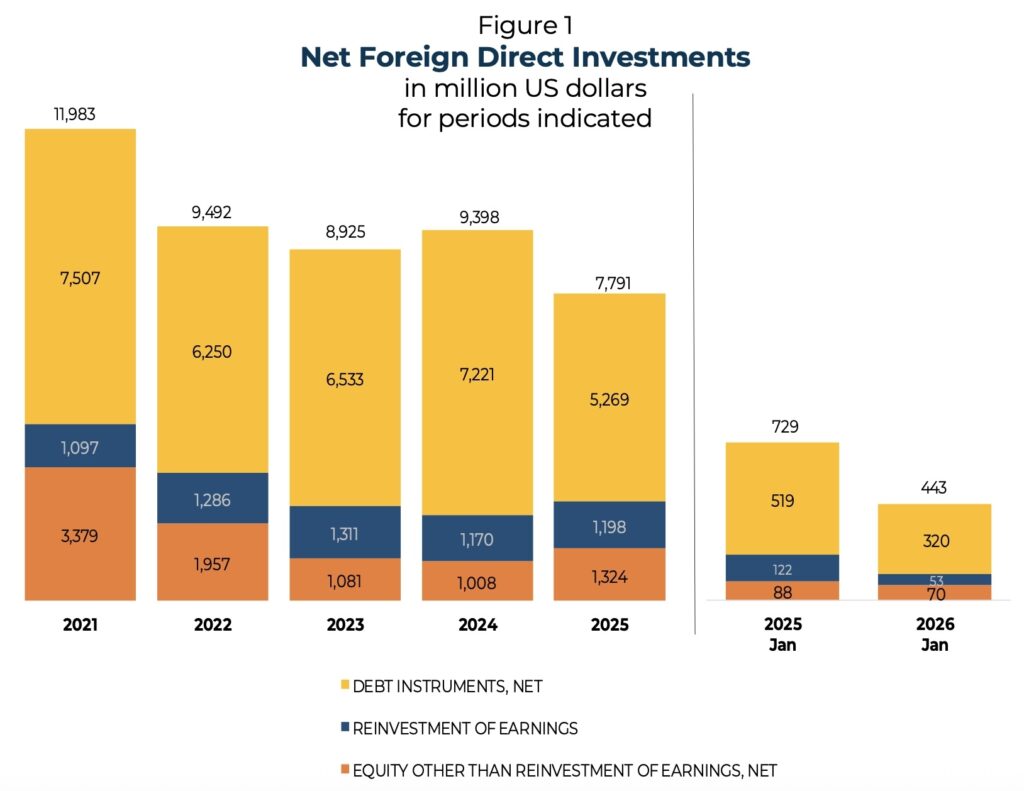
Foreign direct investment (FDI) inflows into the Philippines reached US$443 million in January 2026, according to data released by the Bangko Sentral ng Pilipinas, reflecting a decline from the same period last year as rising geopolitical risks weigh on investor sentiment.
The latest figures suggest a more cautious stance among foreign investors at the start of the year, with global uncertainties continuing to influence capital flows into emerging markets, including the Philippines.
Despite the overall slowdown, Japan emerged as the largest source of FDI during the month, with investments largely directed toward the country’s manufacturing sector — a key driver of industrial growth and export activity.
Other major sources of equity capital placements included the United States and South Korea, with funds flowing primarily into manufacturing, real estate, and wholesale and retail trade.
These sectors remain among the most attractive for foreign investors seeking exposure to the Philippines’ domestic consumption and infrastructure-driven expansion.
The central bank noted that FDI data reflect actual investment inflows, including equity capital, reinvested earnings, and borrowings, based on international standards. This differs from investment approvals reported by other government agencies, which represent commitments that may not be fully realized within a given period.
IMAGE CREDIT: BSP
While January’s figures point to a softer start for 2026, analysts typically view monthly FDI data as volatile, with flows influenced by both global developments and the timing of large investment transactions.
Moving forward, the central bank said investor sentiment is expected to remain closely tied to geopolitical developments and macroeconomic conditions, even as the Philippines continues to position itself as an investment destination in Southeast Asia.